

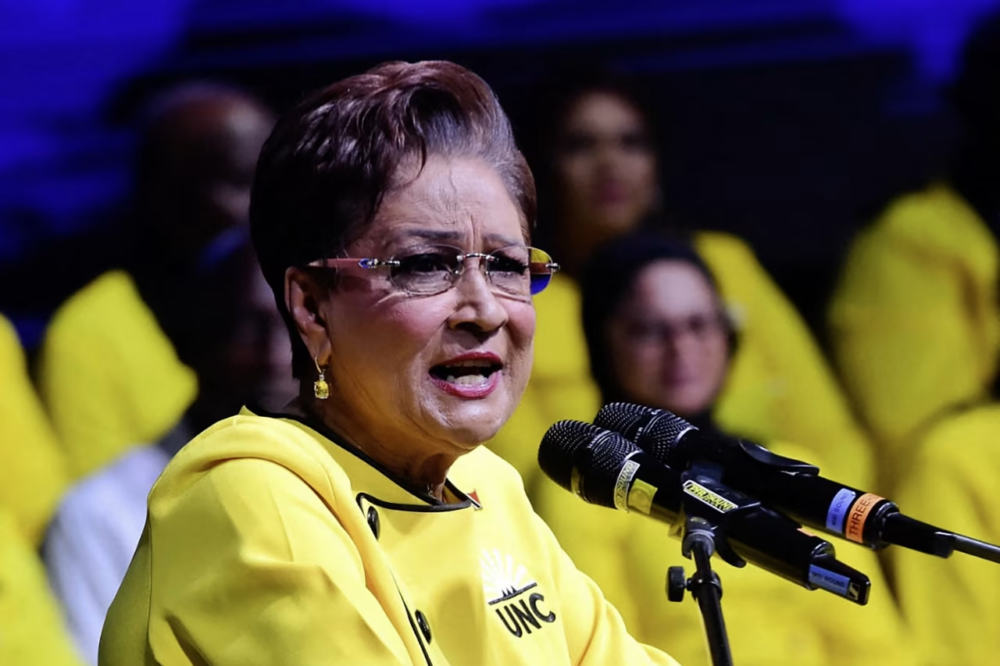
(WiredJA) Port of Spain’s defiant posture on the Barnett reappointment row carries a reckless arithmetic — T&T extracts more from CARICOM’s common market than any other member state, and no amount of sovereign bravado changes that ledger.
When Prime Minister Kamla Persad-Bissessar told reporters that CARICOM is “free to expel us,” she was performing the oldest trick in the Caribbean political playbook — projecting sovereign defiance to a domestic audience that loves nothing more than seeing its leader square up against a regional body.
But bravado is not policy, and behind the rhetoric sits an inconvenient economic reality that no press conference can dissolve: Trinidad and Tobago is CARICOM’s single largest beneficiary, running a trade surplus with the bloc that dwarfs every other member state. When you are the one collecting the most from the arrangement, walking away from the table is not strength — it is self-sabotage dressed up as principle.
The Arithmetic Port of Spain Refuses to Read Aloud
Trinidad and Tobago’s manufacturing sector — food and beverage, petrochemicals, construction materials, household goods — depends on unfettered access to the CARICOM single market for its survival. Its Carib and Solo brands sit on Jamaican shelves.
Its cement pours Barbadian foundations. Its cooking gas fires Guyanese stoves. Under CARICOM’s revised Treaty of Chaguaramas, these goods move duty-free across fourteen other member states.
The moment T&T steps outside that preferential architecture — even symbolically — it triggers an uncomfortable question for the region’s trade partners: why should Grenada or St. Lucia continue absorbing Trinidadian goods on preferential terms when Port of Spain has declared the regional body “dysfunctional and chaotic”?
Persad-Bissessar’s pivot toward “the Middle East, South America, India, and Africa” as alternative markets sounds visionary until one examines the timeline. Those markets require years of trade negotiation, standards harmonisation, and logistics infrastructure that do not exist today.
CARICOM, whatever its institutional dysfunction, is a ready-made, tested, deeply embedded export channel that T&T took decades to build. You do not replace it with a press conference.
“When you are the one collecting the most from the arrangement, walking away from the table is not strength — it is self-sabotage dressed up as principle.”
The Barnett Row: A Grievance of Her Own Making
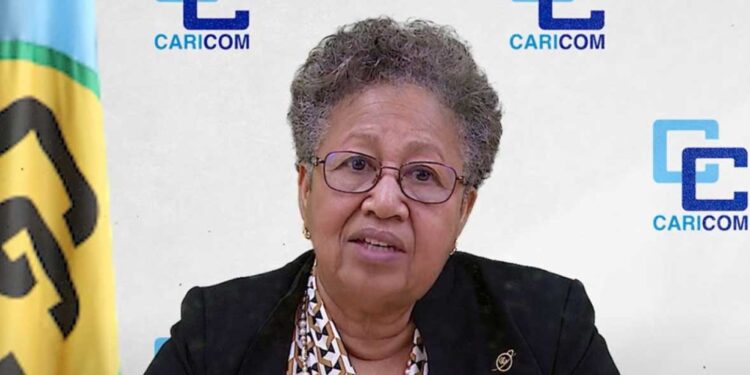
The factual record, stripped of the spin Port of Spain has applied to it, is both simple and devastating. Prime Minister Persad-Bissessar was present at the Heads of Government meeting in St. Kitts and Nevis.
She attended the opening ceremony. She sat in the caucus with United States Secretary of State Marco Rubio. She was in the building, at the table, and fully briefed on the day’s proceedings — including the separate caucus of Heads at which the question of Secretary-General Dr. Carla Barnett’s reappointment was to be addressed. She chose not to go. That is not exclusion.
That is not a disinvitation. That is a deliberate political decision, taken by a sitting prime minister with full knowledge of what was on the agenda, to absent herself from a session whose outcome she now refuses to accept. The “disinvitation” narrative her administration has since constructed has no foundation in the events as they actually unfolded.
The consequences of that decision have kept the region’s leaders occupied ever since. Multiple Heads of Government meetings have been convened in an effort to resolve the impasse Persad-Bissessar created by walking away from the table she chose not to sit at.
One was held last Friday. Another is scheduled for this coming Friday. That is the real measure of the damage: the collective leadership of a fifteen-member regional body is being pulled away from governance, trade, climate resilience, and food security to manage the fallout from one leader’s strategic walkout.
There may yet be a legitimate procedural question about the formal agenda of the 50th Regular Meeting — whether Barnett’s reappointment was properly placed before the plenary is a matter that belongs before the CCJ or a formal dispute resolution mechanism.
But Persad-Bissessar has not pursued that path. She has pursued the press conference, the ultimatum, and the threat of non-recognition — the tools of a government performing grievance, not prosecuting one.
Jamaica’s Quiet Hand on the Wheel
It is instructive that Prime Minister Andrew Holness has inserted himself as a quiet mediator. Persad-Bissessar described him as “a good friend to Trinidad and Tobago” while declining to reveal the content of their conversations. What that diplomatic silence signals is that at least one CARICOM head of government recognises the precipice toward which this dispute is moving.
Holness understands, perhaps better than Persad-Bissessar’s public posture acknowledges, that the Caribbean cannot afford a precedent in which its most economically powerful member uses its market weight as a veto cudgel against institutional decisions it dislikes.
The Verdict
Trinidad and Tobago is entitled to fight for procedural integrity within CARICOM. It is entitled to demand that meeting minutes, performance appraisals, and the WhatsApp message that disinvited Minister Sobers be placed on the public record.
What it is not entitled to do — without serious economic consequences to its own people — is treat CARICOM membership as a conditional arrangement it can suspend at political convenience.
The hard truth is this: CARICOM needs T&T’s financial weight. But T&T’s manufacturers, exporters, and workers need CARICOM’s market access every bit as much. Persad-Bissessar may enjoy the applause line. But when the final bill for this posturing arrives on the desks of Trinidad’s export sector, no amount of sovereign swagger will cover the tab.







![Democratic presidential nominee Joe Biden speaks about election results next to vice presidential nominee Kamala Harris in Wilmington, Delaware on Friday [Kevin Lamarque/Reuters]](https://villagevoicenews.com/wp-content/uploads/2020/11/biden.jpg)
