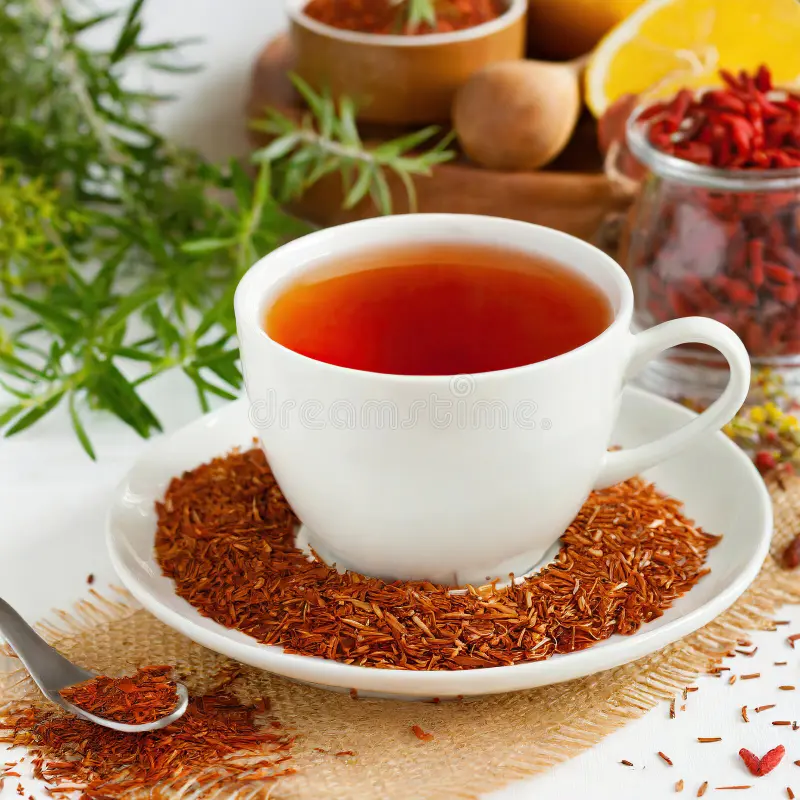
Rooibos tea is a type of herbal tea that is rich in antioxidants. It is thought to be associated with several health benefits, such as boosting heart health. However, further research is still needed to confirm its effects.
Rooibos tea is gaining popularity as a delicious and healthy drink. Consumed in southern Africa for centuries, it has become a beloved beverage around the world.
It’s a flavourful, caffeine-free alternative to black and green tea.
What’s more, advocates praise rooibos for its potential health benefits, claiming that its antioxidants can protect against cancer, heart disease, and stroke.
However, you may wonder if these benefits are supported by evidence.
Learn more about what the research says about rooibos tea’s health benefits and potential side effects.
What is rooibos tea?
Rooibos tea is also known as red tea or red bush tea.
It is made using leaves from a shrub called Aspalathus linearis, usually grown on the western coast of South Africa.
Traditional rooibos are created by fermenting the leaves, which turns them a red-brown color.
Rooibos tea is usually consumed like black tea and has a sweet and nutty taste. Some people add milk and sugar, and rooibos iced tea, espressos, lattes, and cappuccinos have also become popular.
Say goodbye to “good” and “bad” food lists. – now with GLP-1 options – Noom helps you understand your eating habits so you can enjoy satisfying meals while building a sustainable weight loss plan.
Rooibos tea is naturally caffeine-free and is a good alternative to black or green tea.
Rooibos also has lower tannin levels than regular black or green tea.
Tannins, natural compounds present in green and black tea, interfere with the absorption of certain nutrients, such as iron.
2. Packed with antioxidants
Rooibos is associated with health benefits due to its high levels of health-promoting antioxidants, which include aspalathin and quercetin.
Source has found that antioxidants may help reduce your risk of certain chronic conditions, such as heart disease and cancer.
There is some evidence that rooibos tea can increase antioxidant levels in your body.
However, any increase documented has been small and may not last long.
3. May prevent the growth of ACEs
A 2021 review found that rooibos tea may have beneficial effects on inflammation by preventing the growth of angiotensin converting enzymes (ACEs).
ACE indirectly increases blood pressure by causing your blood vessels to contract, which can lead to heart disease.
4. May reduce cancer risk
Some research suggests that the antioxidants present in rooibos tea may help prevent cancer cell growth.
In fact, a 2020 test-tube study on advanced prostate cancer found that green rooibos tea may reduce the migration and invasion of cancer cells.
However, it’s unclear whether rooibos packs enough antioxidants and whether they’re absorbed efficiently enough by your body to provide long-term benefits.
Therefore, more studies in humans are still needed to understand the benefits of rooibos for cancer.
5. May benefit people with type 2 diabetes
Rooibos tea is rich in antioxidants which may be beneficial in reducing symptoms of diabetes.
A 2023 review found that rooibos contains several minerals, especially flavonoids such as aspalathin, which may help to lower blood sugar levels.
However, further research is still needed to understand the exact effects.
Potential side effects
In general, rooibos is very safe and is not associated with any serious side effects. Therefore, enjoying rooibos tea in moderation as part of a balanced diet is unlikely to cause issues for most people.
However, studies have shown that consuming rooibos tea may lead to liver toxicity in very rare cases. If you have a health condition that affects your liver, such as hepatitis, consider avoiding this beverage. A healthcare professional can help you determine if it is safe for you to consume.
The bottom line
Rooibos tea is a healthy and delicious beverage. It is caffeine-free, low in tannins, and rich in antioxidants, which may offer a variety of health benefits.
However, health claims relating to the tea are often anecdotal and not based on strong evidence.
It is still not clear whether the benefits of rooibos tea seen in test-tube and animal studies translate into real-world health benefits for humans (healthline)