Tuesday, September 22, 2026
Village Voice News
[adning id="37476"]
ADVERTISEMENT
  • Home
  • News
  • Sports
  • Editorial
  • Letters
  • Global
  • Columns
    • Eye On Guyana
    • Hindsight
    • Lincoln Lewis Speaks
    • Future Notes
    • Blackout
    • From The Desk of Roysdale Forde SC
    • Diplomatic Speak
    • Mark’s Take
    • In the village
    • Mind Your Business
    • Bad & Bold
    • The Voice of Labour
    • The Herbal Section
    • Politics 101 with Dr. David Hinds
    • Talking Dollars & Making Sense
    • Book Review 
  • Education & Technology
  • E-Paper
  • Contact Us
No Result
View All Result
  • Home
  • News
  • Sports
  • Editorial
  • Letters
  • Global
  • Columns
    • Eye On Guyana
    • Hindsight
    • Lincoln Lewis Speaks
    • Future Notes
    • Blackout
    • From The Desk of Roysdale Forde SC
    • Diplomatic Speak
    • Mark’s Take
    • In the village
    • Mind Your Business
    • Bad & Bold
    • The Voice of Labour
    • The Herbal Section
    • Politics 101 with Dr. David Hinds
    • Talking Dollars & Making Sense
    • Book Review 
  • Education & Technology
  • E-Paper
  • Contact Us
No Result
View All Result
Village Voice News
No Result
View All Result
Home Regional

Gonsalves Exposes Misunderstandings of Debt Structure

Admin by Admin
April 14, 2026
in Regional
0
SHARES
0
VIEWS
Share on FacebookShare on Twitter

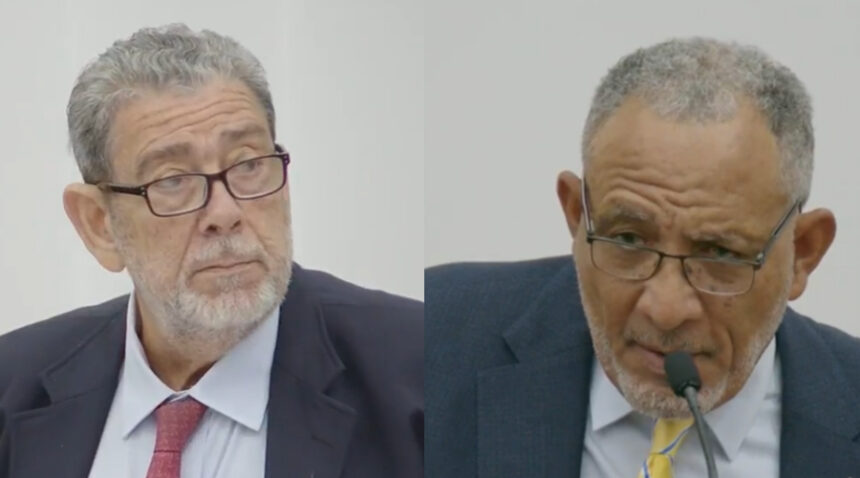
Opposition Leader Ralph Gonsalves has launched a scathing critique of the current administration’s economic strategies, particularly targeting Prime Minister Godwin Friday’s plan to negotiate “debt swaps” at the upcoming World Bank and IMF Spring Meetings.

In a detailed public address, Gonsalves argued that the government’s proposal lacks a factual basis, highlighting a fundamental misunderstanding of St. Vincent and the Grenadines’ (SVG) debt profile and macroeconomic realities.

READ ALSO

BEIJING, Sept. 22 (Xinhua) — Five years after its debut, the Global Development Initiative (GDI) has evolved from a Chinese proposal into broad international consensus, translating vision into action and delivering concrete progress across the world. First proposed during the general debate of the 76th UN General Assembly in September 2021, the GDI anchors six core principles: development as a priority, a people-centered approach, benefits for all, innovation-driven development, harmony between humanity and nature, and results-oriented actions. The framework fully aligns with the UN 2030 Agenda for Sustainable Development. Amid a widening global development deficit and stalled progress of the UN 2030 Agenda for Sustainable Development for many developing nations, China has positioned the GDI as a global public good. Upholding mutual benefit and shared growth, the country has served as a reliable partner for the Global South, delivering a result-oriented platform for pragmatic development cooperation. Since its launch, China has established more than 30 cooperation mechanisms and platforms, mobilized over 23 billion U.S. dollars through vehicles such as the China-UN Peace and Development Fund and the Global Development and South-South Cooperation Fund, carried out over 1,800 “small yet smart” livelihood projects, and trained upwards of 200,000 professionals. DELIVERING TANGIBLE BENEFITS Across the Global South, China’s commitment to common development aligned with the GDI has been translated into projects that improve people’s lives. Skills training programs exemplify the initiative’s on-the-ground impact. This September, 34 Indonesian students enrolled in a three-year industrial mechatronics program at Wuhu Vocational Technical University in east China’s Anhui Province. The cohort joins a customized international order-tailored training program run in partnership with Anhui Conch Group Co., Ltd., a leading domestic cement manufacturer. Launched in 2019, the program adopts a “Chinese language plus vocational skills” model, with courses covering automation, industrial robots and artificial intelligence. “I will not only gain practical skills, but also understand the logic behind it,” said Indonesian student Nilam Insirah, noting that the training allows her to pursue management-related career paths. “I hope to bring the professional knowledge, management know-how and life experience I gained in China back to Indonesia,” program graduate Brayen Difan Makatiwo told Xinhua. “I look forward to becoming a bridge connecting Indonesia with China and the wider world,” he said. Infrastructure connectivity is a key part of these efforts. The China-Laos Railway has turned landlocked Laos into a land transport hub. In Brazil, a “power highway” transmits clean electricity generated in the Amazon rainforest to urban clusters more than 2,000 kilometers away. The initiative has also taken root in regional cooperation. Within the Shanghai Cooperation Organization (SCO) framework, China’s trade with other member states has exceeded 2.3 trillion U.S. dollars. The China-Kyrgyzstan-Uzbekistan railway, now under construction, will further boost regional connectivity. More than two-thirds of the 100 “small yet smart” livelihood projects, outlined at the 2025 SCO Tianjin summit, have now been approved for implementation. In Guinea, Chinese hybrid rice has raised production efficiency, and “brought hope to the country’s young people,” said Guinean Prime Minister Amadou Oury Bah. China’s Juncao technology, which turns grass into mushrooms and animal feed, has been introduced in more than 100 countries, including Fiji and other Pacific island countries. China has further extended cooperation in poverty reduction and agricultural technology, including hybrid rapeseed cultivation in Pakistan and a desertification control center with Mongolia. Market access is expanding too. Since May 2026, China has granted zero-tariff treatment to all 53 African countries with diplomatic relations with China. Innovation and green development feature prominently. China has put MAZU, its homegrown AI-powered meteorological early warning system, into service in some 30 countries. Chinese technologies such as the BeiDou navigation system are also being applied in Egyptian industrial parks. GROWING GLOBAL CONSENSUS “With the ‘six commitments’ as its core philosophy, the GDI has grown from a Chinese proposal into a widely accepted international consensus and from China’s cooperation concept into tangible joint action by China and the international community,” said Dong Xiangrong, a researcher at the Chinese Academy of Social Sciences. The initiative’s practical results are matched by expanding international support. More than 130 countries and international organizations have endorsed it. Nearly 100 countries and international and regional organizations have signed cooperation documents with China, and the Group of Friends of GDI has grown to 88 members. Key multilateral milestones have sustained GDI momentum, including the 2022 High-level Dialogue on Global Development, the 2023 “BRICS Plus” leaders’ dialogue, and the 2026 SCO Summit. “The Group of Friends of GDI has become an important platform for countries to coordinate development positions and match development resources under the UN framework, and a model of South-South cooperation that carries weight in global governance, climate change and development financing,” said Dong.

CARICOM Reparations Conference Shifts From Advocacy to Action

According to Gonsalves, Friday’s intention to swap allegedly high-interest external debt for lower-priced debt is deeply flawed. Gonsalves pointed out that the country’s high-interest debt is actually local, while its external borrowing consists primarily of highly concessional, low-interest loans.

“I don’t think Friday know what debt swap is,” Gonsalves remarked, questioning which specific external loans the government intends to renegotiate given their already favorable terms. He cautioned that misdiagnosing the problem will lead to disastrous policies, warning, “If you diagnose the wrong situation, you’ll prescribe wrong remedy”.

To prove his point, Gonsalves provided a granular breakdown of SVG’s external borrowing, dismantling the narrative that international loans are creating an unsustainable interest burden:

  • Caribbean Development Bank (CDB): The country owes $783 million, with the bulk of interest rates ranging from 0.75% to a maximum of 5.66%, averaging around 3%. Gonsalves noted the CDB cannot engage in debt swaps or relief because doing so would negatively impact the institution’s credit rating.
  • World Bank (IDA): SVG holds $774 million in loans from the World Bank’s soft window, secured at just 0.75% over a 45-year repayment period, making debt relief on these funds virtually impossible.
  • International Monetary Fund (IMF): The $60 million owed from Rapid Credit Facility loans carries a negligible interest rate of just 0.25%.
  • Taiwan: With loans capped at a maximum of 5.35%, Gonsalves highlighted a specific 22-year hospital loan agreement where the Taiwanese government subsidizes any interest that market movements push above 3.5%. Furthermore, he pointed out the impossibility of the World Bank swapping Taiwanese debt, as Taiwan is not a member nation.
  • ALBA Bank (Venezuela): Of the $131 million owed, $99 million is at a 2% interest rate, with only $33 million sitting at 6%.

Gonsalves emphasized that the true financial strain comes from domestic debt and local bondholders, which carry higher interest rates ranging from 2% to 7.25%, with the vast majority falling between 5% and 6.5%.

He illustrated this disparity by noting that while external debt is more than two and a half times larger than internal debt, it only takes 16.5% of government revenue to service the external debt, compared to a staggering 25% of revenue required to service the domestic debt.

Further critiquing the government’s fiscal management, Gonsalves pointed out that the current administration deferred a 2% loan from the Saudi Fund for Development in favor of increasing local borrowing from $103 million to $200 million at rates between 6.5% and 7%. He called this approach incoherent and accused the government leaders of being macroeconomically “innumerate,” unable to connect the dots between data and the broader economy.

The Opposition Leader also pushed back aggressively against Friday’s claims that SVG was near “debt distress” or on the edge of becoming a “failed state”. Gonsalves argued that an elevated public debt is not a defining condition of a failed state, which typically involves the total collapse of political, legal, and security institutions.

Citing a July 2024 IMF report, Gonsalves noted that while public debt remains elevated due to compounding shocks like volcanic eruptions, hurricanes, and the pandemic, the IMF explicitly praised the “decisive policy responses,” “large scale investment projects,” and “robust recovery” achieved during his administration’s tenure.

Gonsalves warned that the current government is attempting to “manage and dispense scarcity” rather than fostering real economic growth, an approach he believes will only exacerbate the nation’s financial challenges in the face of growing global turmoil.

stvincenttimes.com
ShareTweetSendShareSend

Related Posts

A GIFT: Prime Minister Kamla Persad-Bissessar, centre, and Foreign Affairs Minister Sean Sobers, right, present a painting of the Magnificent Seven to John Dramani Mahama, President of the Republic of Ghana, before their bilateral meeting in New York, yesterday.
Regional

BEIJING, Sept. 22 (Xinhua) — Five years after its debut, the Global Development Initiative (GDI) has evolved from a Chinese proposal into broad international consensus, translating vision into action and delivering concrete progress across the world. First proposed during the general debate of the 76th UN General Assembly in September 2021, the GDI anchors six core principles: development as a priority, a people-centered approach, benefits for all, innovation-driven development, harmony between humanity and nature, and results-oriented actions. The framework fully aligns with the UN 2030 Agenda for Sustainable Development. Amid a widening global development deficit and stalled progress of the UN 2030 Agenda for Sustainable Development for many developing nations, China has positioned the GDI as a global public good. Upholding mutual benefit and shared growth, the country has served as a reliable partner for the Global South, delivering a result-oriented platform for pragmatic development cooperation. Since its launch, China has established more than 30 cooperation mechanisms and platforms, mobilized over 23 billion U.S. dollars through vehicles such as the China-UN Peace and Development Fund and the Global Development and South-South Cooperation Fund, carried out over 1,800 “small yet smart” livelihood projects, and trained upwards of 200,000 professionals. DELIVERING TANGIBLE BENEFITS Across the Global South, China’s commitment to common development aligned with the GDI has been translated into projects that improve people’s lives. Skills training programs exemplify the initiative’s on-the-ground impact. This September, 34 Indonesian students enrolled in a three-year industrial mechatronics program at Wuhu Vocational Technical University in east China’s Anhui Province. The cohort joins a customized international order-tailored training program run in partnership with Anhui Conch Group Co., Ltd., a leading domestic cement manufacturer. Launched in 2019, the program adopts a “Chinese language plus vocational skills” model, with courses covering automation, industrial robots and artificial intelligence. “I will not only gain practical skills, but also understand the logic behind it,” said Indonesian student Nilam Insirah, noting that the training allows her to pursue management-related career paths. “I hope to bring the professional knowledge, management know-how and life experience I gained in China back to Indonesia,” program graduate Brayen Difan Makatiwo told Xinhua. “I look forward to becoming a bridge connecting Indonesia with China and the wider world,” he said. Infrastructure connectivity is a key part of these efforts. The China-Laos Railway has turned landlocked Laos into a land transport hub. In Brazil, a “power highway” transmits clean electricity generated in the Amazon rainforest to urban clusters more than 2,000 kilometers away. The initiative has also taken root in regional cooperation. Within the Shanghai Cooperation Organization (SCO) framework, China’s trade with other member states has exceeded 2.3 trillion U.S. dollars. The China-Kyrgyzstan-Uzbekistan railway, now under construction, will further boost regional connectivity. More than two-thirds of the 100 “small yet smart” livelihood projects, outlined at the 2025 SCO Tianjin summit, have now been approved for implementation. In Guinea, Chinese hybrid rice has raised production efficiency, and “brought hope to the country’s young people,” said Guinean Prime Minister Amadou Oury Bah. China’s Juncao technology, which turns grass into mushrooms and animal feed, has been introduced in more than 100 countries, including Fiji and other Pacific island countries. China has further extended cooperation in poverty reduction and agricultural technology, including hybrid rapeseed cultivation in Pakistan and a desertification control center with Mongolia. Market access is expanding too. Since May 2026, China has granted zero-tariff treatment to all 53 African countries with diplomatic relations with China. Innovation and green development feature prominently. China has put MAZU, its homegrown AI-powered meteorological early warning system, into service in some 30 countries. Chinese technologies such as the BeiDou navigation system are also being applied in Egyptian industrial parks. GROWING GLOBAL CONSENSUS “With the ‘six commitments’ as its core philosophy, the GDI has grown from a Chinese proposal into a widely accepted international consensus and from China’s cooperation concept into tangible joint action by China and the international community,” said Dong Xiangrong, a researcher at the Chinese Academy of Social Sciences. The initiative’s practical results are matched by expanding international support. More than 130 countries and international organizations have endorsed it. Nearly 100 countries and international and regional organizations have signed cooperation documents with China, and the Group of Friends of GDI has grown to 88 members. Key multilateral milestones have sustained GDI momentum, including the 2022 High-level Dialogue on Global Development, the 2023 “BRICS Plus” leaders’ dialogue, and the 2026 SCO Summit. “The Group of Friends of GDI has become an important platform for countries to coordinate development positions and match development resources under the UN framework, and a model of South-South cooperation that carries weight in global governance, climate change and development financing,” said Dong.

by Admin
September 22, 2026

PRIME MINISTER Kamla Persad-Bissessar is expected to begin two days of high-level bilateral talks on the margins of the United...

Read moreDetails
Prime Minister Mia Mottley and CARICOM Sec Gen Dr. Carla Barnett (WiredJA photo)
Regional

CARICOM Reparations Conference Shifts From Advocacy to Action

by Admin
September 21, 2026

The Third CARICOM Regional Conference on Reparations, held in Barbados from September 17–19, has moved the Caribbean’s reparations campaign toward...

Read moreDetails
Secretary-General Dr. Carla Barnett
Regional

CARICOM Relaunches Ten-Point Reparations Plan as Barnett Calls for Unity, Action

by Admin
September 18, 2026

 CARICOM Secretary-General Dr Carla Barnett has called for renewed regional unity and concrete action on reparatory justice as the Caribbean...

Read moreDetails
Next Post
Google photo

AFC Condemns Handling of Fuel Crisis as Shortages Disrupt Country


EDITOR'S PICK

MV Konawaruk—formerly called ARIS IV

Gov’t increasing ferry trips, capacity to ease Christmas traffic

December 15, 2025

General & Regional Elections 2025

August 29, 2025
Kataleya Sam (centre) poses with team mates at CAC Award Ceremony.

GUYANA YOUTH TEAM REBOUNDS STRONGLY AT CAC YOUTH CHESS FESTIVAL

December 21, 2025
The national flags of Somalia (L) and China. /CFP

Chinese, Somali FMs meet on bilateral ties

February 19, 2025

© 2024 Village Voice

No Result
View All Result
  • Home
  • News
  • Sports
  • Editorial
  • Letters
  • Global
  • Columns
    • Eye On Guyana
    • Hindsight
    • Lincoln Lewis Speaks
    • Future Notes
    • Blackout
    • From The Desk of Roysdale Forde SC
    • Diplomatic Speak
    • Mark’s Take
    • In the village
    • Mind Your Business
    • Bad & Bold
    • The Voice of Labour
    • The Herbal Section
    • Politics 101 with Dr. David Hinds
    • Talking Dollars & Making Sense
    • Book Review 
  • Education & Technology
  • E-Paper
  • Contact Us

© 2024 Village Voice