General Secretary of the Guyana Trades Union Congress (GTUC), Lincoln Lewis, has issued a forceful rebuke of what he describes as attempts to distort Guyana’s historical narrative, insisting that the contributions of National Hero Hubert Nathaniel Critchlow must not be diminished or erased.
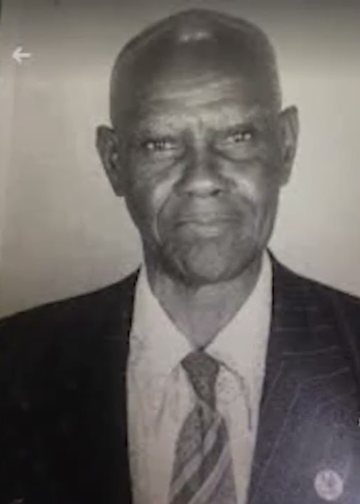
In an op-ed published in Village Voice News titled “Before There Was Cheddi Jagan, There Was Hubert Nathaniel Critchlow,” Lewis called on Guyanese to defend what he termed the “truth of our history,” warning against what he sees as a deliberate effort to marginalise key figures and contributions.
“Before there was Cheddi Jagan, there was Hubert Nathaniel Critchlow,” Lewis declared, adding, “Let that not just be said—let it be understood, respected, and recorded in the permanent ledger of this nation’s history.”
Lewis accused the ruling People’s Progressive Party (PPP) of attempting to reshape the country’s historical narrative.
“When we sit idly by and allow others—yes, I speak directly of the People’s Progressive Party (PPP) regime—to rewrite this nation’s story… we participate in a dangerous falsehood,” he wrote. “A nation built on distortion cannot stand in dignity.”
Challenge to Labour Minister
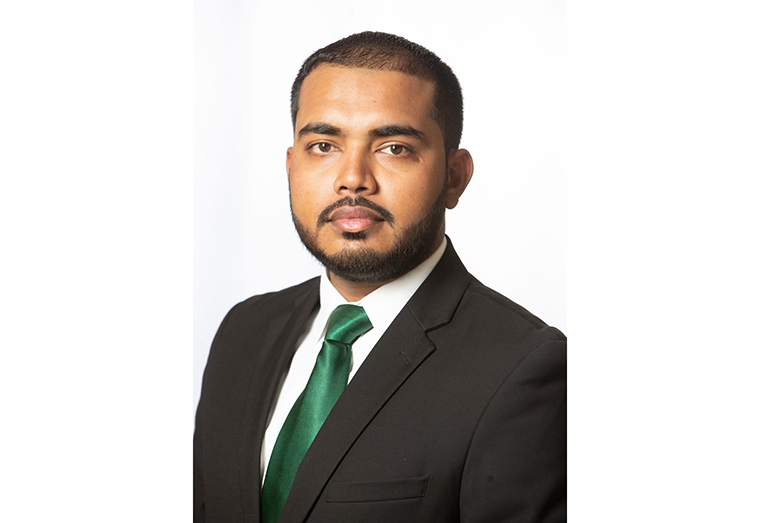
Lewis also directed criticism at Minister of Labour Keoma Griffith, urging him to reflect on his role in what Lewis described as the sidelining of African Guyanese contributions.
“You are of African descent—at least by appearance—and whether you embrace that heritage or not, it is written into the history of this country,” Lewis stated, adding that the Minister does not have “the right—nor the authority—to erase their contribution from the national story.”
He further urged Griffith to be “guided by history” and “guided by truth.”
Historical Timeline Disputed
Central to Lewis’s argument is the assertion that organised labour and political consciousness in Guyana predate Cheddi Jagan’s emergence.
“When Critchlow… was organising workers and igniting a movement… Cheddi Jagan was not born,” Lewis said. “The struggle for workers’ rights… did not begin with Jagan. It began decades earlier.”
He pointed out that workers were mobilising as early as 1905, while Jagan was born in 1918 and only returned to Guyana in 1943.
“By the time Jagan returned… Critchlow had already spent nearly forty years laying the groundwork for trade unionism and industrial relations in this country. These are irrefutable facts!” Lewis wrote.
Criticism of GAWU and Union Landscape
Lewis also criticised the Guyana Agricultural and General Workers Union (GAWU), arguing that its 50th anniversary celebrations failed to adequately acknowledge Critchlow’s legacy and the contributions of Black Guyanese.
“That milestone deserves recognition,” he said, “but it could have been marked without denigrating Black contributions… and more so, without ignoring the towering legacy of… Hubert Nathaniel Critchlow.”
He further claimed that independent unions face barriers today, contrasting past political tolerance with current conditions.
“The Guyana Bauxite and General Workers Union… can point to repeated instances where efforts to organise workers have been stifled,” he said, citing challenges at the Trade Union Recognition and Certification Board.
“So do not speak to us about progress while practicing exclusion,” Lewis added.

Broader Concerns Over Historical Erasure
Lewis questioned what he described as a “persistent effort” to minimise the role of Black Guyanese in national development, particularly in the post-Jagan era.
“One must ask: why this persistent effort… to erase or diminish the role of Black Guyanese in building this nation?” he wrote.
He argued that even Jagan himself would not have supported such a shift.
“I knew Cheddi Jagan. And the Cheddi Jagan I knew would never have supported this rewriting of history. He would have acknowledged Critchlow,” Lewis stated.
Lewis also highlighted Critchlow’s role in early political development, including labour activism that contributed to the push for universal adult suffrage.
“The struggle for the right to vote… did not begin with you. It began with the workers under Critchlow’s leadership in 1926,” he said.
Call for Recognition
Reaffirming his position, Lewis stressed that Guyana’s political and labour institutions are built on the foundation laid by earlier generations.
“You stand on theirs and Critchlow’s shoulders,” he wrote. “You walk on the political ground that Hubert Nathaniel Critchlow helped to pave.”
He also pointed to the involvement of African Guyanese figures in the early development of the PPP, noting that “Forbes Burnham gave the party its name, and Eusi Kwayana… penned its battle song.”
“Try as you might, you cannot erase the foundational contributions and enduring footprints of African Guyanese,” Lewis said.
Closing his argument, Lewis reiterated his central message: “We will not allow Hubert Nathaniel Critchlow to be erased… Not now. Not ever.”
“I rest my case.”