In the quiet riverine community of St. Cuthbert’s Mission, Essequibo Coast—long before oil wealth and global attention—Shakira Baksh Caine was born into circumstances that gave little indication of the international life that awaited her.
It is a story that begins not with glamour, but with craft.
Her mother, a dressmaker, stitched garments for a living—an influence that would shape Baksh’s early ambitions. Fashion, not fame, was her first calling. Yet in 1960s Guyana, opportunities for a young Indo-Guyanese woman were limited, and like many of her generation, her path would be shaped as much by circumstance as by choice.
That turning point came in Georgetown, where she worked as a secretary. During that time, she survived a violent attack linked to unrest at a U.S. facility—an experience that left visible scars and forced a reckoning with her future. It was in the aftermath of that trauma that her employer encouraged her to enter a beauty pageant.
She did—and won.
Crowned Miss Guyana in 1967, Baksh stepped onto a larger stage, representing the country at the Miss World 1967 competition in London. Against a backdrop of rigid Eurocentric beauty standards, she placed second runner-up.
It was more than a personal victory. It was a quiet disruption.
At a time when women of colour were rarely centred in global pageantry, Baksh’s presence alone challenged prevailing norms. For Guyana, newly independent and still defining its identity, she became an early cultural ambassador—though that recognition would come much later.
Instead of returning home, she made a decision that would define the rest of her life: she stayed in London.
Breaking Through—Quietly
London in the late 1960s was not an easy place for a young Caribbean woman to build a career in entertainment. Roles for women like Baksh were scarce, often minor, and frequently uncredited.
Still, she persisted.
She found work in modeling and acting, appearing in films such as Some Girls Do (1969), Carry On Again Doctor (1969), and later The Man Who Would Be King (1975). She also appeared in the British television series UFO, carving out space in an industry that offered few.
Her rise was not meteoric—but it was steady, deliberate, and hard-won.
A Marriage That Rewrote the Narrative
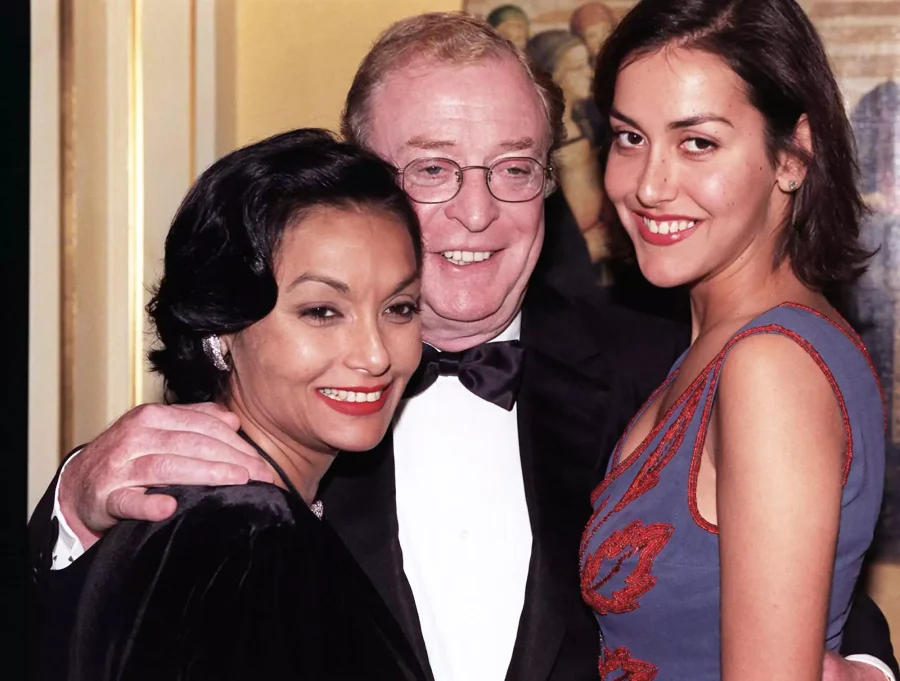
In 1973, her life took another turn when she married British actor Michael Caine.
Their relationship—sparked after he saw her in a television advertisement—would become one of the most enduring unions in the entertainment world, lasting more than five decades.
But with that longevity came a cost.
Public narratives began to shift. Increasingly, Shakira Baksh was no longer introduced as a former Miss Guyana, actress, or designer—but simply as “Michael Caine’s wife.”
It is a familiar pattern, one that has obscured the achievements of many women whose identities become secondary to those of their spouses.
Reinvention and Return to Craft
Yet, even as public attention narrowed, Baksh Caine continued to evolve.
Stepping away from acting, she returned to her earliest passion—fashion. Drawing on her upbringing and her mother’s influence, she built a career in design, producing clothing and jewelry that would be sold in major department stores in both the United Kingdom and the United States.
Her elegance did not go unnoticed. She was named to the International Best Dressed List, cementing her place not just as a former beauty queen, but as a figure of enduring style.
A Legacy Often Overlooked
There is no single dramatic headline that defines Shakira Baksh Caine’s life. Instead, her story unfolds in layers:
- A young woman from a rural Guyanese village stepping onto the world stage
- A beauty queen who challenged racial norms without overt protest
- An actress navigating structural limitations in global cinema
- A designer who returned to her roots and built a transatlantic career
- A wife whose identity was often overshadowed, but never erased
Her journey reflects the lived reality of many Guyanese women—resilient, adaptive, and frequently under-acknowledged.
Reclaiming Her Place in History
As Guyana marks Women’s History Month, her story raises a deeper question: how many of the country’s pioneering women remain at the margins of its national narrative?
Shakira Baksh Caine’s life is not just about personal success. It is about migration, identity, race, and quiet perseverance. It is about what it meant—and still means—for a Caribbean woman to step into global spaces not designed for her.
Today, as Guyana continues to define itself on the world stage, her legacy feels newly relevant.
Not because she demanded recognition—but because she earned it.
And in telling her story fully, perhaps for the first time, Guyana does more than honour a woman.
It corrects the record.
__________________
Sources:
- Meet Michael Caine’s wifer, former Miss Guyana Shakira Caine- South China Morning Post
- Shakira Bask is much more than “Michael Canie’s wife”- The Juggernaut
- Shakira Caine Biography- IMDb
- Shakra Baksh Caine- Miss Guyana 1967- Guyanese Girls Rock
- Shakira Caine- The Famous People
- World Wide Web