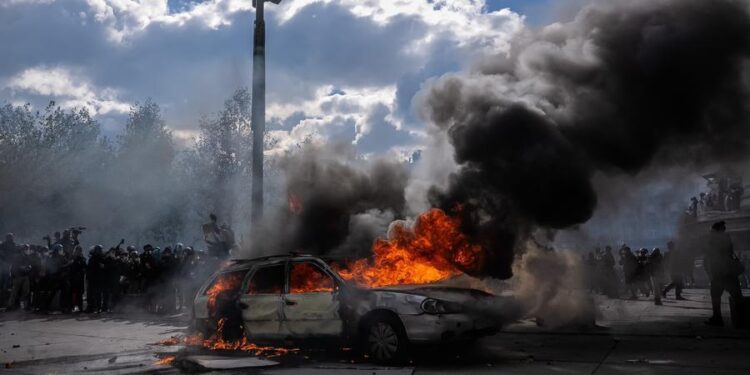
The ongoing war involving Iran, Israel, and the United States has entered a critical phase, as a temporary pause in American military strikes raises cautious hopes for diplomacy—even as fighting continues across the region.
A Fragile Pause Amid Ongoing Conflict
U.S. President Donald Trump has ordered a five-day halt to planned strikes on Iran’s energy infrastructure, describing backchannel communications as “productive.” The move is widely seen as an attempt to open space for negotiations and prevent further escalation.
However, the pause has not stopped the broader conflict. Iranian missile attacks on Israeli cities have continued, with reports indicating the use of cluster munitions designed to overwhelm air defense systems. In response, Israeli and U.S. forces have maintained targeted strikes on Iranian military assets.
Tensions are also emerging between Washington and Jerusalem. Israeli Prime Minister Benjamin Netanyahu is reportedly pushing for a more decisive military outcome, while U.S. officials appear more open to a limited conflict and negotiated settlement.
How the War Began
The conflict erupted on February 28, 2026, following coordinated U.S. and Israeli airstrikes on Iranian nuclear and military facilities. The operation—widely viewed as a preemptive effort to halt Iran’s suspected nuclear weapons development—killed several senior Iranian officials and triggered immediate retaliation.
The roots of the war stretch back years:
- Nuclear tensions over Iran’s uranium enrichment program
- Regional proxy conflicts, including Iran’s support for armed groups hostile to Israel
- Rising instability within Iran, including protests and government crackdowns
These factors combined to create a volatile environment that ultimately led to direct confrontation.
Escalation Across the Region
Since the initial strikes, the conflict has rapidly expanded:
- Iran has launched ballistic missiles and drones targeting Israeli cities and U.S. positions in the Middle East
- Israel has conducted sustained air campaigns aimed at degrading Iran’s military capabilities
- Key infrastructure, including energy facilities and transport routes, has been damaged
Iran has also warned it could target shipping in the Strait of Hormuz, a vital global oil corridor, raising fears of a broader economic shock.
Casualty estimates remain fluid, but thousands are believed to have been killed in Iran, with dozens reported dead in Israel. Civilian infrastructure has been heavily affected on both sides.
Global and Economic Impact
The war has sent ripples across the global economy. Oil prices surged amid fears of supply disruptions, though markets briefly stabilized following news of the U.S. strike pause.
International concern is mounting. Regional powers and global actors are urging restraint, while diplomatic efforts intensify behind the scenes. The potential for the conflict to widen—drawing in additional countries or armed groups—remains a major concern.
What Comes Next
The next several days are seen as crucial. If negotiations gain traction, the current pause could mark the beginning of de-escalation. However, continued missile exchanges and deep divisions over war aims mean the situation remains highly unstable, with the risk of a broader regional conflict still looming.