By WiredJa Staff | Trinidad and Tobago is under a State of Public Emergency — again.
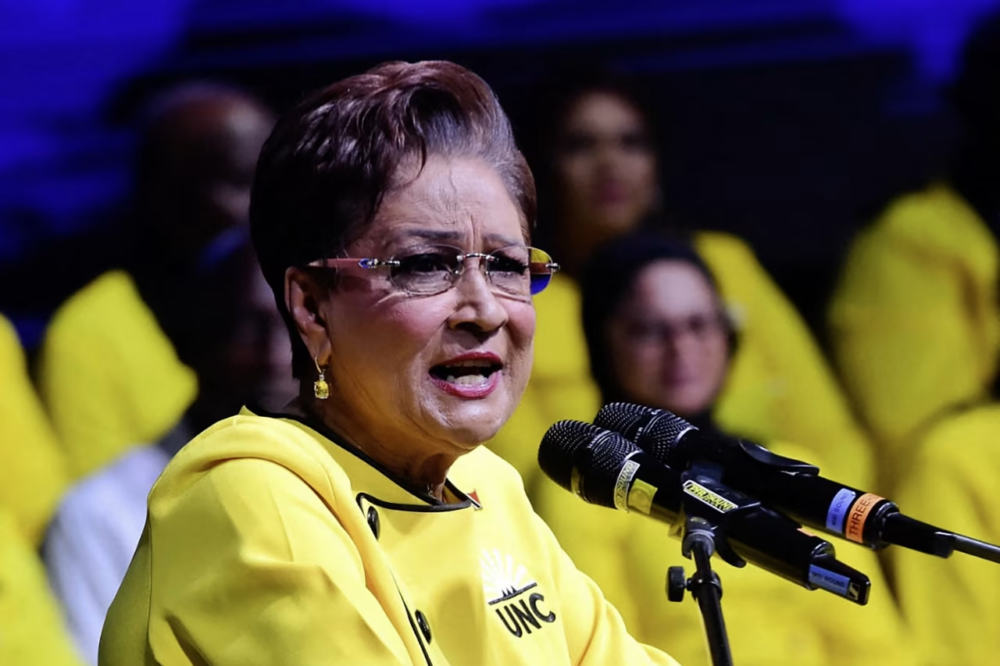
Prime Minister Kamla Persad-Bissessar made the announcement Monday night, effective Tuesday, March 3, 2026, citing a surge in violent gang-related crime, mass shootings, multiple fatalities, and what she described as credible intelligence of planned attacks against police officers, prison officers, and members of the legal services.
The National Security Council had convened. The President had assented. The emergency powers machinery, well-worn from repeated use, was set in motion once more.
The declaration marks a sobering moment — not merely for public safety, but for political accountability. Because this time, there is no convenient foreign villain to blame.
The Borrowed Excuse
For years, T&T’s crime narrative was seasoned heavily with geopolitical spice. The proximity to Venezuela — a nation convulsed by economic collapse and institutional breakdown — provided a ready-made explanation for the republic’s gang proliferation, firearms trafficking, and spiralling murder rate.
It was not entirely without basis; the Venezuelan crisis did accelerate the movement of people, contraband, and criminal networks across the Gulf of Paria. But it also became a political crutch — a way of externalising what was fundamentally a domestic governance failure.
That deflection now belongs to the previous administration’s playbook. Persad-Bissessar and the United National Congress swept back to power in April 2025. They inherited the crime problem.
They own it now — every murder, every reprisal killing, every gang that has spent the past decade embedding itself into communities the state abandoned long before Venezuela’s crisis began.
The Numbers Indict the Narrative
The Prime Minister herself provided the indictment. Since the previous SoE ended on January 31, she said, violent criminal activity has increased significantly. In barely a month, the security situation deteriorated sufficiently to justify extraordinary constitutional measures.
That is not a Venezuela problem. That is a structural collapse — of community policing, of social intervention programmes, of a criminal justice system that has been outpaced, outgunned, and outmanoeuvred by organised gangs for the better part of two decades.
Persad-Bissessar pointed to “successful joint operations” and “legislative initiatives” over the past ten months as evidence of progress. But if ten months of zero-tolerance policing and criminal justice reform produced a security environment requiring yet another SoE, the interrogation must go deeper than operational tactics.
The Emergency Powers Addiction
Trinidad and Tobago is developing an uncomfortable dependence on emergency powers as a substitute for sustained crime governance. States of Emergency have become a recurring feature of the republic’s security landscape — blunt instruments deployed in crisis, lifted when the political pressure eases, only for the underlying conditions to reassert themselves, often with greater intensity.
Emergency powers suspend civil liberties. They concentrate authority. They produce short-term arrest statistics that make for good press conferences. What they do not produce — and have never produced in T&T — is the dismantling of the gang infrastructure that drives the violence. The gangs absorb the disruption, adapt, and wait. The state, apparently, does the same.
Own Your Crisis
There is something clarifying about this moment, even in its darkness. A government that campaigned on competence and accountability now faces the unfiltered reality of governing a nation where crime has become existential. The familiar escape hatches — opposition mismanagement, regional destabilisation, foreign interference — are significantly narrower now.
Persad-Bissessar has declared that gang members “will be returned to prison.” She has promised firmness. These are not new words in T&T’s political vocabulary. What would be new — genuinely, historically new — is a government that follows emergency detention with the hard, unglamorous work of social investment, institutional reform, and long-term community rebuilding that actually breaks the cycle.
The SoE buys time. The question is whether this administration has the political will to use it for something other than a temporary headline.
Trinidad is watching. So is the Caribbean.