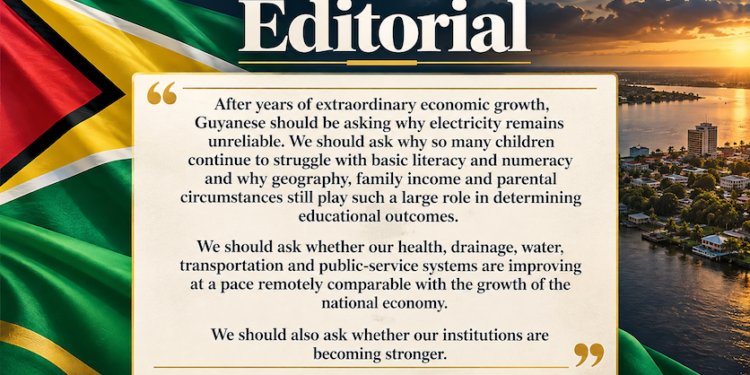
Guyana’s oil bonanza promised a once-in-a-generation opportunity: to invest in schools and hospitals, build resilient infrastructure, and lift entire communities out of poverty. But when a governing party narrows access to the levers of resource management — excluding broad swathes of society from meaningful participation — that promise curdles into patronage, inequality, and long-term social harm. The People’s Progressive Party’s approach to managing oil wealth risks transforming a rare national asset into a mechanism of exclusion rather than inclusion, with consequences that extend far beyond the balance sheet.
Resource wealth does not automatically produce shared prosperity. Without transparent institutions, robust oversight, and inclusive governance, resource booms often magnify rent-seeking, fuel political capture, and deepen inequality — the classic “resource curse.” The IMF has cautioned that resource wealth can entrench poor policy choices, create incentives for corruption, and heighten the risk of social conflict unless it is deliberately and inclusively managed.
Guyana stands at a dangerous crossroads. Commentators and analysts have warned that the architecture for distributing oil revenues — contracts, advisory appointments, and procurement streams — appears increasingly structured in ways that favour insiders and political allies. Such patterns corrode public trust and concentrate economic power in the hands of a few, while many ordinary citizens continue to face underinvestment in essential services.
Why does exclusion matter? Because deprivation is not an abstract economic concept; it is measured in sick children, hungry households, and squandered human potential. Poverty, food insecurity, and malnutrition remain stark realities in many developing societies. When oil wealth is not equitably managed, it fails to confront — and may even worsen — these social ills. Inclusive resource policy must be designed to reduce hardship, not entrench disparity.
When appointments and procurement decisions are confined to narrow circles, benefits tend to flow to political affiliates or external contractors rather than toward broad-based investments in education, healthcare, housing, and employment. That shortchanges equality and sows the seeds of long-term social fractures.
Oil revenue must be governed as a public trust. This requires three non-negotiable reforms.
First, transparency. Every contract, consultancy fee, and major expenditure tied to oil earnings must be published in accessible formats, with clear reporting on purpose and outcomes. Transparency deters corruption and enables accountability. Civil society, trade unions, and opposition representatives should be formally integrated into oversight mechanisms to scrutinise spending and identify deviations from national priorities. Public scrutiny is not political theatre — it is responsible governance.
Second, participatory budgeting and equity safeguards. Resource windfalls should be channelled into a comprehensive national development strategy that prioritises health, education, social protection, and climate resilience. That strategy must emerge from meaningful public consultation and incorporate protections for vulnerable groups. The allocation of benefits should be guided by measurable poverty and human development indicators so that resources reach those most in need rather than those most politically connected.
Third, institutional insulation and fiscal discipline. Institutions responsible for managing oil revenues — including sovereign wealth funds and fiscal oversight bodies — must be legally insulated from partisan interference and bound by clear fiscal rules that guard against boom-and-bust cycles. Independent audits, parliamentary oversight with cross-party representation, and judicial recourse must be standard features of the governance framework. International experience consistently shows that strong institutions are essential to avoiding the destructive patterns associated with the resource curse.
Excluding significant sections of Guyanese society from participating in the management of national wealth violates the principle that public resources belong to all citizens. It erodes dignity, fosters resentment, and narrows opportunity — outcomes fundamentally at odds with the developmental promise that oil was meant to fulfill.
Guyana’s oil wealth should unite the nation in shared progress. If it instead becomes a tool of exclusion, the cost will not only be economic. It will be measured in diminished trust, weakened democracy, and a future far poorer than the one we were promised.