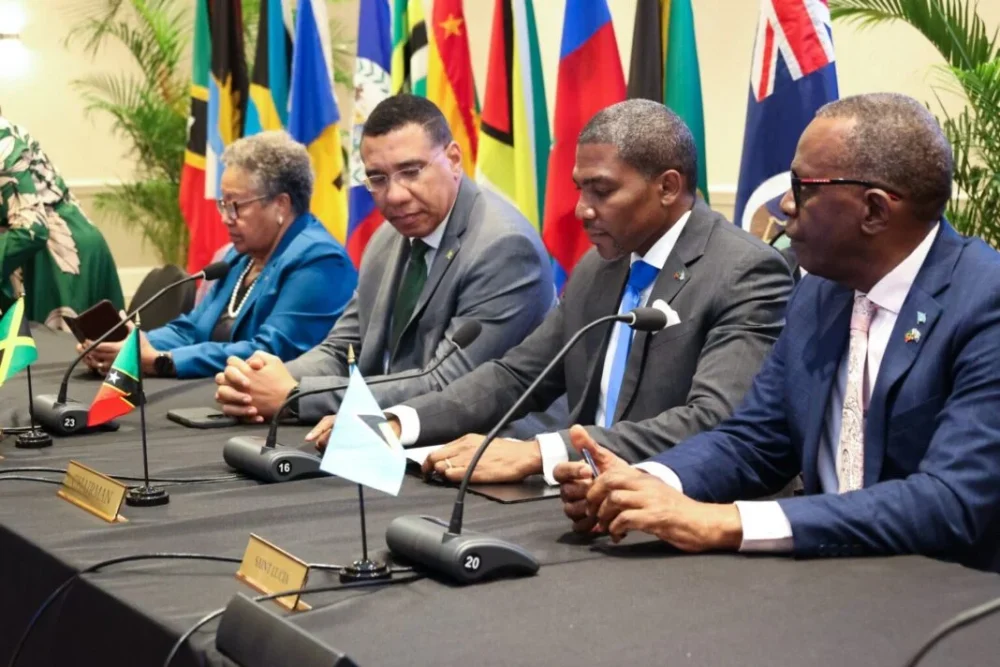
By Mark DaCosta- In a significant show of solidarity, the Caribbean Community (CARICOM) has pledged humanitarian support for Cuba, responding to an escalating crisis in the nation that has been heavily impacted by recent United States sanctions and a long-standing economic blockade. This commitment comes as regional leaders convene in St. Kitts and Nevis, led by Prime Minister Dr. Terrance Drew, who has affirmed the need for urgent aid to assist the Cuban people grappling with severe conditions.
The recent meeting of CARICOM heads of government culminated in an announcement that highlights the regional bloc’s unified stance on humanitarian issues. Dr. Drew, who is also a trained medical professional, has been receiving firsthand accounts of the plight faced by Cubans, particularly concerning food shortages, limited access to healthcare, and widespread power outages. The dire situation has been exacerbated by a US executive order, enacted earlier this year, which threatens to impose tariffs on any country providing oil to Cuba. As CARICOM leaders deliberated over the weekend, it became increasingly clear that a coordinated response would be necessary to alleviate the suffering of the Cuban population.
The Prime Minister articulated a swift commitment to mobilising aid, stating that CARICOM’s response would occur within a month, with further details to be provided in the coming weeks. Despite the eagerness from journalists for specific information regarding the type of aid, Dr. Drew remained vague about whether fuel would form part of the supplies due to ongoing complexities stemming from US policy. This reluctance highlights the delicate balance that CARICOM must navigate in providing assistance without provoking further diplomatic tensions with the United States.
Cuba’s humanitarian crisis is not merely an isolated incident; it is intertwined with broader geopolitical dynamics in the Caribbean region. Following the US’s efforts to oust Venezuela’s leadership earlier this year, Cuba has found itself without its primary supplier of oil, further hindering its capability to sustain public services. Consequently, the Cuban government has had to confront challenges including prolonged blackouts, garbage accumulation, and critical shortages in health services. Such conditions illustrate the depth of the crisis, making CARICOM’s intervention all the more timely and relevant.
Notably, CARICOM’s decision to assist Cuba is also reminiscent of historical ties, with Cuba having previously extended crucial medical support to various Caribbean nations over the years. This background underscores a shared history of cooperation within the region, and it reflects CARICOM’s moral obligation to aid a member of its own network facing adversity. The past record of the Cuban Medical Brigade providing healthcare personnel to CARICOM countries reinforces the value of solidarity among member states in difficult times.
Yet, the landscape of regional cooperation is complicated. In recent months, the pressures exerted by the US have led several Caribbean nations, including our own, to reevaluate their relationships with Cuba. Fears of being accused of endorsing forced labour or people trafficking have prompted a distancing from the Cuban medical support system. This retreat from formal agreements threatens to unravel the spirit of cooperation that has long existed within the region.
As the heads of CARICOM engage in dialogue with US officials, including Secretary of State Marco Rubio, the conversation has shifted towards a more comprehensive framework for future cooperation. It is encouraging to see the recognition of the need for a multifaceted approach to mutual concerns, including migration, trade, and humanitarian support. However, the lingering question remains: how will these discussions translate into tangible actions that benefit the Caribbean at large, especially those in crisis?
For our country, the implications of CARICOM’s stance are profound. As a member of this regional body, we must advocate for actions that prioritise the welfare of our neighbours while also considering the complex geopolitical realities at play. The historical connection between Cuba and CARICOM presents an opportunity for our nation to take a stand against the injustices that have long plagued the island. It becomes imperative for us to push back against any attempts at isolation that could further damage the livelihoods of our Caribbean family members.
Ultimately, CARICOM’s decision to support humanitarian efforts in Cuba must be seen as a crucial step in asserting regional identity and resilience. Still, it serves as a reminder of the complexities involved in international relations and the potential repercussions of foreign policy, particularly in light of external pressures like those from the United States. As discussions continue, it is our responsibility to remain vigilant and ensure that our region’s interests and humanitarian values are prioritised over political considerations.
In sum, CARICOM’s move to support Cuba amidst its humanitarian crisis reflects a commendable commitment to regional solidarity. It is now up to us, as part of the Caribbean Community, to uphold these values and advocate for the needs of the Cuban people while navigating the slippery slopes of international diplomacy. The journey ahead will require measured responses, resilience, and a steadfast commitment to our collective well-being as a region.