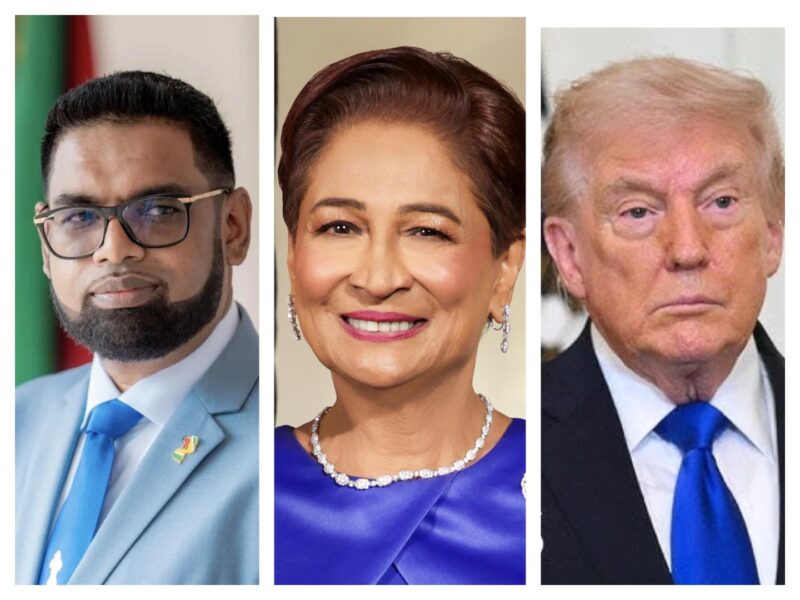
Guyana’s President Dr Irfaan Ali and Trinidad and Tobago Prime Minister Kamla Persad-Bissessar are expected to meet United States President Donald Trump in Miami on March 7 as Caribbean leaders navigate a shifting geopolitical landscape marked by tensions involving Venezuela, heightened U.S. security operations in regional waters and renewed diplomatic pressure from Washington on issues such as Cuba policy.
The planned talks come amid broader U.S. efforts to reassert influence in the Caribbean following military actions linked to Venezuela and expanded regional security cooperation. These developments have unsettled some Caribbean governments while intensifying debate over sovereignty, diplomacy and stability in the hemisphere.
The meeting is expected to address regional security, energy cooperation and wider foreign policy concerns, with analysts noting that Caribbean governments are increasingly balancing relations with major powers while seeking to preserve sovereignty and regional unity.
Security operations and Venezuela backdrop
The engagement follows heightened U.S. maritime operations across the Caribbean under security and counter-narcotics initiatives that have drawn scrutiny because of their proximity to Venezuela and broader geopolitical implications. The increased U.S. presence has fuelled regional debate over sovereignty and the potential role of Caribbean waters in Washington’s confrontation with Caracas.
Both Guyana and Trinidad and Tobago have maintained security cooperation with the United States, while other Caribbean leaders have stressed the importance of regional stability and the peaceful resolution of disputes as tensions with Venezuela persist.
Energy interests are also central to the discussions. Venezuela’s vast oil reserves and shifting U.S. sanctions policies continue to shape Caribbean energy diplomacy, particularly for Trinidad and Tobago, which has sought U.S. approvals for cross-border gas initiatives involving Venezuelan fields while balancing compliance with sanctions regimes.
U.S. pressure and Cuba relations
The meeting also unfolds against longstanding concerns over Washington’s efforts to shape Caribbean countries’ relations with Cuba. U.S. policy toward Havana — including sanctions and diplomatic pressure — has historically affected trade, financial transactions and cooperative programmes between Cuba and CARICOM states.
Washington has been seeking to influence Caribbean countries’ relations with Cuba as part of a broader policy aimed at intensifying pressure on Havana and limiting its diplomatic and economic engagement across the region. Despite this, many Caribbean governments have maintained close ties with Cuba, particularly in health care, education and disaster response cooperation.
Regional analysts say this dynamic has reinforced calls within CARICOM for respect for sovereign foreign policy choices and for engagement with Cuba without external constraints.
Balancing interests ahead of talks
Against this backdrop, Ali and Persad-Bissessar are expected to use the meeting with Trump to advance security and energy cooperation while articulating regional priorities on sovereignty, development and independent diplomacy.
For Guyana, the talks come as the country deepens its strategic partnership with the United States while managing its border controversy with Venezuela and expanding its role as a major oil producer. Trinidad and Tobago, meanwhile, continues to position itself as a regional energy hub while navigating complex relationships with both Washington and Caracas.
Observers say the upcoming engagement underscores the delicate balancing act facing Caribbean leaders — engaging the United States on security and economic matters while safeguarding regional autonomy and longstanding partnerships with countries such as Cuba.
Further details on the agenda and expected outcomes of the Ali-Persad-Bissessar-Trump meeting are anticipated ahead of the March 7 talks.