- Curriculum strengthens environmental education in hinterland schools
- Teacher’s handbook and tool kits formally handed over to educators
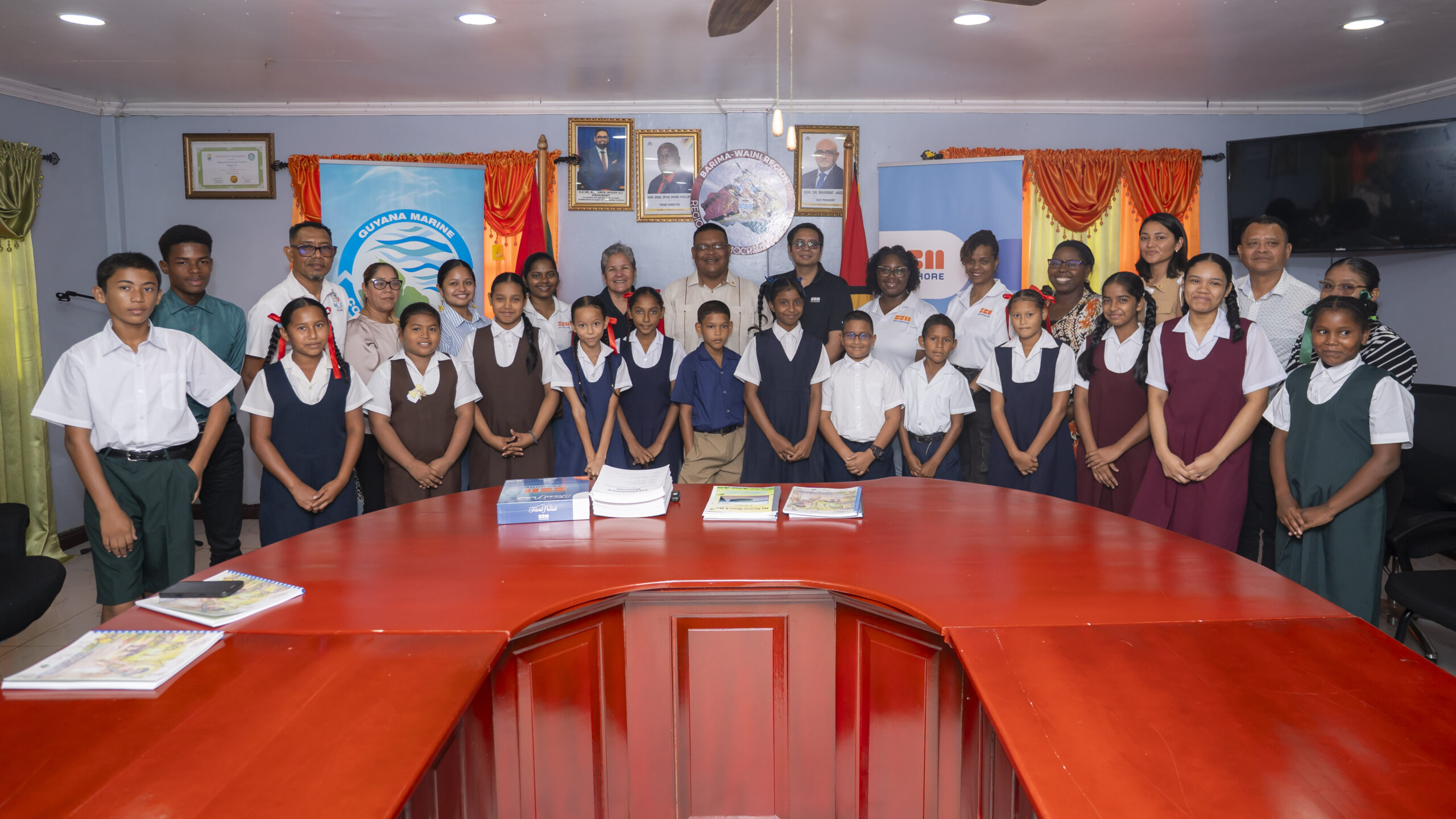
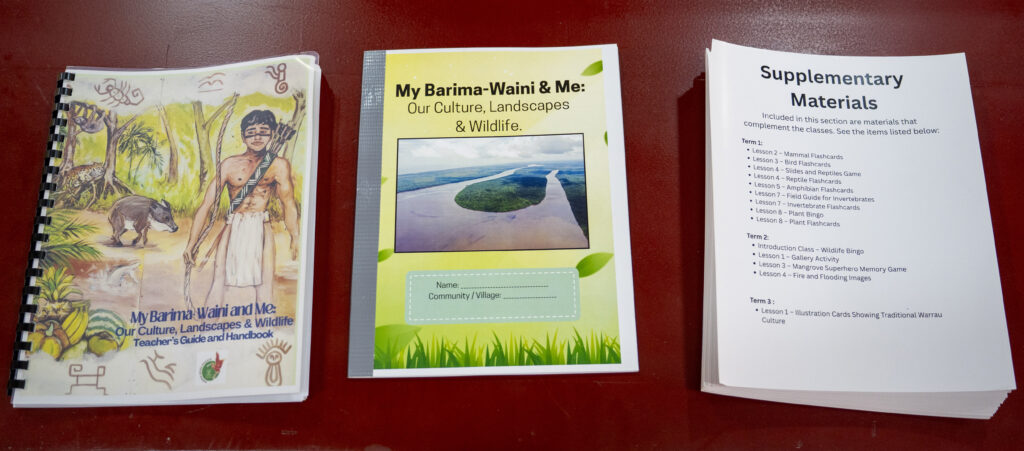
Mabaruma, Region 1, – Students and teachers in Region One are now better equipped to connect classroom learning with their environment, culture, and community following the official handover of the Environmental Education Curriculum (EEC), “My Barima-Waini & Me: Our Culture, Landscapes & Wildlife.” The handover ceremony, held in Mabaruma on February 4, marks an important step forward in strengthening quality education while promoting environmental conservation and cultural pride in hinterland schools.
The Guyana Marine Conservation Society (GMCS) has partnered with Indigenous communities in the Barima Mora Passage to conserve biodiversity, strengthen environmental education, and support sustainable livelihoods. Together with SBM Offshore Guyana, the Ministry of Education through the National Centre for Educational Resources Development (NCERD), the Regional Democratic Council Region 1, and the South Rupununi Conservation Society, a new Environmental Education Curriculum was developed to help students better understand their local ecosystems, biodiversity, and cultural heritage.
The curriculum integrates scientific knowledge, traditional wisdom, and experiential learning to strengthen teachers’ capacity to deliver engaging, culturally relevant, place-based lessons. The programme aims to inspire environmental awareness, cultural pride, and sustainable action among primary and secondary school students, empowering them as young stewards of their environment.
Structured across three thematic terms, the curriculum guides students through Animals and Plants, where they explore local biodiversity and the connections within ecosystems; Land, Water and Climate Action, which builds understanding of habitats, environmental challenges, and practical solutions for sustainable living; and Culture, Language and Resource Use, which highlights the value of traditional knowledge, craftsmanship, and cultural practices linked to the environment.
During the handover ceremony, Ms. Annette Arjoon-Martins, Co-Founder and Project Director of GMCS expressed, “We believe in the importance of partnerships, as governmental agencies, private businesses and other NGOs have helped to sustain our 35 years of operations that started right here in Region One.”
Ms. Maya De Freitas, representative of the South Rupununi Conservation Society (SRCS), provided an overview of the curriculum, highlighting that it builds on successful environmental education initiatives in Region 9. She noted that its development included extensive consultations and quality reviews, to ensure long-term value for both teachers and students.
Special remarks were delivered by Mr. Arth Austin, Education Officer at the NCERD who said, “The benefits of this teacher’s guide and handbook are more than far reaching; for our students it brings learning closer to home by connecting academic content to lived experiences.” His remarks were echoed by Mrs. Jocelyn Albert, Education Officer for Region One who emphasized the importance of the handbook in preserving Indigenous culture.
SBM Offshore Guyana’s Country General Manager, Mr. Martin Cheong, highlighted the deeper purpose of the initiative, stating, “What makes this curriculum especially important is its relevance. It brings learning to life by connecting lessons to what you see every day…. It encourages curiosity, pride, and understanding of both your natural environment and your rich cultural heritage.”
In his feature address, the Chairman of the Regional Democratic Council, Region One, Mr. Brentnol Ashley, reflected on global challenges such as climate change and emphasized the role of Indigenous peoples in environmental protection. He welcomed the Environmental Education Curriculum as a practical tool that connects learning to students’ daily lives, culture, and natural environment, and stressed the importance of education in hinterland communities for long-term development. The Chairman highlighted the value of partnerships and urged teachers and students to actively use the curriculum, calling for its implementation and monitoring to ensure meaningful results for communities over the coming years.
The ceremony also featured poetry by students, celebrating the deep connection between education, heritage and environmental stewardship. A key highlight of the event was the distribution of the EEC Teacher’s Handbook and Tool Kits, resources that will continue to support educators beyond the life of the project and help improve delivery. This curriculum will first be introduced in ten schools across Region One, including the following primary schools: Black Water, Lower Kaituma, St. Anselm’s, Unity Square, Aruka, St. Cyprian’s, St. Peter & Paul, and Hosororo; as well as Northwest Secondary and Hosororo Secondary.
GMCS and its partners remain committed to supporting education, sustainability and community development in the Barima Mora Passage and surrounding landscapes..