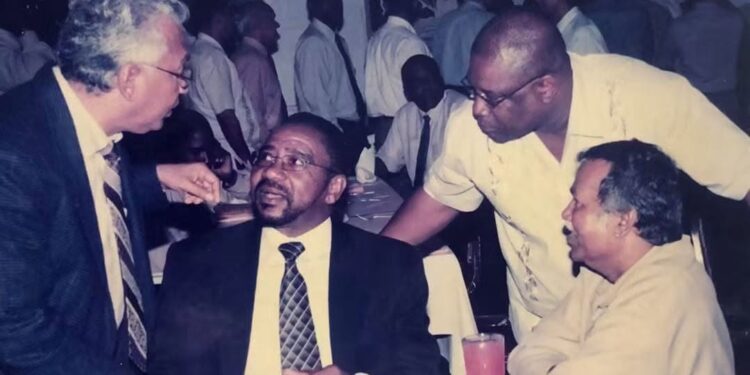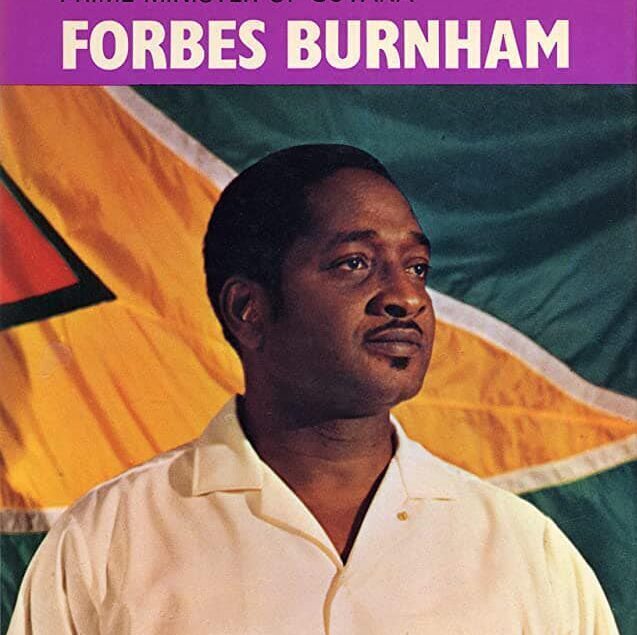
By B. Beniprashad Rayman-Today, February 20, marks the 103rd birth anniversary of Cde. Linden Forbes Sampson Burnham, the Father of the Nation whom I respectfully called Cde. Leader. For me, this is not simply a date on the calendar. It is personal. I worked with him in the field, in the party, the People’s National Congress, in Parliament, and campaigned for his re-elections. I saw the statesman on the platform and the human being behind the scenes. What remains with me most is not just his brilliance, but his belief, belief in Guyana and in Guyanese.
Cde. Burnham understood that independence meant little without infrastructure, institutions, and identity. He did not merely speak of nationhood; he constructed it.
Consider the Demerara Harbour Bridge. When it was commissioned in 1978, it was the longest single floating bridge in the world, a bold and historic engineering achievement. It connected East and West Demerara in a way that transformed commerce, mobility, and social life. It was more than steel and pontoons; it was a symbol of ambition. It told Guyanese that we could attempt what others thought was too difficult.
The Canje Bridge opened up communities in Berbice, improving agricultural transport and daily life. The Linden Soesdyke Highway linked the coast to the mining town of Linden and the interior, creating new economic possibilities and strengthening national cohesion. These arteries of development were part of a deliberate strategy to knit the country together physically so that it could grow together socially.
In agriculture, Cde. Burnham advanced transformative projects such as the Mahaica Mahaicony Abary scheme and the Tapacuma Irrigation Project. These initiatives expanded rice cultivation, improved drainage and irrigation, and empowered farmers to increase productivity. Canal No. 1 and Canal No. 2 road works strengthened coastal resilience and agricultural output. He understood that food security was national security.
He pushed industrialisation with equal determination. The Guyana Refrigeration Company, GRECO, produced refrigerators and freezers locally, tangible proof that manufacturing was possible here. The Sanata Textile Mill processed cotton, including from Kimbia, into fabric, creating jobs and reducing imports. The Guyana National Flour Mill ensured a local supply of flour. The Tapir vehicle assembly project sought to give Guyana its own automobile brand. The Caloi bicycle became a household name, affordable and practical for working families. The clay brick factory further strengthened local production, supporting the construction sector and reinforcing the ethos of self-reliance. These were not vanity projects. They were pillars of a strategy rooted in self-reliance, produce what you consume.
Cde. Burnham believed that a nation could not stand tall if its people were uneducated. His introduction of free education from nursery to university remains one of the most far-reaching social policies in our history. For thousands of families, including those from humble means, the gates of learning were opened wide. Scholarships were granted for advanced study abroad in medicine, engineering, law, and a wide range of educational development. Many of today’s professionals owe their opportunity to that vision.
I saw how seriously he took the development of our people. He would question policy details late into the night, not for show, but because he understood that institutions must be built carefully. He strengthened the Guyana Defence Force, expanded the Foreign Service, and ensured Guyana’s voice was heard regionally and internationally. In CARICOM and the Non-Aligned Movement, he stood firm, a nationalist, regionalist, and internationalist in one.
He also forged our national identity. The Golden Arrowhead, the motto One People, One Nation, One Destiny, the Coat of Arms, and the national anthem were not mere symbols. They were tools of unity. Long before social cohesion became fashionable language, he embedded the principle into governance. His respect for all Guyanese was also reflected in the elevation and celebration of diverse cultures, including the granting of national holidays for Muslims and Hindus, affirming that every faith and heritage formed part of the national tapestry. He respected indigenous culture and talent, expanded hinterland education, and insisted that diversity must not divide us.
To work alongside the Cde. Leader was to witness discipline and preparation. His oratory was commanding, his diction precise, his grasp of issues formidable. Yet in private moments he displayed humility and humour. He loved local culture. He respected ordinary citizens. He believed that leadership required both authority and accessibility.
History, of course, is complex. His era was marked by global tensions and domestic challenges. Debates about his governance will continue, as they should in any democracy. But structures do not lie. The bridges, highways, irrigation systems, factories, schools, and institutions remain. They testify to a period of intense nation-building driven by conviction.
When I travel across the Demerara Harbour Bridge, which should not have been disbanded, when I drive the Linden Soesdyke Highway, and when I see professionals who benefited from free education, I am reminded that nation-building is not an abstract ideal. It is concrete, steel, water, classrooms, and opportunity.
The Cde. Leader dared to believe that a small nation could think big. He dared to insist that Guyana would not merely survive, but stand with dignity. He sought to forge a mighty soul, and he laid the frame upon which generations continue to build.
For those of us who knew him, he remains not just a political figure, but a chapter of lived experience, a leader who believed deeply in his people and acted on that belief.
——————-
B. Beniprashad Rayman AA, has been a member People’s National Congress Reform (PNCR) since 1972, a member of the Party’s Elder Committee, and served as a Member of Parliament (1980–1989)