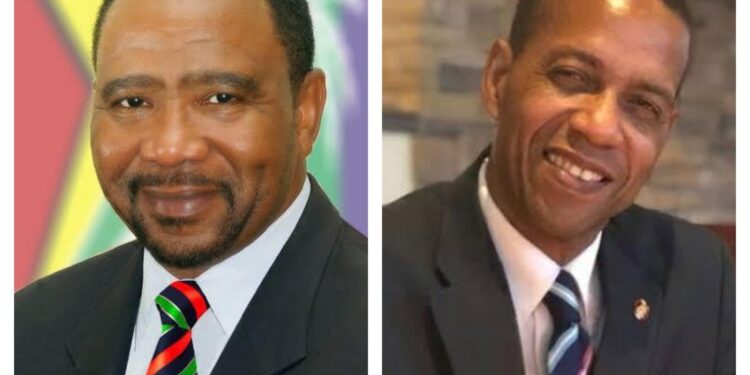
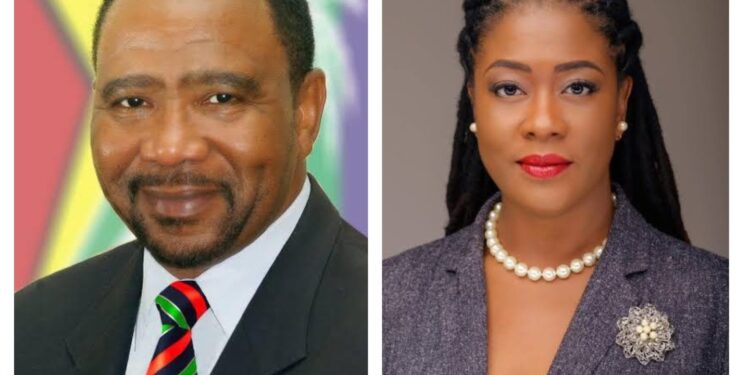
Head of the Guyana Office for Investment (GO-INVEST), Peter Ramsaroop, has drawn attention for dismissing opposition contributions to the 2026 budget debate as “nonsense,” a comment that has highlighted concerns about the tone of public discourse as Parliament examines the $1.558 trillion spending plan.
In a statement issued at the start of the debate, Ramsaroop urged investors and citizens to ignore what he described as recycled economic ideas being advanced by opposition parties. “You will hear a lot of noise this week,” he said, referring to opposition presentations as “predictable nonsense” and accusing familiar political figures of promoting policies that “failed Guyana between 2015 and 2020.”
“You can change your party name, your logo, and your colours, but you cannot change your record. Failure has a memory,” Ramsaroop added.
While seeking to contrast the government’s economic record with that of previous administrations, Ramsaroop’s choice of language stood out in a parliamentary debate expected to focus on policy scrutiny rather than dismissive characterisations of opposing views.
Ramsaroop defended the government’s economic direction by pointing to President Irfaan Ali’s Vision 2030, which he said is anchored in long-term growth, infrastructure expansion, education and skills development. “This growth is not accidental,” he said. “Guyana is building an economy by design—planned, disciplined, and focused on results.”
He cited the government’s 2020–2025 performance and Budget 2026 as evidence of progress, arguing that the opposition’s economic approach had already been rejected by voters. “No amount of political rebranding can resell a rejected product,” he said.
Highlighting key budget measures, Ramsaroop pointed to a $14.5 billion allocation to the University of Guyana, continued free tertiary education, expanded technical and vocational training, and state payment of CSEC and CAPE examination fees. He also noted more than $100 billion in cost-of-living and income-support measures for 2026, continued investment in gas-to-energy to lower electricity costs, over $200 billion for transport and logistics infrastructure, and the removal of taxes on agriculture and agro-processing.
Additional allocations include $159.1 billion for housing, with a target of 40,000 new homes, and $161.1 billion for healthcare.
“These are the fundamentals investors and citizens care about,” Ramsaroop said, adding that Guyana “is not recycling the past—it is designing the future.”
The budget debate is expected to continue throughout the week, with opposition parties set to respond to both the substance of the estimates and the tone adopted by government speakers.