

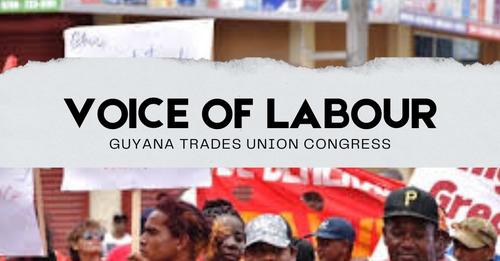
By Mark DaCosta- In tracing the evolution of the Labour Movement in our nation, it becomes clear that this struggle is not merely about securing better wages or working conditions; it has been a vital force in shaping our social and political landscape. From the early rumblings of the 20th century to the present struggles faced by educators, the trade union movement remains a pivotal chapter in the story of our country.
Historically, the Trade Union Movement emerged as a response to unsatisfactory working conditions, with the intent of advocating for the rights of workers — the backbone of any society. As early as the 1905 strike led by Hubert Nathaniel Critchlow against “starvation wages,” the seeds of organised labour were being sown. Critchlow, often celebrated as the “Father of Trade Unionism” in our nation, catalysed a consciousness that would evolve into a structured movement seeking dignity and respect for the working class.
The founding of the British Guiana Labour Union in 1919 marked a critical turning point, as it became the first registered trade union in the British Caribbean. This formal recognition was pivotal in laying down the legislative framework that allowed unions to thrive without being persecuted as “conspiracies.” The enactment of the Trade Unions Ordinance represented a victory for collective mobilisation, ushering in an era of more organised industrial relations.
The years following saw a shift from industrial-oriented demands to broader political aspirations. The formation of the British Guiana Trades Union Council in 1941 united various organisations under one umbrella, enhancing their capacity to influence governance and wage struggles. The brutal Enmore Martyrs incident in 1948, where colonial police shot five sugar workers, became a significant marker in the labour movement, galvanising public sentiment and making the case for political reform.
Throughout the decades, the relationship between trade unions and politics became increasingly fraught, particularly in the context of our country’s post-independence landscape. The descent into the Cold War era illustrated how external powers sought to manipulate local divides, as unions became embroiled in the longstanding rivalry between the People’s Progressive Party (PPP) and the People’s National Congress (PNC). Major strikes during this period, including the infamous 80-day walkout in 1963, showcased the immense power of organised labour but also illustrated how union aspirations could be co-opted by political agendas.
As we stand in the present day, the legacy of the trade union movement continues to unfold with ongoing industrial actions, notably highlighted in the recent teachers’ strike led by the Guyana Teachers’ Union (GTU). Here, the educators pursued not just better remuneration but the acknowledgment of their professional dignity in the face of a government that, despite claims of investment, has left many feeling undervalued and overworked. The GTU’s fight for collective bargaining rights reignites memories of past struggles, reminding us that securing workers’ rights is an ongoing battle.
Justice Sandil Kissoon’s ruling that protected the right to strike without the threat of salary deductions stands as a poignant moment in this continued fight, serving as a testament to the power of collective action. As unions advocate for improved conditions amidst a burgeoning economy characterised by newfound oil wealth, they continually stress the importance of valuing human capital — ia cornerstone for sustainable development.
Yet, the tension between government and labour remains palpable. The current administration’s failure to adequately address the needs of educators and other workers speaks to a broader neglect of social justice principles, which were foundational to the labour movement’s inception. The PPP’s track record, which many critics argue reflects a preference for political posturing over genuine engagement with unions, raises questions about its commitment to fostering an equitable society.
As our country continues to grapple with economic transformations, it is crucial to remember the historical context of our labour movement. The notion that “progress is never given; it is won, defended, and preserved” underscores the necessity for vigilance and advocacy. The authorities must realise that to undermine or ignore the labour voice is to jeopardise not only worker rights but also the fabric of democracy itself, as strong, independent unions are essential for holding governments accountable.
Our nation’s trade union movement is a rich tapestry of struggle, resilience, and achievement, punctuated with notable victories against oppressive regimes. The sacrifices of past leaders like Critchlow, Jagan, and Burnham laid the groundwork for the rights we observe today, yet the movement’s relevance remains as vital as ever. As we push forward, it is imperative to bolster the collective action that propels our society towards greater equity and justice, ensuring that workers’ voices echo loudly in the halls of power. It is a commitment to a fairer future — a testament to what can be achieved when men and women unite for a common purpose.





