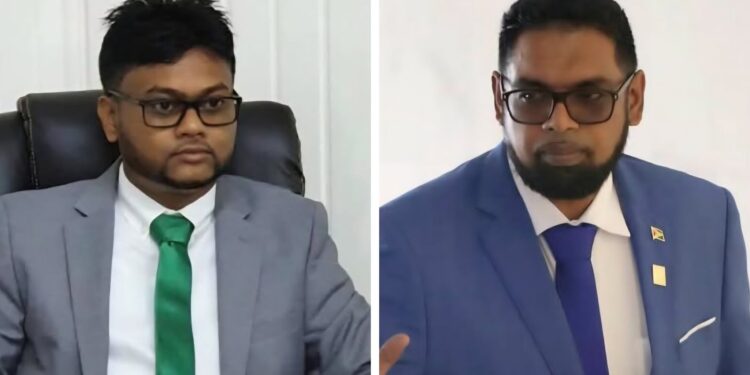
Over the past several weeks, I have taken careful note of what appear to be serious and troubling allegations of high-level, blatant corruption involving senior members of the People’s Progressive Party (PPP) government, including Ministers Susan Rodrigues and Zulfikar Mustapha. These concerns, widely discussed in public discourse and civil society circles, relate to questions surrounding the accumulation of substantial assets and properties in Guyana and abroad—matters that, to date, have not been adequately or transparently addressed.
What is most alarming is not merely the allegations themselves, but the apparent absence of decisive action by President Dr. Irfaan Ali. In a democratic society committed to the rule of law, the standard should be clear: when credible concerns arise about public officials, those concerns must be confronted openly, independently, and without political shielding. Yet, no such accountability process has been initiated in relation to these ministers.
The Guyanese people must therefore ask whether the PPP government has become embedded in a culture of tolerance toward corruption at the highest levels. If the President truly intends to lead a serious national fight against corruption, that commitment must begin within his own Cabinet. Shielding ministers from scrutiny—whether through silence, delay, or inaction—undermines public trust and weakens the very institutions meant to protect the integrity of the state.
In any functioning democracy, ministers facing serious public allegations would be expected to step aside voluntarily to allow for independent and impartial investigations. Such an action would not imply guilt; rather, it would demonstrate respect for transparency, accountability, and the offices they hold. To date, no such gesture has been forthcoming.
Equally concerning is the apparent inactivity of the Special Organised Crime Unit (SOCU). The public has repeatedly witnessed swift action by SOCU when ordinary citizens are accused of financial impropriety. The contrast is stark. When allegations involve powerful political figures, enforcement appears hesitant or nonexistent. This disparity raises legitimate questions about selective application of the law.
President Irfaan Ali has consistently spoken about good governance and accountability. However, leadership is measured not by rhetoric but by action—especially when difficult decisions must be made within one’s own political ranks. If corruption is to be confronted meaningfully, it cannot be addressed selectively or politically. The law must apply equally to ministers and citizens alike.
Until there is visible, independent investigation and genuine accountability, many Guyanese will remain unconvinced that the government is serious about combating corruption. The moment demands courage, transparency, and integrity—qualities that must be demonstrated, not merely proclaimed.