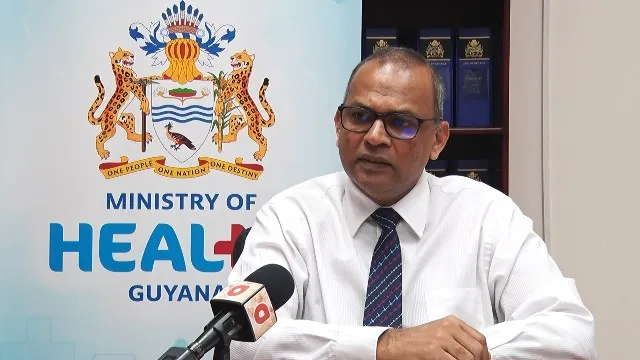
Health Minister Dr Frank Anthony has warned that failure to comply with clinical guidelines within Guyana’s health system will no longer be tolerated, as the Ministry of Health moves to strengthen accountability, supervision, and standards of care across disability and rehabilitation services.
Speaking at the Disability and Rehabilitation Services Managers’ Programme Review at Cara Lodge on December 29, Dr Anthony underscored that non-adherence to established medical guidelines can have grave consequences. He stressed that while guidelines are periodically reviewed and updated, they must be strictly followed until any formal changes are made, noting that lapses can result in serious harm, including loss of life.
As part of tighter oversight, Dr Anthony announced that the Ministry will establish a Quality Unit beginning next year to conduct clinical audits across regions and departments. The audits will assess compliance with clinical guidelines, identify service delivery gaps, and support corrective action. He made it clear that “persistent non-compliance, despite repeated interventions, will not be tolerated.”
The Minister also pointed to weaknesses in management and supervision, urging health managers to document performance issues accurately and address deficiencies honestly. He cautioned against overlooking recurring patient complaints, even when staff appraisals appear positive, stressing that accountability must be evidence-based and transparent.
Addressing rehabilitation-specific priorities, Dr Anthony called for stronger collaboration across departments, particularly in the management of diabetes, hypertension, and stroke care, as well as in preventing complications such as amputations. He reiterated government plans to develop a Neurological and Stroke Rehabilitation Centre that would consolidate comprehensive rehabilitation services under a single facility.
In addition, the Minister reaffirmed the government’s commitment to expanding access to prosthetics, wheelchairs, and other assistive devices, while exploring sustainable approaches to meet the rising demand for motorised mobility aids.
Meanwhile, Director of Rehabilitation and Disability Services Dr Ariane Mangar said the meeting outlined the Regional Rehabilitation Services Framework, aimed at strengthening, standardising, and expanding rehabilitation services across all administrative regions. She noted that the growing burden of stroke, amputations, trauma, chronic disease, childhood disabilities, and hearing impairment has made rehabilitation an essential component of healthcare.
“Rehabilitation is no longer optional or supplementary care,” Mangar stressed, describing it as critical to reducing long-term disability, improving functional outcomes, and ensuring safe discharge from hospitals.
The programme review was also attended by Director of Regional Health Services Dr Cerdel Mc Watt, Director of Primary Health Care Dr Ertenisa Hamilton, and other senior health officials.