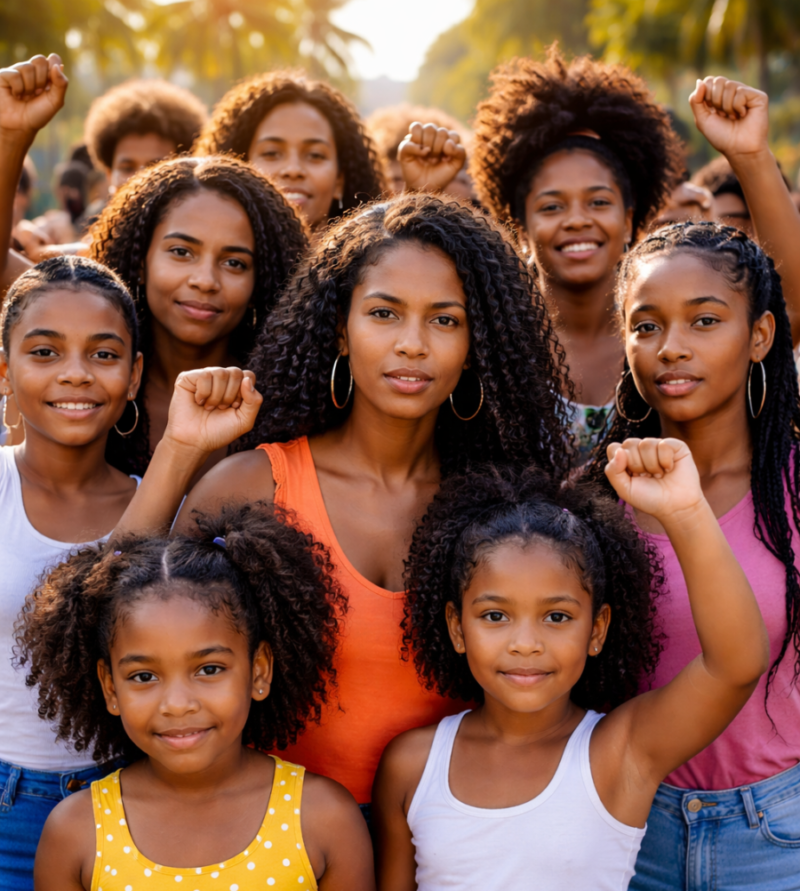
ChildLink Inc. has renewed calls for stronger protection, equality and accountability for women and girls, warning that despite decades of advocacy, many fundamental rights remain out of reach as Guyana approaches 2026.
In a letter published today, the organisation said it was “painful to acknowledge how little has changed for women and girls around the world,” noting that women continue to fight for safety, equality and freedom in their homes, workplaces, communities and online spaces.
The group pointed to historic gains made through the efforts of women’s rights advocates, including former United States Supreme Court Justice Ruth Bader Ginsburg, who won landmark cases in the 1970s that helped dismantle gender discrimination, and activist Tarana Burke, who founded the #MeToo movement in 2006. ChildLink said such efforts led to reforms in sexual harassment laws, school reporting systems and accountability for offenders, but stressed that the struggle for women’s rights remains ongoing.
Referencing a recent Stabroek News article titled “NGOs call for urgent reform of Guyana’s child marriage laws,” ChildLink highlighted what it described as grave human rights violations affecting girls in Guyana. Although the Marriage Act sets 18 as the legal age for marriage, the organisation noted that existing legal exceptions allow girls as young as 16 to marry with parental consent, and even younger in certain circumstances, including pregnancy.
According to ChildLink, these loopholes expose girls to exploitation, violence and lifelong inequality. The organisation said child marriage remains one of the most pervasive human rights violations facing girls in Guyana, which has among the highest rates of early marriage in the Caribbean. It warned that early marriage increases vulnerability to gender-based violence, disrupts education, creates serious health risks and entrenches cycles of poverty.
The organisation also raised concern about ongoing cases of femicide and violence against women and girls, stating that abuse continues to occur within families, workplaces and intimate relationships. Women and girls, the letter said, are frequently subjected to mental, emotional and physical abuse and are often treated “as vessels rather than as human beings.”
Addressing ongoing debates about the relevance of feminism, ChildLink argued that advocacy remains necessary because women continue to be silenced and controlled, reproductive rights remain under threat, harassment is often normalised and gender-based violence remains a daily reality for many.
The organisation called for stronger accountability for abusers, improved efforts to investigate and prosecute criminal cases, and safer conditions for survivors to report abuse without fear of retaliation. Women and girls, it said, must not remain statistics in the fight against gender-based violence.
“Real change must happen,” ChildLink stated, expressing hope that the coming year will bring meaningful progress toward safety, equality and justice for all women and girls.




![Chinese Premier Li Qiang speaks during the 54th annual meeting of the World Economic Forum in Davos, Switzerland, Jan 16, 2024. [Photo/Xinhua]](https://villagevoicenews.com/wp-content/uploads/2024/01/65a69e6da3105f211c8582b0-350x250.jpeg)