By Mark DaCosta- Azruddin Mohamed, leader of the We Invest in Nationhood (WIN) Party, has raised alarm over the allocation of $209.3 billion intended for roads and bridges. Despite this substantial investment, many crucial interior routes remain in a dismal state, exacerbating the struggles faced by communities that rely on them for their livelihoods. Mohamed has consistently underscored a range of pressing social issues, and this latest exposé further illustrates the inadequacies stemming from the mismanagement of national resources.
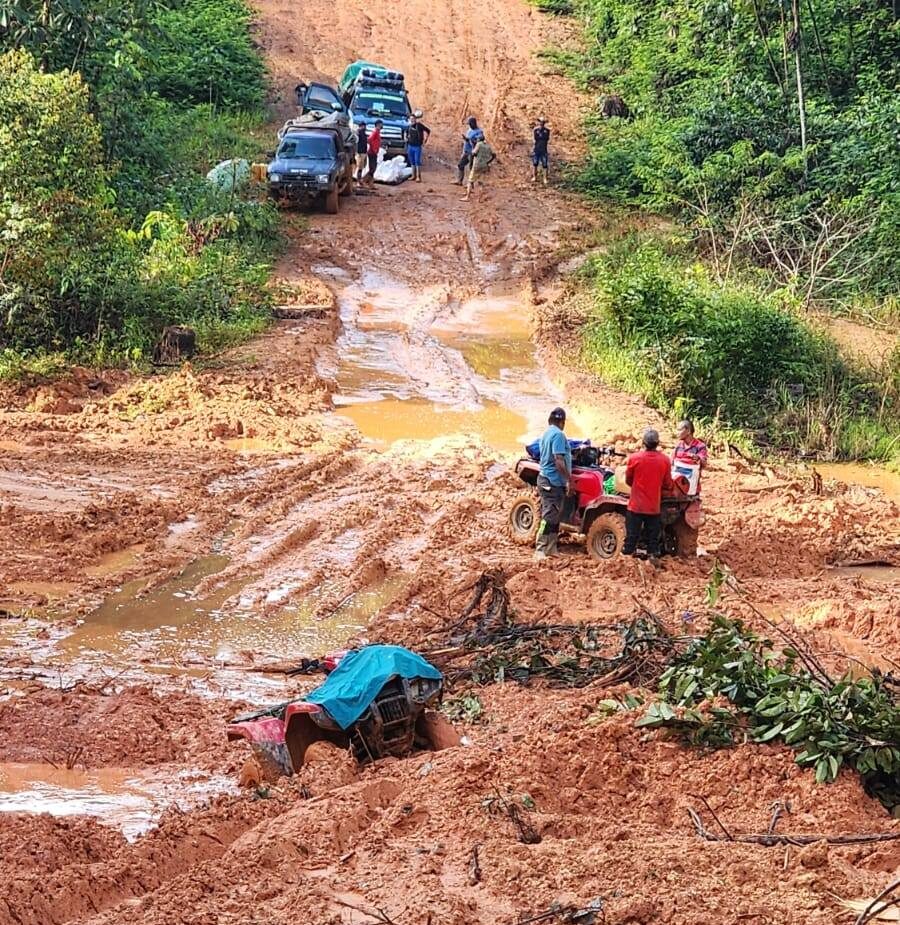
The roads, often constructed to serve expansive interior regions, have been reported as severely compromised, with significant portions remaining impassable. Poor construction practices have led to the deployment of inferior materials, notably mud, which has proven disastrous for durability and safety. The structural weakness of mud-related ventures leaves roads incapable of withstanding the rigours of use, often turning treacherous during adverse weather conditions. Observations made by Mohamed note that “mud is structurally weak because it holds water,” contributing to the hazardous and often unreliable travel experiences for individuals who traverse these routes daily.
Images depicting the harsh realities of these interior roads have emerged, including one striking photograph of a utility vehicle overturned on a precarious incline. The instability of the road surface, riddled with uneven patches and waterlogged sections, presents an imminent danger to transport operators, miners, loggers, and residents reliant on these critical connections. Mohamed underscores that “this is not an isolated situation; it has become routine,” emphasising the dire need for urgent action.
In addition to safety concerns, Mohamed has raised substantial questions regarding the integrity of the contracting process for road construction. Allegations of corrupt practices have marred the awarding of contracts, many of which are processed internally without public tender. The final approvals correspondingly rest with the Minister of Natural Resources, Mr Vickram Bharrat, prompting widespread suspicion surrounding oversight and accountability.

Reports of alleged kickbacks demanded by both the Minister and approving engineers further cloud the legitimacy of these contracts, leading to inevitable delays and financial drain on the public. As Mohamed articulately states, there is a pressing demand for transparency: “We call on the Ministry of Natural Resources to be transparent and to ensure better roads are built.”
The implications of these substandard constructions are far-reaching. The degradation of roads and bridges results not only in increased operational costs for businesses but also in heightened safety risks for those travelling. As transportation operators struggle with damaged equipment and delayed deliveries, the repercussions ripple throughout the economy. The ongoing disrepair essentially punishes citizens who rely on functional infrastructure to sustain their livelihoods.
Mohamed’s concerns resonate with many who have experienced firsthand the adverse effects of the current administration’s approach to infrastructure development. With his call for a more accountable and transparent process, he advocates for all contracts pertaining to road construction to be subject to public tenders and independent reviews. Such measures, he asserts, are essential to maintain quality standards while efficiently utilising public funds.
It is evident that the situation surrounding our road infrastructure warrants immediate attention and action. As communities continue to grapple with the implications of inadequate and potentially corrupt oversight, the government’s commitment to the welfare of its citizens is increasingly being called into question. Mohamed stands firm in his conviction, arguing for a collective demand from the public for greater scrutiny of how taxpayer money is being deployed in the name of progress.
In a nation that should be striving towards improvement and development, the evidence presented by Mohamed highlights a glaring inconsistency in the promises made to our people. The failure to adequately address these pressing concerns not only jeopardises safety and livelihood but also undermines the very fabric of trust in governance. The time for action is now, and the responsibility lies with both the officials in power and the citizens who rightfully demand accountability from their leaders.