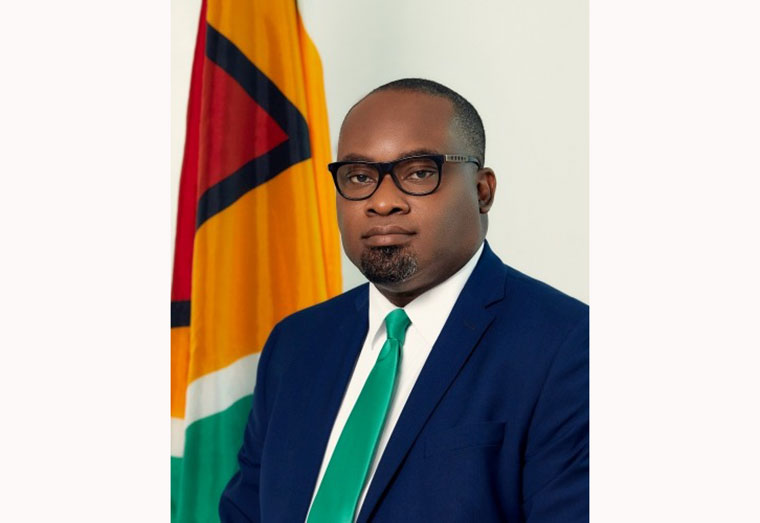
Political scientist and former People’s Progressive Party (PPP) minister Dr. Henry Jeffrey has delivered a has delivered a far-reaching assessment of Guyana’s governance trajectory, arguing that the PPP has systematically concentrated power, weakened democratic institutions, and overseen a worsening poverty landscape despite record economic growth. In his analysis, Jeffrey contends that after more than two decades in office, the PPP has “transformed [Guyana] into an autocracy/dictatorship that is impoverishing more and more of its citizens.”
Citing readily available global assessments, Jeffrey noted that poverty remains acute, with “a reported poverty rate of approximately 48% as of 2023,” while the Inter-American Development Bank estimates the figure closer to 58%. That means “some 400,000 people, almost half of the population of about 823,000, live in poverty,” he wrote.
Despite government cash grants, subsidies, and social programmes, Jeffrey maintains that these interventions have had limited structural impact and are often deployed with political intent rather than developmental design.
“The government’s haphazard cash-grants… defied planning and wealth creation and should immediately be replaced by a predictable type of basic income,” he argued, claiming that African Guyanese in particular — whom he estimates form “about 50% of the population” — have been “amorially and unlawfully targeted and made poor… to break their historic political allegiance” to the People’s National Congress/A Partnership for National Unity (PNC/APNU).
Jeffrey juxtaposes the current government’s posture with that of the Party’s founding leader Dr. Cheddi Jagan, whom he described as far more respectful of labour rights and balanced development. He recalled an incident from the early 1990s (around 1993) when Jagan intervened directly at Omai Gold Mines to insist on trade union recognition, noting that “trade recognition was non-negotiable.”
By contrast, he argued, today’s PPP leadership has presided over “the repression of democratic trade unionism,” especially within unions representing predominantly African workers. The unresolved decade-long impasse between the Bauxite Company of Guyana (BCGI) and the Guyana Bauxite and General Workers Union (GB&GWU) is presented as a prime example. Such regression, he said, has contributed to deteriorating working conditions and stifled wage growth, worsening ethnic economic disparities. Jeffrey urged the opposition to demand “an ethnic disparity analysis” to quantify the depth and origins of poverty across communities.
The former minister further argued that Guyana’s democratic backsliding is being captured by independent international bodies. He highlighted Guyana’s demotion to an “elected autocracy” by the V-Dem Institute and cited Transparency International’s warning that political and economic elites have “captured the state… fostering the misappropriation of resources, illicit enrichment and environmental crime.”
He also referenced the World Justice Project’s Rule of Law Index, which shows Guyana slipping from 73 to 80 between 2020 and 2025, alongside declines in constraints on government powers (58 to 69), corruption (66 to 74), open government (84 to 95), and fundamental rights (65 to 75). Jeffrey noted that many of these indicators had improved under the 2015–2020 Coalition administration.
The government’s defensiveness toward such assessments, he said, reflects the contradiction between its claims of democratic governance and the realities documented by observers. He pointed to the PPP’s dispute with the European Union Election Observation Mission, whose final report found that the 2025 elections unfolded in an environment “monopolised” by the governing party and declined to declare the elections free. For Jeffrey, these responses illustrate a broader unwillingness by the administration to accept scrutiny or reform.
Perhaps Jeffrey’s most sobering conclusion is that Guyana’s political culture lacks the civic backbone needed to correct the situation. Citing a 2021 USAID governance assessment, he stressed that “there is no ‘we’” — no unified civil society capable of demanding accountability, driving reform, or resisting authoritarian drift.
The assessment noted that “there is not a vibrant and sizeable civil society that can contribute to national reconciliation… Consequently, there is no cohesive public pressure for substantive political or electoral reform.” Jeffrey argued that ethnic polarisation remains the central barrier.
While the PPP has failed for decades to secure significant African support, “the vast majority of Indian Guyanese… continues to support it,” even as international indicators show democratic erosion. This dynamic, he said, prevents the emergence of the national consensus required to uphold constitutional guardrails or restrain political excesses.
Jeffrey concluded that Guyana’s governance model lacks the institutional mechanisms that democracies elsewhere rely on to curb executive power. The absence of meaningful checks, he argued, makes it impossible to replicate the accountability being exercised in other jurisdictions.
“Guyana does not have a constitutional/legal establishment with the kind of checks and balances that can enable what the political system of the United States is at present facilitating against President Donald Trump,” he wrote. In his view, Guyana remains trapped in a loop of ethnic loyalties, institutional weakness, and executive dominance — a system where democratic decay goes unchallenged because, as he puts it, “there is no political ‘we’ to hold governments accountable.”