As Saudi Arabia, Dubai, England, Australia, and the United States accelerate the rollout of flying-taxi technology, a provocative question is gaining momentum at home: Can the world’s fastest-growing economy reshape itself into a hub of innovation, or will Guyana continue prioritising brute extraction over brain-powered development?
An op-ed published today in the Village Voice News by Professor Shamir Ally, former Guyana Ambassador to Kuwait, underscores just how quickly electric vertical takeoff and landing aircraft (eVTOLs) are transitioning from futuristic concept to real-world infrastructure. Major economies are no longer planning—they are building, testing, regulating, and preparing for commercial deployment.
Professor Ally highlights that Saudi Arabia’s Sovereign Wealth Fund has partnered with Archer Aviation, while Dubai is integrating flying taxis into its national transport network. The United States, England, and Australia are similarly advancing certification frameworks, vertiport infrastructure, and pilot programs. As he writes, “Flying taxis are finally edging into real life.”
Meanwhile, Guyana — a country of fewer than one million people, with more than US$6 billion in oil revenues collected to date — remains nowhere on the innovation map.
A Development Paradox: Billions in Oil, Fewer Than One Million People — Yet Rising Poverty
The numbers reveal a striking contradiction:
-
Population: <1,000,000
-
Oil revenues to date: >US$6 billion
-
Poverty rate: 58%
-
Extreme poverty: 32%
Few nations enjoy such favourable development conditions: immense wealth, small population, natural resources, and strategic location. Yet Guyana continues to falter in translating these advantages into innovation, high-tech industry, or transformative infrastructure.
The question practically asks itself:
If far larger nations can pioneer flying taxis, what is Guyana — with fewer than one million people to serve — doing with its historic windfall?
A History of Innovation That Surpasses Today’s Reality
Guyana’s current stagnation is even more perplexing when contrasted with its past under the Forbes Burnham-led People’s National Congress (PNC) administration.
Decades ago — with no oil money — the country demonstrated resourcefulness, industrial capability, and engineering vision, which realised among others:
-
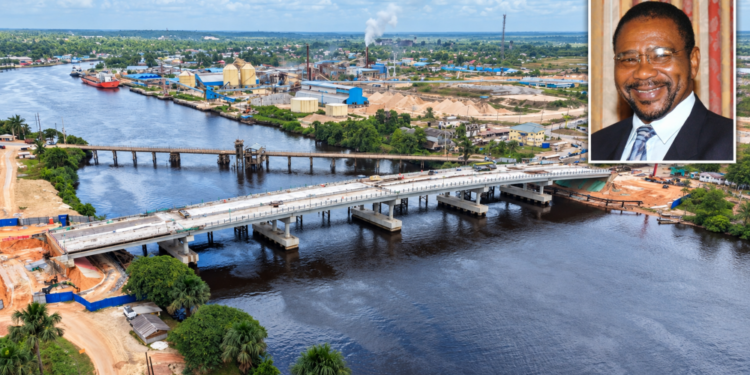
Demerara Harbour Bridge (once the world’s longest floating bridge)
-
Canje Bridge
-
MMA & Tapakuma irrigation schemes
-
Linden–Soesdyke Highway
-
The Tapir vehicle, locally engineered and manufactured
Guyana also produced:
-
bicycles
-
refrigerators
- freezers
-
glass
-
cassava flour
- rice flour
- plantain flour
- persevered local fruits
- Salted fish and meat
-
radios and stereos (GRECO)
These were home-grown achievements, built by Guyanese expertise and ambition.
Today, with billions in hand and far greater global exposure, Guyana has not produced a single major technological innovation or manufactured product of comparable national significance.
Why Other Nations Are Surging Ahead
Professor Ally’s analysis reveals a shared formula among innovation-driven states:
-
They trust and value their experts.
-
They create enabling ecosystems for new industries.
-
They invest in long-term technological development.
-
They treat innovation as fundamental to national progress.
Dubai is building vertiports.
Saudi Arabia is leveraging its sovereign wealth fund.
Australia is preparing flying taxis for the 2032 Olympics.
The United States is certifying new aircraft categories.
These governments view innovation as a strategic imperative.
Guyana treats it as an afterthought.
Can Guyana Build a Future Based on Brains — Not Just Barrels of Oil?
Placed in its national context, Professor Ally’s op-ed forces a deeper reflection:
What is holding back a country with fewer than one million people and billions in oil revenue from becoming an innovation leader?
Guyana enjoys every prerequisite for transformation:
-
a manageable population
-
record financial resources
-
rising global visibility
-
abundant technical talent
-
the opportunity to build smarter, greener, future-ready infrastructure
But political culture continues to prioritise centralisation, loyalty-based governance, and exclusion of independent technical thinkers.
A country cannot leap into the future while sidelining the very minds capable of building it.
The Crucial Question
With flying taxis on the verge of real-world deployment in major economies, Guyanese must now confront a defining national question:
Will Guyana harness the ingenuity of its people to build a modern, innovative future — or remain grounded by political inertia despite its wealth and tiny population?
- Saudi Arabia is preparing flying taxis.
- Dubai is integrating them.
- The United States and England are certifying them.
- Australia is planning to use them at the Olympics.
And Guyana — the world’s newest petrostate — is still debating basic poverty relief and institutional credibility.
The world is rising.
Guyana must decide whether it will rise with it — or remain grounded.