As Guyana’s newly minted oil elite gush over their president’s vision of a glistening future for all, the struggling slum residents living nearby face a reality which is closer to the bottom of the barrel.
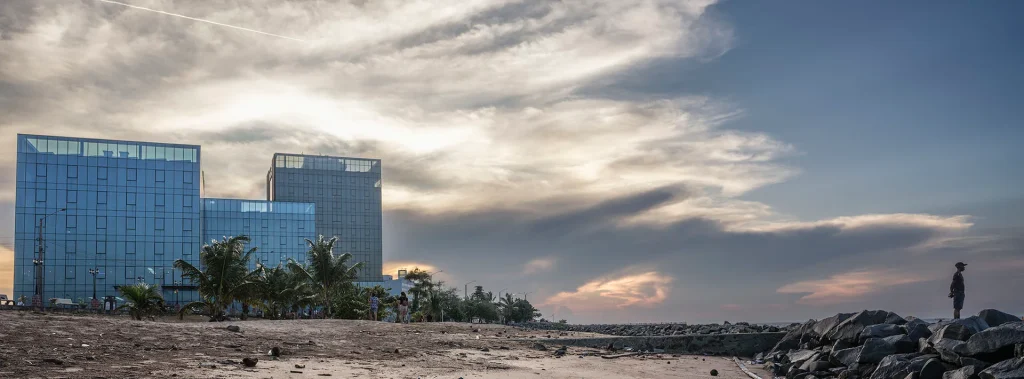
For the select coterie in President Irfaan Ali’s refined orbit, the venue is a new hotel for oil workers in an industrial suburb renamed Houston, perhaps in deference to Texas-headquartered ExxonMobil which is pumping billions in profit from Guyana’s recent crude boom.
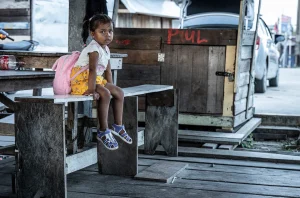
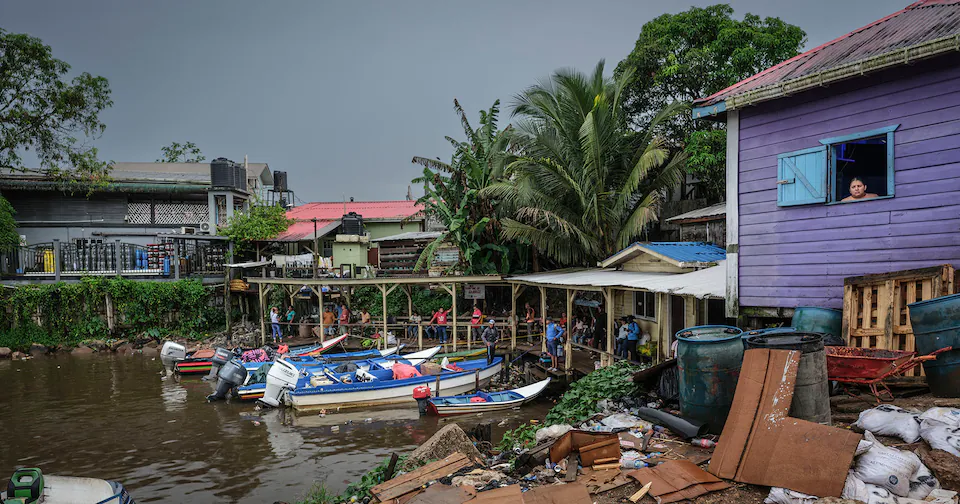
Five minutes away in the ghetto district of East Ruimveldt, 72-year-old Joseph Anthony and his daughter Shevy, 31, swelter in a tiny room with a leaking corrugated roof and dirt floor in an overcrowded warren of cramped shacks.
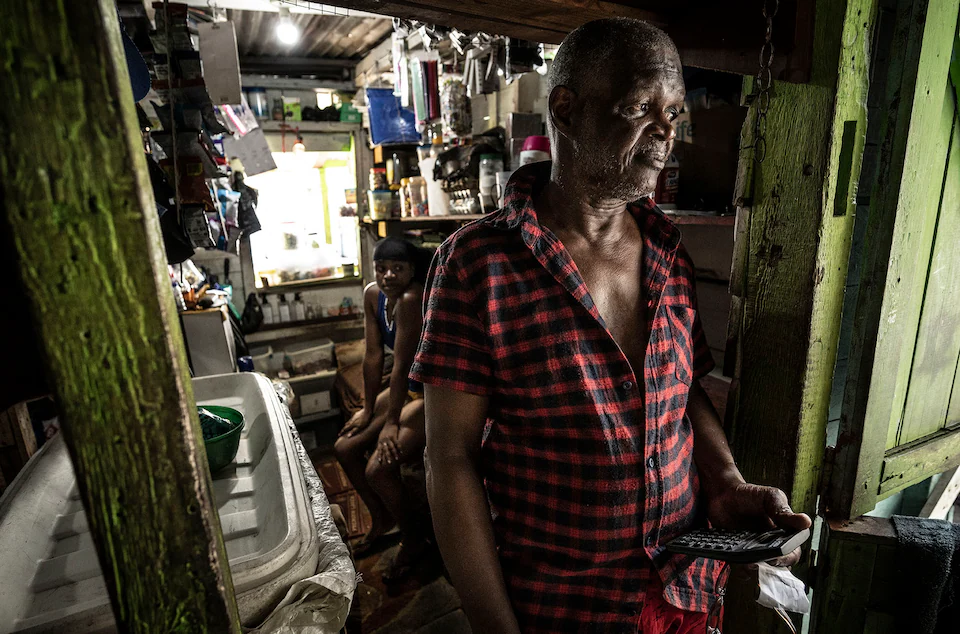
In this clammy, cockroach-infested space, they sleep on mouldy mattresses at night and sell groceries during the day yet barely have enough to make ends meet. For them, Joseph says, the start of offshore drilling in 2019 has brought only higher prices and resentment.
“As far as I’m concerned, the oil money is going straight into their pockets,” complains Joseph when asked about the benefits of Guyana boasting the world’s best GDP growth rates. “I have seen none of it, just things getting much more expensive.
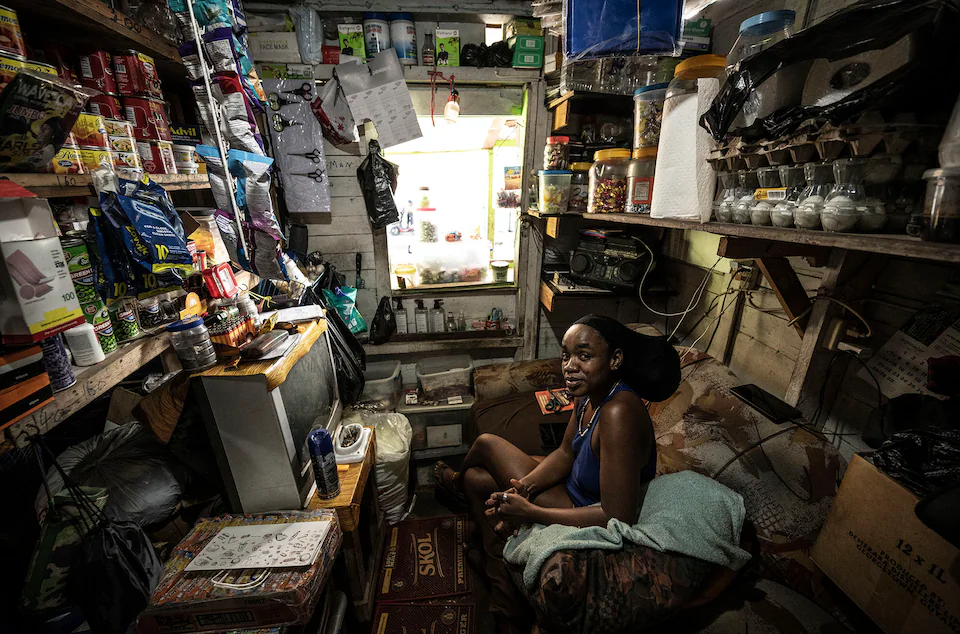
“They keep it for themselves, but we have no drainage, no toilet and no running water. When it all started, they made a lot of promises. Then they did all of these big construction projects to show off to the rest of the world, but people like us living in squats receive nothing.”
Joseph anticipates that his dilapidated home will soon be bulldozed to make way for more prestigious real estate in Georgetown. His neighbour Isol Etaagard, also 72, agrees, alleging that her government has failed to fulfil its promises.
“Look around,” she says, gesturing towards the dope-smoking gang members lingering on the opposite corner, “we are no better off here.”
Isol’s complaint is a familiar one which continually bubbles to the surface in conversations throughout the most deprived neighbourhoods of Georgetown. “I think most of the profit from the oil is going to America,” she correctly summarises.
Exxon – known as Esso in the UK – has the largest stake in Guyana’s Stabroek block 120 miles out in the Atlantic, a treasure trove beneath the seabed which should transform the fortunes of this under-developed South American nation.
But under the terms of the 2016 production and revenue-sharing agreement between Guyana and the oil companies – Exxon, China National Offshore Oil Corporation (CNOOC) and Chevron, which recently bought out the smallest partner, Hess, Guyana is certainly losing out, taking only 14.5 per cent of total revenues.
Guyana’s profit from the crude being drawn from the offshore platforms – which recently climbed to 800,000 barrels a day – reached $1.1 billion (£840m) last year. The Exxon-led consortium, however, made $10.4 billion (£7.9 billion) – nearly ten times as much – with Exxon’s Guyana subsidiary taking $4.73 billion (£3.6 billion).
It is, critics say, a classic example of how powerful oil giants foist deals weighted disproportionately in their favour on desperate developing countries when vast reserves are discovered. They justify this on the basis of the costs incurred in offshore exploration and development.
Under such one-sided terms, Guyana has become one of the cheapest and most profitable places in the world to drill for oil. Its government has revised terms for future contracts, but that is likely too little too late for the 11 billion barrels estimated to be in the Stabroek Block.
Despite that, economic growth climbed to a dizzying 63.3 per cent in 2022 before falling marginally to 43.6 per cent in 2024 – by far the highest in Latin America. In comparison, UK figures for the same years were 4.8 per cent and 1.1 per cent respectively.
There is no disputing that Guyana has enjoyed a five-fold increase in GDP per capita since 2019, but it could be so much more. And more significantly, it seems little of the wealth generated by the black gold gushing from the wells is trickling into the pockets of its poorest people.
Uneven wealth distribution means that up to 48 per cent of the population are still living on just over £4 a day, according to latest available World Bank data – one of the highest poverty rates in the region in spite of newfound riches.
Dr Vincent Adams, a former senior manager at the US Department of Energy who served as the head of the Guyana Environmental Protection Agency from 2018 to 2020, is one of the harshest critics of the handling of the oil bonanza.
He was involved in overseeing Exxon’s permit for the second phase of drilling but says he was removed from his post for standing up to the company over environmental obligations that would be standard in Europe or the US.
“When I was in the US at the Department of Energy, I had to deal with the presidents of all the biggest oil corporations in the world,” recalls Dr Adams, who played cricket for Guyana before emigrating to the United States. “And when we would say ‘Jump’, they say, ‘How high?’
“What happened in Guyana, like in other Third World countries, is the reverse. In these countries, guys from companies like Exxon normally control the politicians and they intimidate them, especially since the politicians do not have the kind of expertise to question anything they say.
“They basically laugh at what they can get away with. It’s a fact that they take advantage of these countries. There is no question about it.”
Dr Adams says that although Exxon and the other oil firms doubled Guyana’s royalty – the amount it gets as owner of the mineral rights – from 1 per cent to 2 per cent, President Ali, who first came to office in 2020 and was recently re-elected, “knows that it’s not a fair deal”.
“After Ali became the president, he himself said they will renegotiate, but of course Exxon wielded its power, and they backed off completely,” he said. “I don’t know what happened. It is exploitation, without question. The promises that have been made are empty promises.”
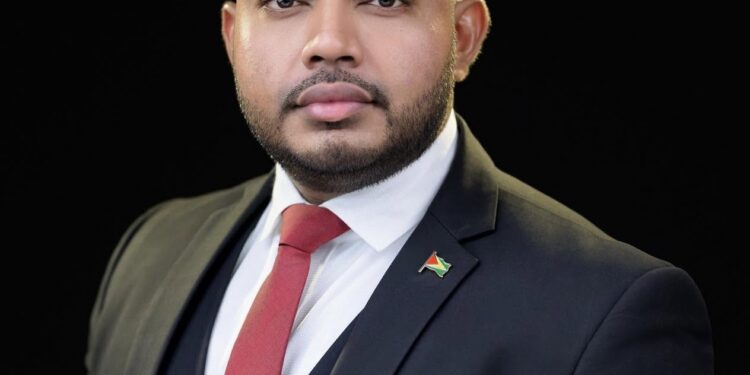
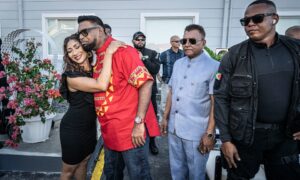
President Ali, unsurprisingly, presents a much more optimistic interpretation to the well-heeled VIPs who receive him with rapturous applause. As he strides from the presidential motorcade to the red carpet, he oozes high-octane confidence.
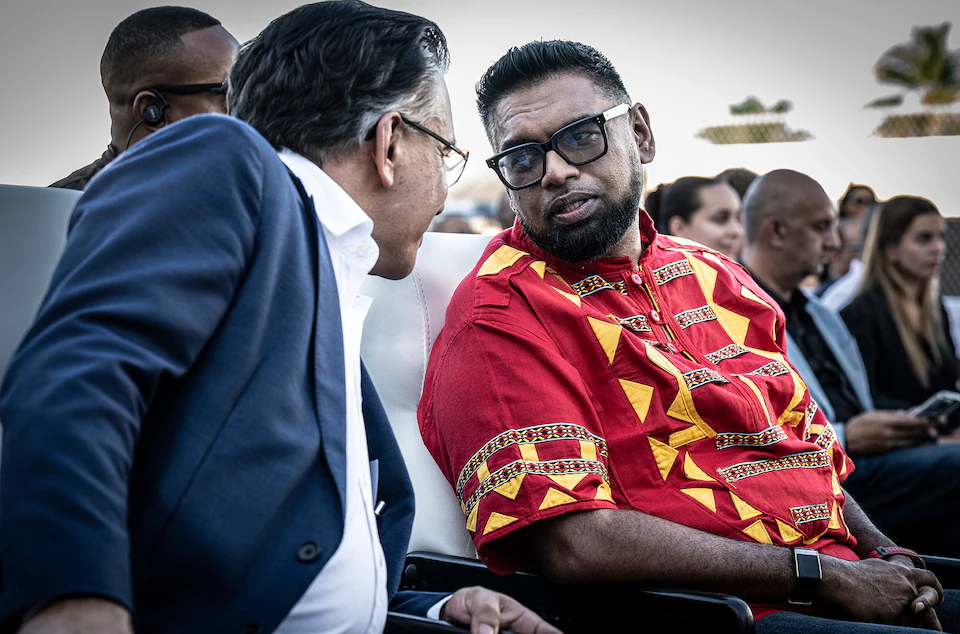
A tall figure dressed casually in a red shirt with traditional embroidered patterns, he wants to show off his plans for a new utopia to his admirers gathered in the nondescript Guyana Shore Base on the Demerara River. Even by the bombastic standards of Donald Trump, his projections of previously unimaginable riches are grandiose.
“This is not just about oil and gas,” he declares. “What we’re going to be building by 2030 is the most amazing, outside-the-box, imaginative, diversified, forward-looking economy the world has ever seen.

“We’re going to leapfrog this country into unbelievable places. We’re going to go through that with God on our side, and the people along for the journey.”
In a lengthy speech, President Ali goes on to detail how the oil fields, which are set to ramp up capacity to 2.2m barrels a day by 2030, will be accompanied by two large coal mines by 2027.
He informs the nodding and smiling dignitaries that Guyana will deliver ten years’ worth of productivity in only five years. Alongside that, he boasts, Guyana will soon have “a world-class healthcare system, second to none, world class education system, world class infrastructure and world class food system. It will be feeding the entire region.”
The speech is every leader’s dream – an enviable shopping list of positive development founded on oil profits rather than higher taxes. Judging by the clapping from President Ali’s attentive listeners, none of them doubt his words.
And there is some physical evidence of progress – circumstantial at least.
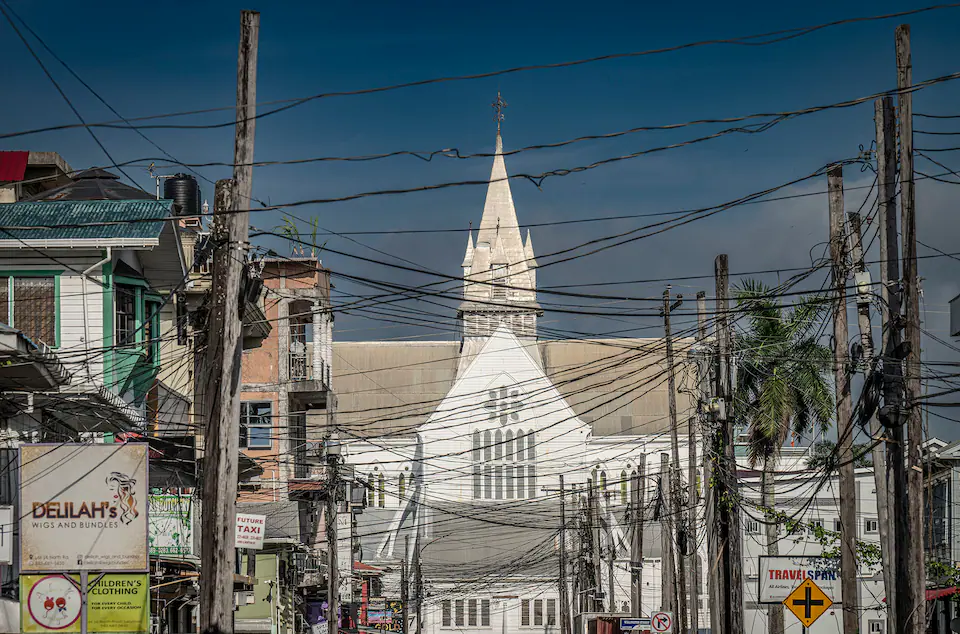
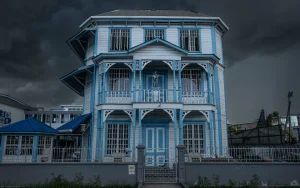
All around the city, Guyana’s claims to being the new Qatar protrude garishly from the colonial clapboard houses on Georgetown’s quieter, more charming streets. Big US hotel chains like Marriott have moved in, with room rates of between £400 and £600 a night.
A constant buzz of construction work is taking place along the roads leading to the international airport, where Florida-style villas have become a must for the affluent winners of the oil-derived expansion. For the majority, however, the only noticeable change has been ever-worsening congestion.
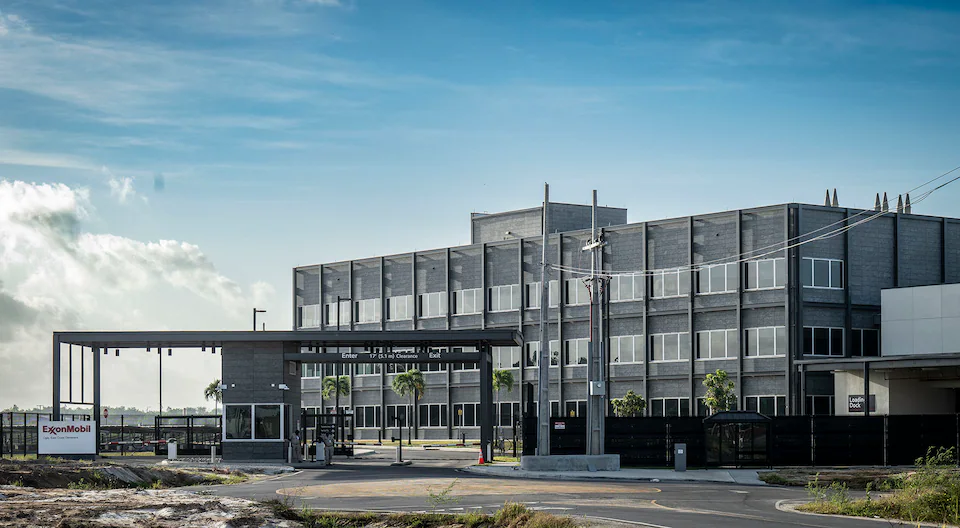
Exxon’s petrol-stained footprint is discreetly hidden away, with a huge office building at the regional airport from which rig workers fly out on helicopters. Elsewhere, a continual stream of men in hi-visibility vests re-equip the offshore platforms.
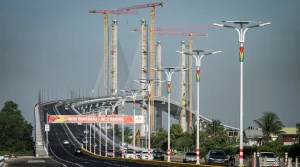
The most overt symbol of recent progress is the 3000-metre-long, four-lane Demerara River Bridge, which President Ali opened to great fanfare last month.
According to the government, the “landmark” project has cost £200m, most of which has gone to the China Railway Construction Corporation (CRCC) which won the contract to build it. All of that money came from oil revenues.
But with Guyana’s annual proceeds from the wells estimated to be at least £1.8bn, there remains a considerable amount left over. And evidence that the state budget has quadrupled since the start of the world’s biggest oil rush of recent times is not easy to spot.
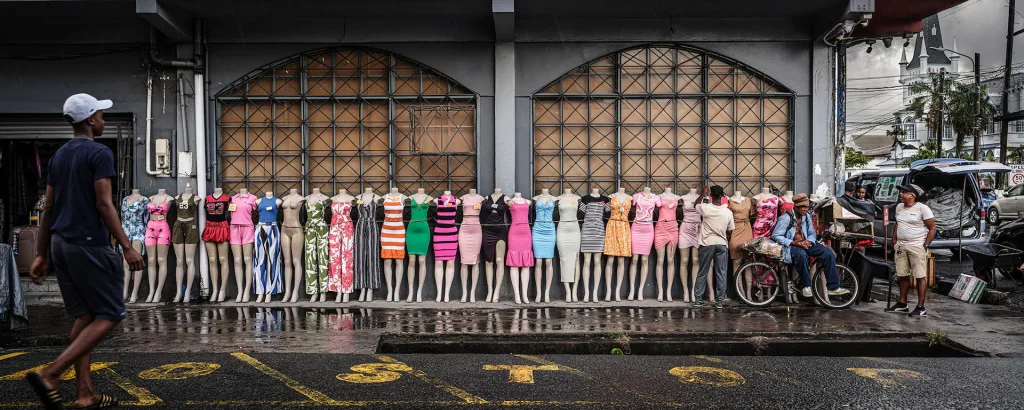
One of the strongest criticisms of Guyana since it became the world’s fastest-growing economy has been that only the inner circle is really reaping the rewards.
Many ordinary people believe construction contracts funded by oil money are going to a privileged few with high-placed connections. Instead of better welfare and health spending, money is instead going on high-profile infrastructure projects, in which spending is by nature difficult to keep track of.
Jean La Rose, Executive Director of the Amerindian Peoples Association, which represents Guyana’s indigenous citizens, around 10 per cent of the total population, is scathing.
“Corruption – the perception of corruption and actual corruption – is very rife in all sectors and across all regions of Guyana,” she tells me. “Although we are projecting to be the fastest growing economy in the world, our legislative and legal framework is lacking despite a commitment to making Guyana a modern state.
“There is no independent audit that enables us to say exactly what we are getting from the extractive industry sector and how that is translated into the national budget.”
“The corruption is just rampant, which is what only happens in these poor, oil-producing countries,” agrees Dr Adams. “And that’s the problem. They do not follow the rule of law and checks and balances.
“We started producing oil in 2019. It’s been six years, and we still have half of the population living on less than $5 per day while at the same time the top 5 per cent, the friends and families of the administration, are getting all the money. 90 per cent of the people getting these construction contracts, the ones who are becoming millionaires, are associates of theirs.”
Positive opinions are hard to come by in Georgetown’s bustling Stabroek Market, although a hardy band of enthusiastic government supporters is out in force ahead of the bridge unveiling.
Close to the jetty from which oil company workers are ferried to their harbour re-supply base, 57-year-old Paula Paulette gesticulates furiously while buying vegetables. Prices have risen again, she moans.
Mother-of-three Paula tells me she has recently undergone chemotherapy for breast cancer. Assailed by unmanageable prescription charges, she is understandably angry.
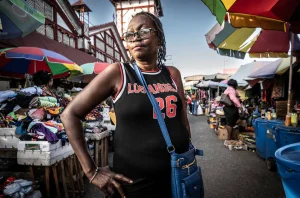
“Guyana is now a big, oil-rich country and I can’t even afford a bed,” she grumbles. “It’s corruption. Exxon is pumping out all of that oil. Where is all that money going? They are snatching it! We are struggling more than ever. What a nonsense.”
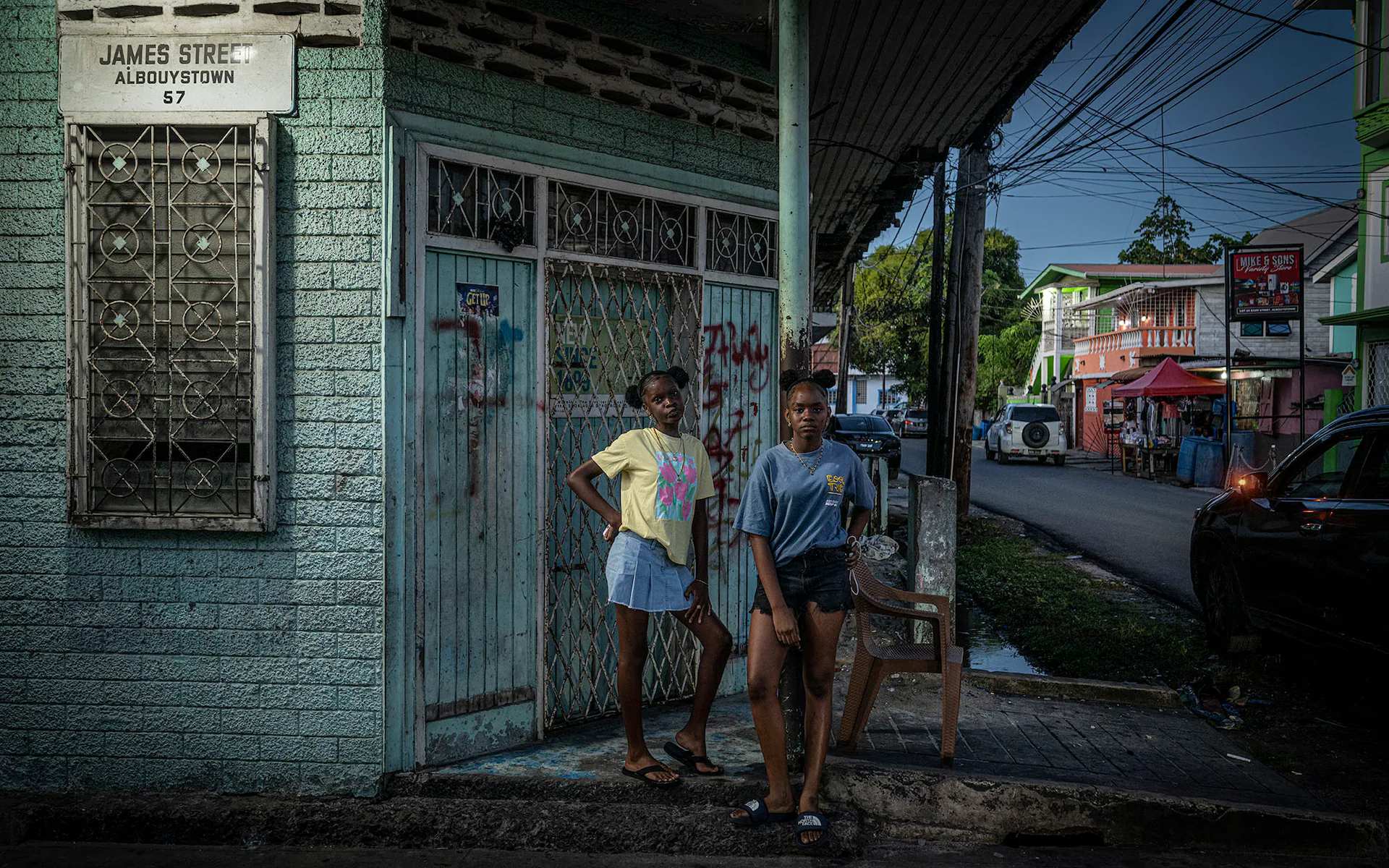
In Albouystown, one of Georgetown’s most notorious neighbourhoods because of its high crime rate, battered cars with deafening sound systems prowl slowly down narrow streets. Armed robberies are commonplace, I am warned.
Here, Destry and Kahtaylah, both 14, tell me they are optimistic for the future.
“The oil is going to make life better,” claims Destry, “there is going to be more money and more jobs for young people like us. So far it hasn’t come to my family, but it will.”
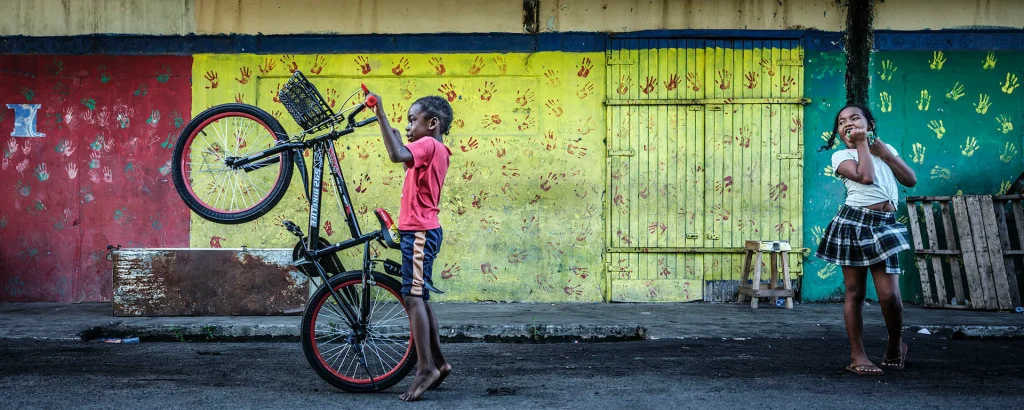
Despite the construction boom on Georgetown’s periphery, the newfound prosperity has certainly not reached the appropriately named town of Charity, a drab, quietly despairing place that marks the literal end of the westbound road out of the capital.
Most of Guyana is not yet linked up by the road network.
As soon as darkness falls, the bustle at the wooden landing which provides Charity’s commercial hub dies down. A barmaid passes drinks to a handful of silent, grim-faced drinkers from behind a metal grill.
Terence Williams, 35, and wife Janell, 22, live here in a crumbling stucco house with their three children and large extended family. In total, there are 17 people – seven adults and ten children – sleeping in only two rooms.
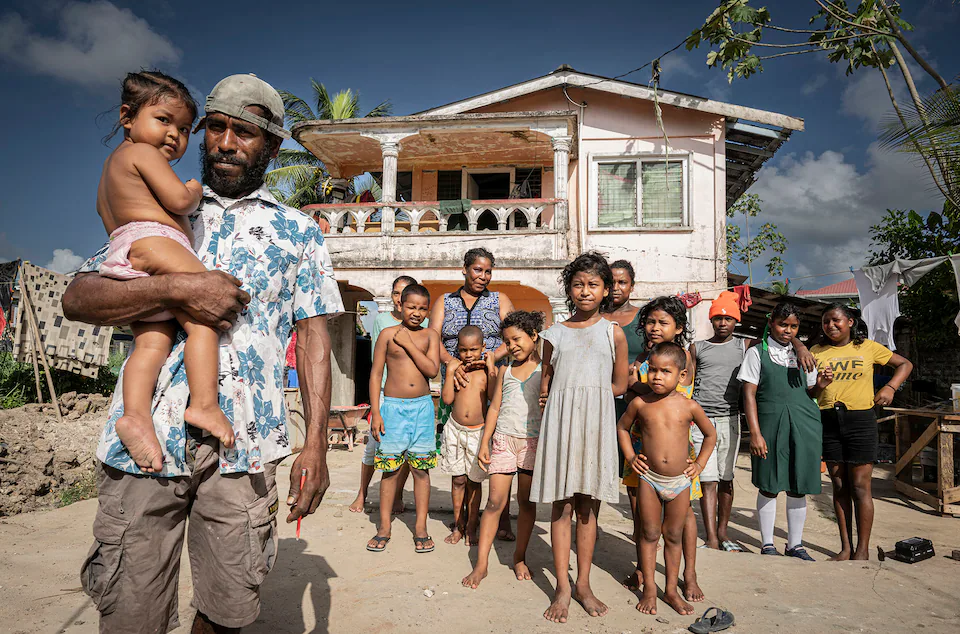
“The oil keeps pumping every day, but people like us are not seeing anything from it,” Terence complains from the meagre stall out front which provides their only income.
Guyana’s full-blooded first fling with Big Oil is an experiment which might soon be mirrored along South America’s northern tip as the region tilts towards increasing production in the face of global pressure for clean energy.
1,200 miles to the east, Brazil is pushing ahead with plans to pump crude from new offshore platforms close to the mouth of the Amazon.
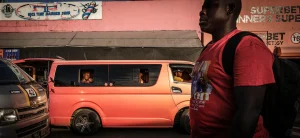
Suriname, Guyana’s immediate neighbour, intends to start offshore oil production in 2028, operated by the French company Total, despite long promoting itself as a net negative emitter of carbon.
Most attention is focused on Venezuela, which has the world’s biggest known oil reserves, as President Trump weighs up military action to oust its revolutionary socialist leader President Nicolás Maduro.
Even though Venezuela’s reserves dwarf Guyana’s, its production has reduced to an inconsistent dribble because workers fled the state-owned company when their salaries could not keep up with hyperinflation.
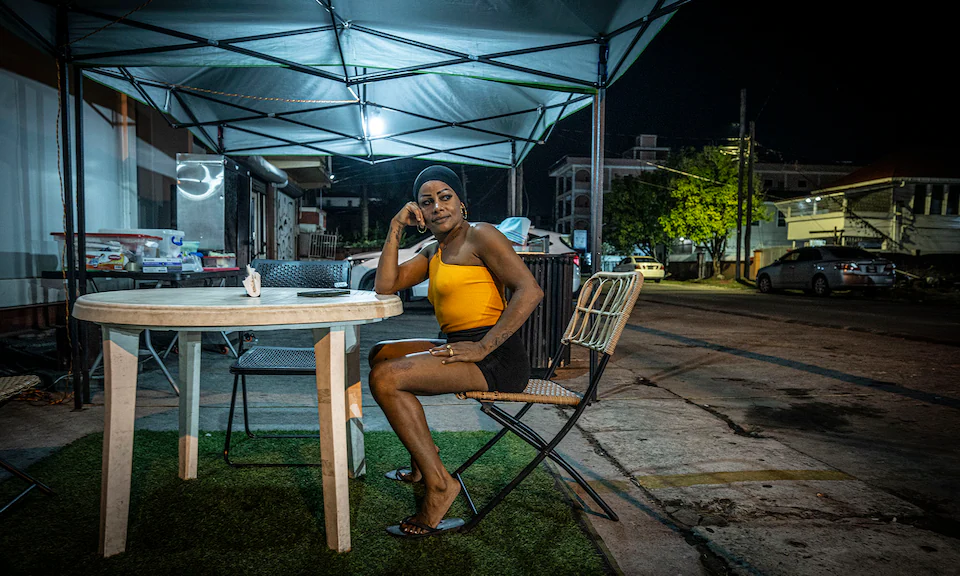
It means that Guyana remains a magnet for Venezuelans, where an economic crisis characterised by widespread hunger and unemployment levels of 44 per cent prompted millions to flee over the border.
If Maduro is overturned, however, Exxon, Chevron and Total will surely be first in line to set up similar deals.
But for now, the widening gulf between the neighbouring nations is such that Venezuelans represent roughly 3 per cent of Guyana’s population.
Certain districts of Georgetown are visibly dominated by these refugees. Among them is Catalina Betemy, 41, originally from Ciudad Bolivar, who spends her evenings selling hot dogs from a street corner stall.
“I came to Guyana because there was no way of earning money back home,” she admits. “I brought my son with me. He has a much better chance being here. Many of my friends are here too. We all took the same path. I much prefer living in Guyana. It’s a more relaxed place. Since the oil, they have money to spend.”
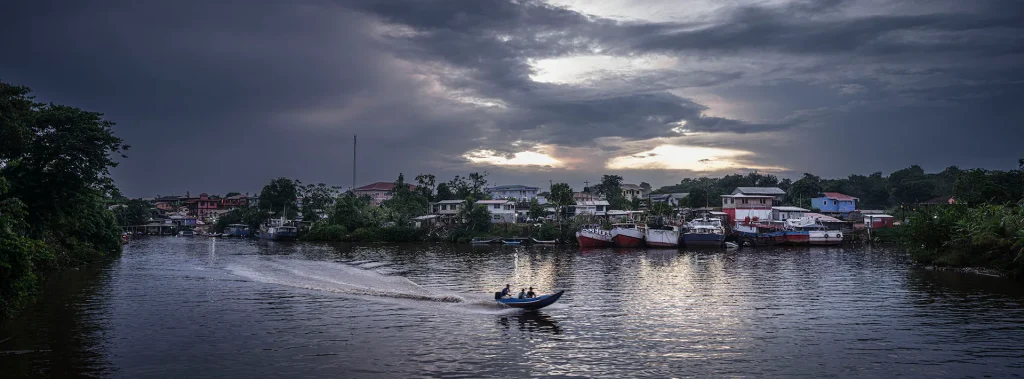
Also prominent in the oil-infused black-market economy sustained by recent economic migrants in Georgetown are sex workers from Venezuela and other struggling Caribbean states like Cuba and Haiti. They stand on the kerbs on the central boulevard at night.
“Because of the economic situation in their countries, coupled with the oil boom, a lot of them have been coming here for work,” explains Ohio Thompson, head of the Guyana Women Miners’ Organisation, which helps young migrant women held at gold mines deep in the rainforest. “A lot of them disappear into the hinterland; they start out trying to sell food or work in the mines but are then trafficked into prostitution.”
With oil royalty and export revenue projected to reach nearly £6bn by 2040 – a lot for a country with about 1.5 per cent of the UK population – Guyana will undoubtedly retain its allure.
Meanwhile the poorest are waiting impatiently for the promised flood of oil affluence, or at least some trickle down. For now, there is not much evidence of that at all.
The Telegraph