By Mark DaCosta- The recent general and regional elections were marred by allegations of unfair practices, highlighting persistent issues of political bias and shortcomings in the electoral framework. The European Union Election Observation Mission (EOM), which deployed its team to oversee the electoral process, provided an insightful assessment that sheds light on the complex realities on the ground.
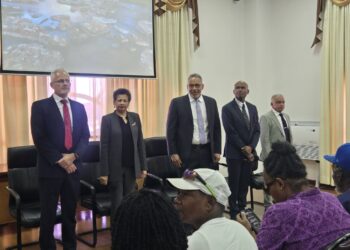
Comprising 50 observers from 26 EU member states and Norway, the EOM aimed to monitor all aspects of the electoral process, evaluating compliance with both local legislation and international electoral standards. Led by Chief Observer Robert Biedroń, who represents Poland in the European Parliament, the mission was on the ground for an extended period, allowing for a comprehensive view of the situation surrounding the elections held on 1 September 2025.
While the elections were deemed to have taken place in a largely peaceful environment, there was a notable undercurrent of deep political division, a legacy of past electoral conflicts, particularly those stemming from the contested 2020 elections. Six political parties competed for voter support, including the long-standing People’s Progressive Party/Civic (PPP/C) and a new contender, We Invest in Nationhood (WIN), which is attempting to break historical ethnic voting patterns.
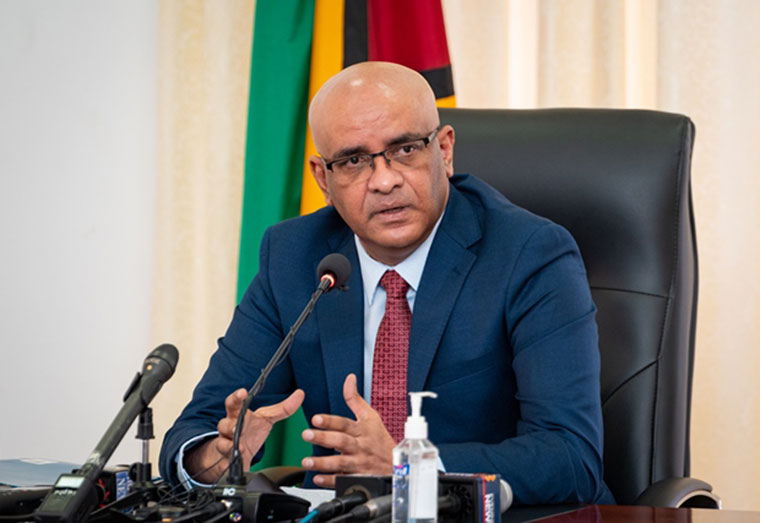
The Guyana Elections Commission (GECOM), responsible for overseeing the electoral process, managed the administration efficiently, yet its structure remains tainted by political affiliations. The perceived bias has, as noted by the EOM, undermined trust among opposition parties. There were claims regarding the use of government resources to favour the ruling party, raising concerns over the fairness of the electoral playing field. “The undue advantage of the ruling party… distorted the level playing field,” the report emphasised, with serious allegations regarding the misuse of public funds and resources during the campaign.
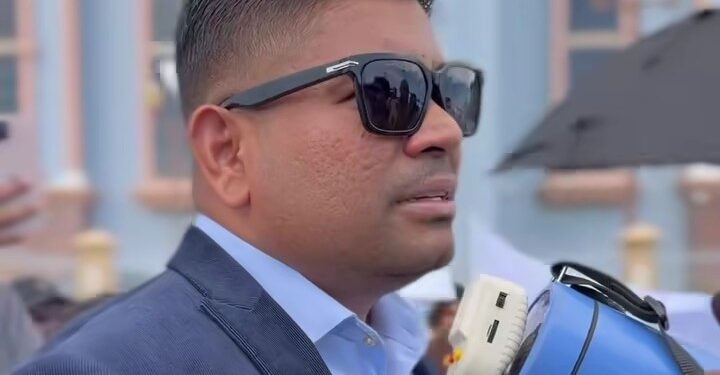
Political campaigning was characterised by a confrontational atmosphere, especially in the lead-up to the election, with instances of aggression and tension. A significant expression of this discontent was found in the rhetoric surrounding WIN’s presidential candidate, Azruddin Mohamed, who faced a campaign of intimidation involving sanctions making it difficult for him to operate freely. Reports indicated that over 70 members affiliated with WIN had their bank accounts closed, raising grave questions about the transparency of the political environment.
The electoral landscape highlighted several issues with the accuracy of the voter list, which was disputed by opposition parties that argued it could be inflated. “Opposition parties questioned the accuracy of the voter list, claiming it was inflated,” the EU’s findings noted. This speculation, combined with unreliable population data, cast a shadow over the integrity of the voting process. Additionally, the lack of access to information and the disenfranchisement of prisoners further complicated the election framework.
In terms of candidate registration, GECOM facilitated an inclusive and timely process, with all six political parties meeting the legal requirements, including gender representation among candidates. However, these numbers do not diminish the fact that systemic barriers persist, particularly for minority groups and those with disabilities, who continue to encounter significant obstacles to full electoral participation. Accessibility concerns were amplified as many polling stations failed to accommodate individuals with mobility challenges adequately.
The media landscape surrounding the elections further illustrates the challenges to democratic engagement. Although there were a few independent outlets, the overwhelming majority of media coverage was biased in favour of the ruling PPP/C party. The EOM described the media environment as “vibrant but highly polarised,” pointing out that state-run channels heavily favoured the government, leading to limited access for voters seeking impartial information. State-funded broadcasts frequently neglected opposition voices, which only served to perpetuate inequality in the pre-election narrative.
In the realm of campaign finance, significant gaps were identified. The EU assessment found that the regulations governing financial transparency were insufficient, highlighting outdated expenditure limits and a lack of regulations surrounding digital and social media campaigning. These issues raise serious concerns about accountability on the part of political parties. As the report notes, “Campaign finance is under-regulated, resulting in a lack of transparency and accountability.”
Despite the various issues raised by the EU EOM, the elections proceeded without major incidents. Voter turnout was evident, but the underlying system operated under a cloud of skepticism regarding fairness and integrity. Polling stations opened on time and staff performed their duties, but the report noted inconsistent adherence to vital principles meant to safeguard the secrecy of the ballot.
The final outcome of the elections saw the PPP/C securing 55 percent of the votes, enough for 36 seats, while WIN emerged as the primary opposition with 16 seats — a promising debut given the challenges they faced. Meanwhile, APNU suffered a disappointing decline, further tipping the electoral balance. The results mirrored the overarching sensation of disproportionate representation that many community leaders and citizens feel regarding those in power.
While the elections demonstrated some improvements — thanks to recent legal reforms — the core issues of transparency, media bias, and political intimidation have left many citizens disillusioned. The call for substantial electoral reforms echo loudly, signalling the need for a more equitable and transparent political system. The EOM’s findings advocate for updates to the legal framework, improvements in campaign transparency, and stronger safeguards for all citizens’ electoral rights, thereby laying a pathway towards an empowered and inclusive democracy.