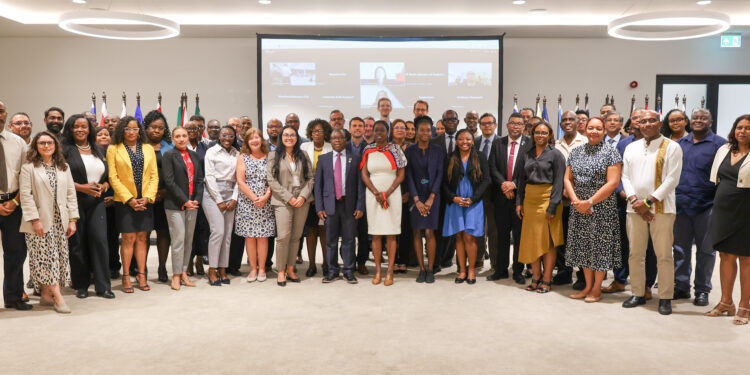
30 October 2025, Santiago, Chile – To advance the institutionalization of Integrated Fire Management (IFM) aimed at reducing wildfire risks and damages, improving land management, protecting livelihoods, and contributing to environmental restoration in the region, representatives from 15 countries participated in the International Workshop on the Incorporation of Integrated Fire Management into Public Policies, National Plans, and Sectoral Strategies, held at the Regional Office of the Food and Agriculture Organization of the United Nations (FAO) for Latin America and the Caribbean.
Integrated Fire Management is a holistic approach that recognizes the ecological, cultural, and social roles of fire. It promotes management actions that include prevention, controlled use, response, recovery, and financing, to reduce the negative impacts of wildfires, protect biodiversity, and ensuring the resilience of territories and communities.
Argentina, Bolivia, Brazil, Chile, Colombia, Ecuador, El Salvador, Guatemala, Guyana, Honduras, Mexico, Paraguay, Peru, Suriname, and Uruguay discussed the region’s challenges, as each country is at a different stage of progress on this issue.
For instance, Brazil is currently the only country with an active national policy on IFM. At the same time, Colombia has begun its legislative process with a bill that has just passed its second reading. Some countries have made significant progress in institutional coordination, while others are in the early stages of technical and regulatory exploration.
This international meeting took place in a regional context marked by an increase in wildfires and their impacts on ecosystems, biodiversity, livelihoods, and food security.
The workshop provided a technical space for peer dialogue and learning to explore how to institutionalize Integrated Fire Management—an approach that goes beyond fire suppression to encompass prevention, controlled use, response, recovery, and financing.
The event was organized by FAO, through the FiRe Project, the Inter-American Development Bank (IDB), and the Deutsche Gesellschaft für Internationale Zusammenarbeit (GIZ) through the CoRAmazonia project, with financial support from the Swiss Agency for Development and Cooperation (SDC) and the German Federal Ministry for Economic Cooperation and Development (BMZ).
Participants included Flávia Saltini, General Coordinator for Forest Fire Prevention at the Brazilian Institute of the Environment (IBAMA); Captain Lina Marín, National Director of the Colombian Fire Department; César Robles, General Manager for Fire Management at Mexico’s National Forestry Commission (CONAFOR); and Gastón Martínez, Director General of Forestry at Uruguay’s Ministry of Livestock, Agriculture and Fisheries, among other government representatives.
The workshop concluded with the identification of common challenges and opportunities to strengthen regional cooperation, promote good practices, and advance toward more resilient fire management.