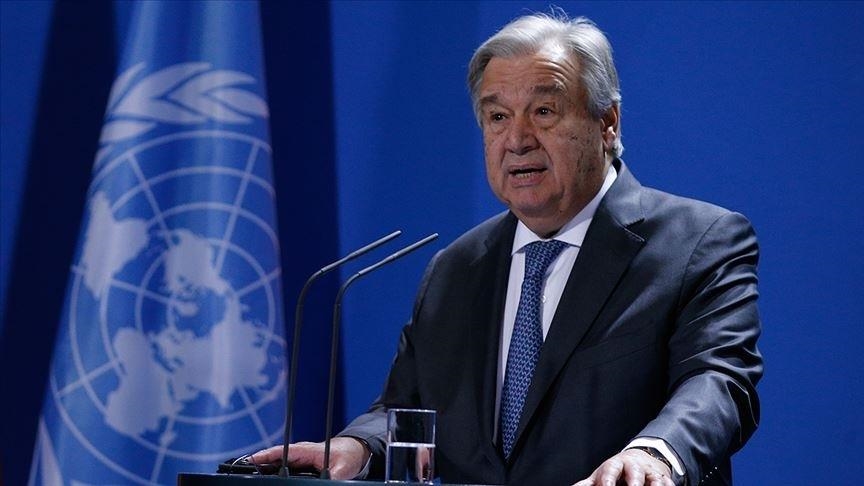
Guyana is often hailed as one of the world’s fastest-growing economies, its offshore oil discoveries and foreign investment fuelling historic growth. Since first oil in December 2019, the country has earned more than US $6.5 billion in oil revenue as of mid-July 2025 (Ministry of Finance, Natural Resource Fund reports). Yet, behind the glitter of prosperity lies a deepening crisis: a public education system buckling under chronic neglect, inequity, and unfulfilled promise.
Billions Budgeted, But Where Does It Go?
Official figures show that Guyana continues to allocate massive sums to education. The allocation has increased consistently from approximately G$ 52 billion in 2020 to G$ 175 billion projected for 2025.
From August 2020 to August 2025, the Minister of Education was Priya Manickchand, under whose tenure education budgets rose sharply. In September 2025, Sonja Parag was appointed Minister of Education, succeeding Manickchand.
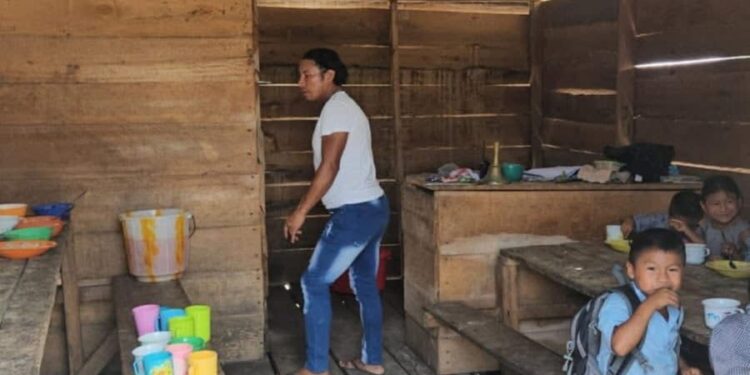
However, field reports from across the country paint a very different picture. In many hinterland and Indigenous communities, students still attend schools without safe water, sanitation, furniture, or enough teachers. Even in coastal regions, where new school buildings and ribbon-cuttings dominate headlines, teachers are raising alarms about worsening conditions behind the walls.
From Coast to Interior: A Pattern of Neglect
Pigeon Infestations and Overcrowding in Parika
Earlier last week, the Guyana Teachers Union (GTU) visited the Parika-Salem Secondary and Parika-Salem Primary Schools in Region 3 after receiving reports of urgent issues affecting staff and students.
At Parika-Salem Secondary, teachers expressed serious concern over a pigeon infestation inside classrooms and staff areas. Following the GTU’s intervention, the Department of Education, Region 3 dispatched a team to assess and clean the affected areas. Officials said further measures will be taken to permanently remove the pigeons and prevent recurrence.
Meanwhile, at Parika-Salem Primary, teachers highlighted severe overcrowding and a shortage of furniture. The GTU’s visit prompted a rapid response — the Department of Education delivered 20 new classroom combinations the same day to help ease the situation.
The swift action in Parika shows that when problems are surfaced and pressure applied, responses can come quickly. But it also underscores a troubling reality: many schools remain in crisis until teachers themselves intervene.
Water and Sanitation Failures
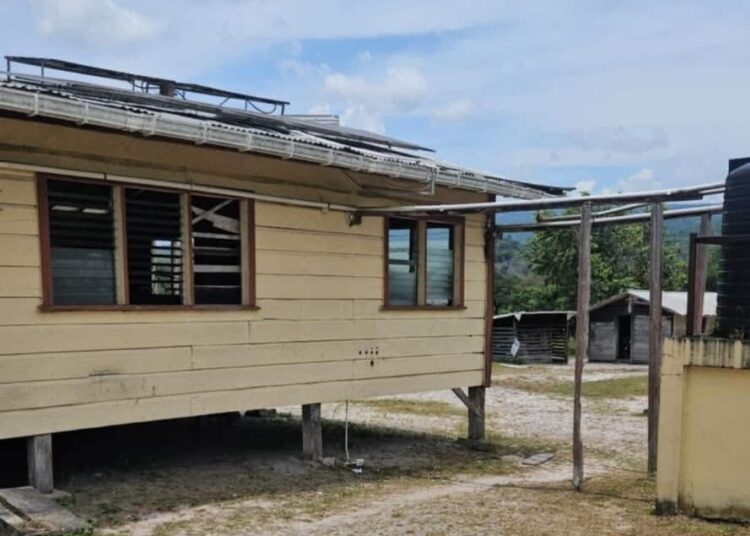
In Micobie Village (Region 8), over 240 students at the local primary and nursery schools were forced to close temporarily because there was no running water — no way to flush toilets, wash hands, or prepare meals under the school-feeding programme.
According to the opposition party We Invest in Nationhood (WIN), teachers were forced to fetch water from the Potaro River, roughly 1,000 feet away, to keep classes going
At St Ninian’s Primary School (Region 1), teachers reported using pond water for toilets and dismissing classes early due to poor sanitation. Staff housing, they said, was “bat-infested,” with non-functioning washrooms
Classroom Furniture Absent, Basic Conditions Ignored
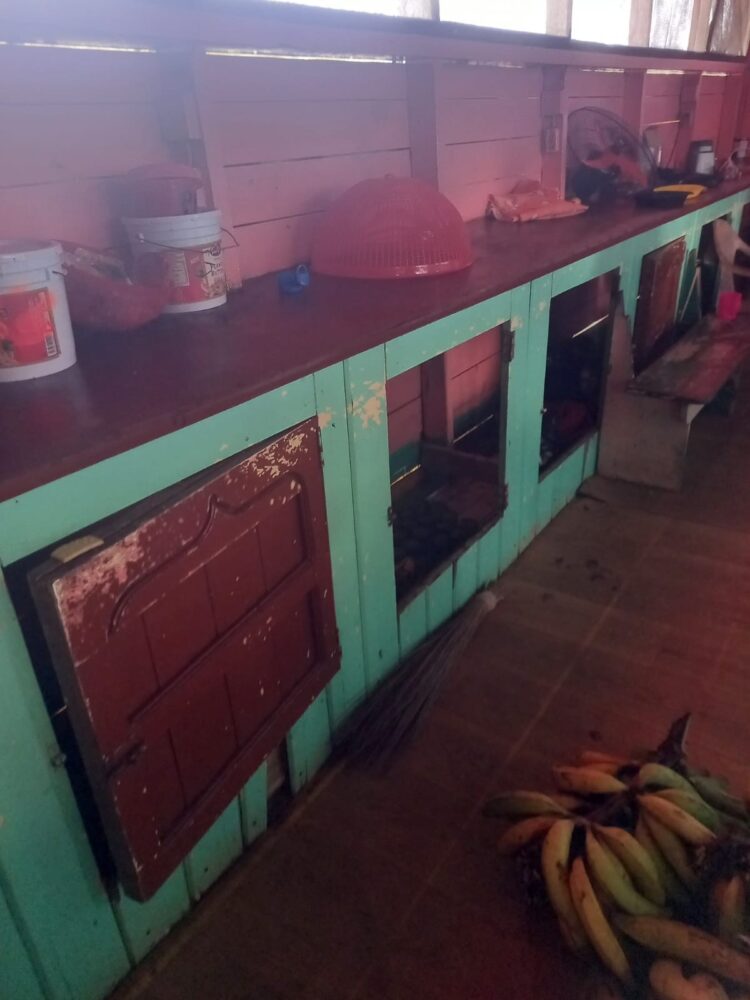
At Aishalton Secondary School (Region 9, South Rupununi), WIN reported that Grade 7 students are being taught in the school’s kitchen because classrooms lack chairs, desks, and blackboards. Some 63 students across three classes share a single laptop screen instead of blackboards
Electricity is unreliable and ventilation poor — conditions teachers say make effective learning nearly impossible.
Teacher Shortages and Pay Delays
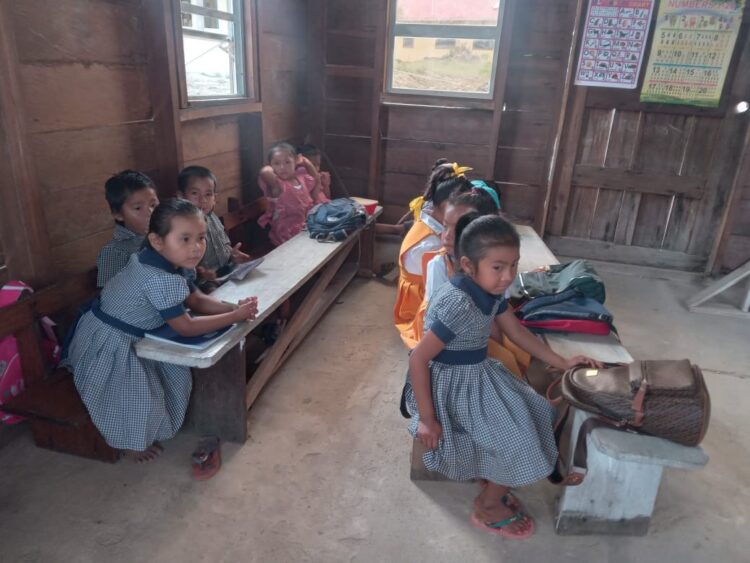
At Matthews Ridge Secondary School (Region 1, Barima-Waini), only two teachers reportedly remain for nearly 200 students, forcing a split-session schedule where Grades 7–9 attend half-day and Grades 10–11 full-day
At Eyelash Primary and Five Star Primary (Matarkai sub-region, Region 1), WIN reported that one teacher had not been paid for four months, while students study amid broken furniture and stray dogs
Four teachers assigned to the Wayal Ayeng Primary School (Region 7) are forced to live in an abandoned school building, as the teachers’ quarters are uninhabitable. They purchased their own beds and a stove to make the space minimally livable and are compelled to bathe in a nearby river due to the absence of bathrooms. These teachers, sent from Phillipai to educate the nation’s children, face conditions described as “unacceptable and [that] speak volumes of a government that is quick to utter ‘we care.’” The situation underscores the stark disparity between the expectations placed on teachers and the support they receive.
WIN leader Azruddin Mohamed also drew attention to Tiger Pond Nursery and Primary Schools (Region 9), where toilets were built but no water connected, forcing the use of pit latrines. “In a resource-rich country, such treatment is unacceptable,” Mohamed said.
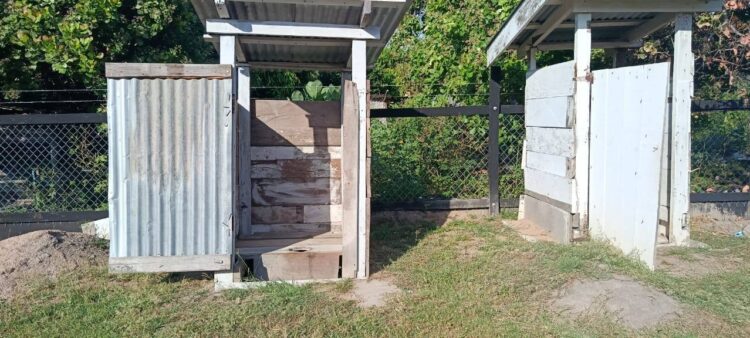
Systemic Failure, Not Isolated Cases
These cases reveal a recurring pattern rather than random mishaps:
- Geographic Inequality: Hinterland and Indigenous schools consistently face the harshest conditions, while coastal institutions receive greater attention and investment
- Institutional Neglect: Chronic salary delays, inadequate maintenance, and weak oversight signal governance failure, not lack of funds.
- Economic Paradox: Despite booming oil revenues, basic education remains under-served. Kaieteur News noted the government’s tendency to focus on “optics” rather than tangible educational outcomes.
- Human Rights Dimension: Forcing children to fetch river water or study in kitchens breaches their right to a safe, dignified education.
The Human Cost
The consequences ripple far beyond the classroom:
- Health risks from unsafe water and poor sanitation.
- Academic decline due to overcrowded, under-resourced learning environments.
- Low teacher morale from unpaid wages and unlivable housing.
- Deepening inequality between coastal and hinterland communities.

The education dilemma
In 2024, only 34 percent of children scored 50 percent or higher in all subjects at the National Grade Six Assessment (NGSA). This year, the Administration set a target of 40 percent, which means that even if the goal is achieved, more than half of Guyana’s children would still lack a sound primary education.
According to a recent World Bank report, a child born in Guyana today will be only 50 percent as productive as they could be if they enjoyed complete education and full health — a figure below the average for the Latin America and Caribbean (LAC) region and other upper middle-income countries.
The report attributes this low Human Capital Index score to weak educational and health outcomes. Although the average Guyanese student is expected to complete 12.2 years of schooling, this equates to just 6.8 years of effective learning when adjusted for quality, as measured by Learning-Adjusted Years of Schooling (LAYS).
Government Response
The Ministry of Education cites ongoing reforms — such as building teachers’ quarters in Regions 1, 7, 8 and 9 and expanding online teacher-training programmes, supported by the World Bank.
In the Micobie water crisis, the Ministry said the disruption stemmed from a wider community water issue, handled with Guyana Water Incorporated (GWI) and regional authorities.
Officials have also pointed to swift corrective action — such as the Region 3 response following the Guyana Teachers’ Union’s Parika visit — as proof that the system can adapt when issues are raised.
Critics, however, argue that these interventions are too often reactive rather than preventative, and that accountability remains weak. “Children across this resource-rich nation are not treated fairly,” WIN stated
Calls for Accountability and Reform
Advocates urge a shift from short-term fixes to systemic change:
- Emergency triage for the most distressed schools — ensure water, sanitation, teacher housing, and furniture immediately.
- Equitable resource allocation — channel more funding to remote and Indigenous regions.
- Transparent audits and oversight of education spending and infrastructure.
- Teacher support and retention policies — including timely salaries and incentives for remote postings.
- Investment of oil wealth in human capital, not just infrastructure for display.
A Moral Reckoning
Guyana stands at a critical juncture. Its oil boom offers a once-in-a-generation chance to transform education and uplift its youth. Yet, when children are still being taught in kitchens, fetching river water, or learning amid pigeons and overcrowding, prosperity’s promise rings hollow.
In a country that has earned over US $6.5 billion in oil revenue since 2019, allowing its youngest citizens to learn in neglect is not merely an administrative lapse — it is, as Azruddin Mohamed put it, “unacceptable.”