Georgetown – By all top-line metrics, Guyana is the world’s next economic miracle. With GDP growth rates soaring above 30%, fueled by one of the largest offshore oil discoveries in recent history, the country should be a magnet for global capital. International financial institutions are crafting new asset classes around its potential, and its president is a fixture on the global stage, promising a transformative “One Guyana” agenda.
But for any serious investor looking beyond the oil rigs, a ground-level assessment reveals a starkly different reality. The much-touted economic boom is a mirage for the vast majority of the economy, and the country presents a profound and multifaceted risk that threatens to strand foreign direct investment (FDI) outside the protected enclaves of the oil and gas sector.
The symptoms of this malaise are everywhere, yet are willfully ignored in high-level briefings. The nation’s tourism sector is a case study in failure. Travel here is exorbitantly expensive, offering poor value with substandard and overpriced hotels, mediocre and pricey restaurants, and famously awful customer service. The experience is so consistently disappointing it feels less like an emerging destination and more like a territory with a strategic goal of driving visitors away. The infrastructure connecting these dismal offerings is a network of crumbling or perpetually congested roads, making even short journeys a test of endurance.
This failure is not an accident. It is the direct result of a corrosive system of political patronage that strangles genuine economic diversification. The ability to open a hotel, a restaurant, or any significant business is too often reserved for a closed circle of the unexposed, unqualified, and visionless family, friends, and favorites of the ruling People’s Progressive Party (PPP). This isn’t a free market; it’s a fiefdom.
The spectacle of President Irfaan Ali himself cutting ribbons for burger joints and small hotels is not a sign of a hands-on leader, but a devastating indictment of the nation’s stunted private sector. When the head of state is the highlight for the opening of a fast-food franchise, it signals a catastrophic lack of depth and an economy where significant, transformative investment outside of oil is virtually nonexistent. The government isn’t building an ecosystem for business; it’s presiding over a cottage industry for its allies.
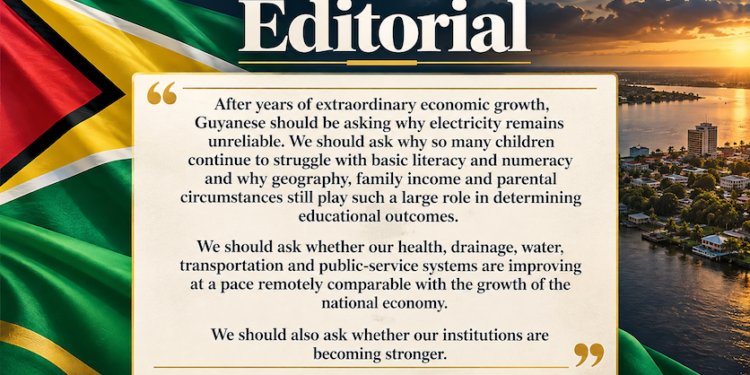
The PPP, it seems, cannot get out of its own way. While they speak the language of development at international forums, their actions at home foster a climate of exclusion and cronyism that actively deters the sophisticated capital they claim to want. Why would a global hotel chain invest tens of millions when the regulatory environment is skewed to protect a politically-connected local competitor? Why would a manufacturing firm set up shop when the logistics are hamstrung by terrible infrastructure and a workforce hampered by an underfunded education system that boasts a 55% dropout rate over 5 years and a poorly educated workforce?
This brings us to the foundational risks that no amount of oil revenue can quickly fix. The territorial dispute with Venezuela remains a sword of Damocles, an existential threat that injects permanent geopolitical risk into every investment thesis. Rampant corruption siphons off public funds and distorts market mechanisms, while cries of racial discrimination and political marginalization threaten the social cohesion required for long-term stability. An undereducated population cannot staff a modern, diversified economy.
Proponents point to initiatives like the World Bank’s proposed Small States Asset Class (SAC) as a solution. But financial engineering cannot solve a problem of poor governance. The SAC aims to pool risk across many countries to attract capital, but how does it mitigate the specific, homegrown risk of a government that prioritizes cronyism over competence? Dressing Guyana up in a financial portfolio doesn’t fix its rotten foundations.
The truth is this; Guyana is two economies. The first is the oil-and-gas economy, a high-stakes, high-risk playground for supermajors like ExxonMobil who have the leverage and insurance to navigate the turbulence. The second is the real Guyanese economy, stagnant, insular, and hostile to outsiders.
Until the government dismantles its architecture of patronage, makes a genuine commitment to meritocracy, and invests oil revenues into tangible improvements in infrastructure, education, and the rule of law, the “miracle” will remain a narrowly-based resource curse. The significant risk isn’t in the ground or on the map; it’s seated in the halls of power in Georgetown. Investors beware.