Friday, April 17, 2026
Village Voice News
ADVERTISEMENT
  • Home
  • News
  • Sports
  • Editorial
  • Letters
  • Global
  • Columns
    • Eye On Guyana
    • Hindsight
    • Lincoln Lewis Speaks
    • Future Notes
    • Blackout
    • From The Desk of Roysdale Forde SC
    • Diplomatic Speak
    • Mark’s Take
    • In the village
    • Mind Your Business
    • Bad & Bold
    • The Voice of Labour
    • The Herbal Section
    • Politics 101 with Dr. David Hinds
    • Talking Dollars & Making Sense
    • Book Review 
  • Education & Technology
  • E-Paper
  • Contact Us
No Result
View All Result
  • Home
  • News
  • Sports
  • Editorial
  • Letters
  • Global
  • Columns
    • Eye On Guyana
    • Hindsight
    • Lincoln Lewis Speaks
    • Future Notes
    • Blackout
    • From The Desk of Roysdale Forde SC
    • Diplomatic Speak
    • Mark’s Take
    • In the village
    • Mind Your Business
    • Bad & Bold
    • The Voice of Labour
    • The Herbal Section
    • Politics 101 with Dr. David Hinds
    • Talking Dollars & Making Sense
    • Book Review 
  • Education & Technology
  • E-Paper
  • Contact Us
No Result
View All Result
Village Voice News
No Result
View All Result
Home Op-ed

Connecting Communities, Government, and Markets for Smarter Climate Protection in the Caribbean

By: Chalsey Gill Anthony, Environmental Communicator, on behalf of Caribbean Policy Development Centre (CPDC)

Admin by Admin
October 16, 2025
in Op-ed
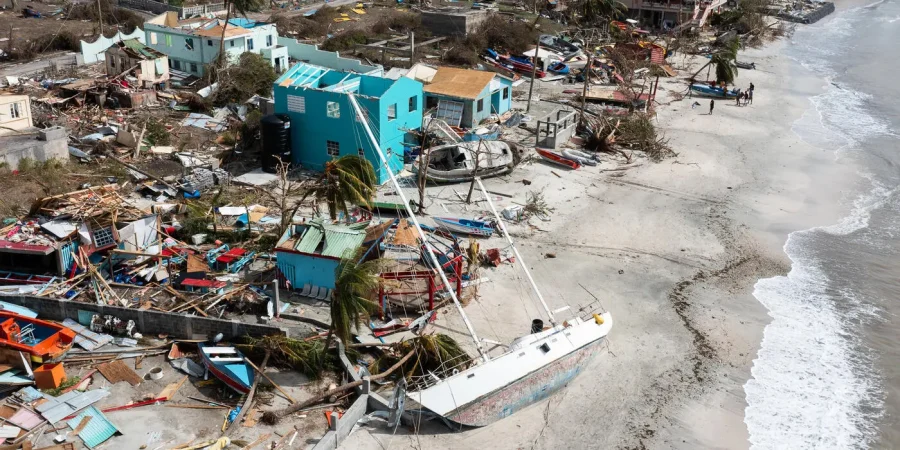
Damaged and destroyed homes and boats in Petite Martinique, Grenada, after Beryl passed the Caribbean island. Photo Credit - Arthur Daniel

Damaged and destroyed homes and boats in Petite Martinique, Grenada, after Beryl passed the Caribbean island. Photo Credit - Arthur Daniel

0
SHARES
0
VIEWS
Share on FacebookShare on Twitter

When a hurricane barrels through the Caribbean, recovery doesn’t just depend on rebuilding homes and roads. It depends on whether farmers can afford to replace lost livestock, whether fishers can access damaged docks or launching areas, whether market vendors can access refrigeration to preserve perishable goods, and whether tourism workers can survive months while hotels remain closed. These are the people who keep food on our tables, keep goods moving, and sustain the local economy. Yet, when disasters strike, they are often the ones left waiting the longest for help.

Where Governments and Traditional Insurance Fall Short

READ ALSO

Southport Inquiry: a real one, real results

Gas lines -a study in leadership failure, mixed priorities

Governments do step in, of course. After major storms, ministries coordinate emergency aid, negotiate loans, and restore infrastructure. But the Caribbean Policy Development Centre (CPDC)’s research highlights that governments are focused on the “big picture.” They fix roads, restore the power grid, and manage national relief. But they cannot meet the thousands of small, urgent needs of individual workers and households quickly enough. Things like restoring a farmer’s contaminated well, replacing a fisher’s equipment, or helping a vendor secure a new market permit can take too long to address.

Meanwhile, private insurers serve those who can afford policies, usually businesses with formal assets. For informal workers like farmers without land titles, fishers who can’t insure small boats, vendors without registered stalls, traditional insurance is simply out of reach. That leaves a huge gap when disaster strikes.

Meso-Level CDRFI Bridges the Gap

This is where meso-level Climate and Disaster Risk Finance and Insurance (CDRFI) becomes a bridge. It links the scale of government and insurance with the trust and reach of community organizations.

Here’s how it works:

  • Community institutions, like cooperatives, credit unions, and NGOs, act as the direct link to people on the ground. They know who is most vulnerable, and are trusted by members.

  • Financial tools, like parametric insurance and community savings funds, are pooled and managed through these groups, making payouts faster and fairer.

  • Governments and private insurers provide the wider safety net and financial backing, ensuring that the system is sustainable and affordable.

Instead of operating separately, these three levels work together. Communities identify needs, governments reduce risk exposure through policy, and insurers provide capital. The result?  Livelihoods are protected, and national budgets face less strain.

Consider this: CPDC’s research across five Caribbean countries found that 79% of organizations serving vulnerable workers have no budget for disaster response. Without meso-level CDRFI, those organizations are stranded when disasters hit. With it, they can access financial resources, deliver support directly to members, and reduce the wait time between disaster and recovery.

This bridge also builds trust. Research confirms that credit unions and cooperatives hold the highest trust ratings in our communities. By placing them at the center of disaster protection, meso-level CDRFI ensures that recovery is not just about money, but about fairness, transparency, and local decision-making.

Building Resilience for the Future

In a time when climate risks are rising, the Caribbean needs real solutions that work for our people. Farmers, fishers, vendors, and tourism workers need systems that connect them to wider resources while respecting the realities of informal work. Meso-level CDRFI is one way to strengthen that chain.

To understand how these bridges can transform disaster response in the region, explore the Risk Resilience Hub to learn more about meso-level CDRFI. Use it as a guide to strengthen your community’s resilience, contributing to a smarter, more connected Caribbean future.
ShareTweetSendShareSend

Related Posts

GHK Lall
Op-ed

Southport Inquiry: a real one, real results

by Admin
April 16, 2026

The Commission of Inquiry chaired by Sir Adrian Fulford and probing for answers into the Southport, England tragedy went live...

Read moreDetails
GHK Lall
Op-ed

Gas lines -a study in leadership failure, mixed priorities

by Admin
April 15, 2026

Like a wildfire, a flicker became a flame almost instantly.  Thankfully, it was not a real fire, but the fearful...

Read moreDetails
Op-ed

Hungary and Guyana -Many Striking Parallels

by Admin
April 14, 2026

By GHK Lall- A handful of people owns/controls half the country. Rings loudly; with a bigger fraction involved. The “machinery...

Read moreDetails
Next Post
Crushed limestone moves along a conveyor belt at a local quarry. Jamaica is looking to boost exports of construction materials such as limestone and aggregates to meet growing regional demand.

Jamaica eyes new port in St Thomas to tap Guyana’s building boom


EDITOR'S PICK

Queens, New York, February 14, 2024 @ 4 p.m.

Guyanese Community in Queens Struggles Under Trump’s Deportation Policies

February 15, 2025

WPA welcomes charges for Quindon Bacchus’ murder, demands accountability also for higher ups

July 5, 2022

Gov’t left in the dark over Eastern Airlines service suspension

February 9, 2021

International Day for the Preservation of the Ozone Layer

September 16, 2023

© 2024 Village Voice

No Result
View All Result
  • Home
  • News
  • Sports
  • Editorial
  • Letters
  • Global
  • Columns
    • Eye On Guyana
    • Hindsight
    • Lincoln Lewis Speaks
    • Future Notes
    • Blackout
    • From The Desk of Roysdale Forde SC
    • Diplomatic Speak
    • Mark’s Take
    • In the village
    • Mind Your Business
    • Bad & Bold
    • The Voice of Labour
    • The Herbal Section
    • Politics 101 with Dr. David Hinds
    • Talking Dollars & Making Sense
    • Book Review 
  • Education & Technology
  • E-Paper
  • Contact Us

© 2024 Village Voice