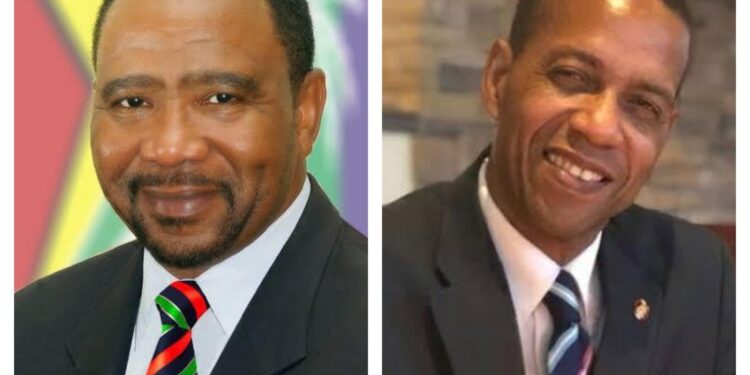
A cadre of frontline healthcare professionals from across the Caribbean will converge in Miami next week for a high-impact HIV training programme aimed at accelerating progress toward the UNAIDS 95-95-95 targets. The three-day workshop, running from September 17 to 19, 2025, will take place at the University of Miami Miller School of Medicine, and is being led by the Pan Caribbean Partnership Against HIV and AIDS (PANCAP) in collaboration with the University of Miami, PAHO, and The Global Fund.
The training will focus on motivational interviewing (MI) and other advanced, evidence-based strategies designed to enhance HIV prevention, treatment, and patient retention—particularly among vulnerable and hard-to-reach groups.
“This isn’t just another training, it’s a strategic intervention to change the trajectory of HIV in our region,” said Dr. Wendy Telgt Emanuelson, Director of the PANCAP Coordination Unit. “By mastering motivational interviewing techniques and applying the latest evidence-based approaches, our regional clinicians will become powerful change agents in their communities, particularly in reaching marginalised populations most in need of these services.”
Healthcare professionals attending the programme represent a wide swath of the region, including Antigua and Barbuda, The Bahamas, Barbados, Belize, Dominica, Guyana, Jamaica, Montserrat, St Kitts and Nevis, St Lucia, Suriname, Trinidad and Tobago, St Vincent and the Grenadines, Anguilla, the British Virgin Islands, and the Dominican Republic. The cohort includes physicians, nurses, and community health specialists from both public health systems and civil society organisations.
The Miami session builds on the success of the PANCAP Learning Journey held earlier this year in Amsterdam, where clinicians demonstrated significant improvements in their ability to engage high-risk groups in PrEP programmes and to re-engage people living with HIV who had dropped out of care.
According to Dr. Shanti Singh Anthony, Knowledge Management Coordinator at the PANCAP Coordination Unit, the Amsterdam model proved the effectiveness of patient-centred care. “The Amsterdam Learning Journey proved that when clinicians adopt patient-centred approaches, outcomes improve dramatically,” she said. “This training on motivational interviewing will allow for a differentiated and client-centred approach to recruit, initiate and retain persons on HIV prevention and treatment services, helping us close gaps in the HIV care continuum and achieve the global targets.”
The programme’s “train-the-trainer” model ensures that participants will take the knowledge and skills gained in Miami back to their home countries, equipping their colleagues and strengthening national health systems. This sustainable model of knowledge transfer is seen as critical for building long-term regional capacity.
With the 2030 deadline fast approaching, many Caribbean nations face uneven progress in meeting the 95-95-95 targets — which call for 95% of people living with HIV to know their status, 95% of those diagnosed to be on sustained treatment, and 95% of those on treatment to have suppressed viral loads.
“This training is not only timely, it’s necessary,” said Dr. Emanuelson. “We must revitalise our HIV prevention and treatment strategies if we are to end AIDS as a public health threat in the Caribbean.”
PANCAP extended its gratitude to The Global Fund, the University of Miami Miller School of Medicine, and PAHO for their support in bringing this critical initiative to life.