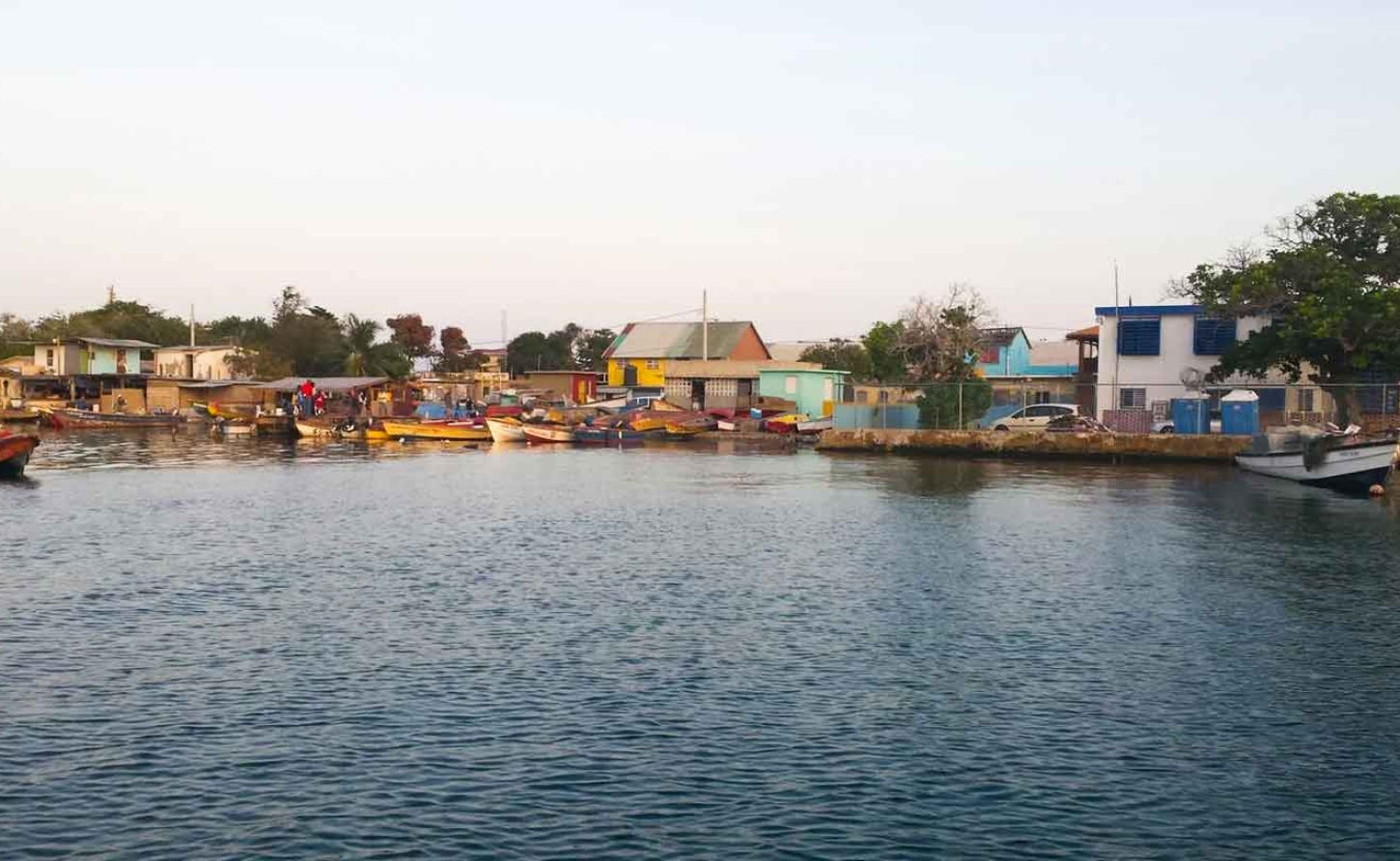
MONTEGO BAY, Jamaica – At 11:43 a.m. on June 7, 1692, the earth beneath Port Royal shuddered, cracked, and opened its jaws. In less than three minutes, two-thirds of what contemporaries called “the wickedest city on earth” vanished beneath Kingston Harbor’s blue waters.
Buildings, people, and an entire way of life disappeared into the Caribbean Sea, creating something unprecedented in the Western Hemisphere: a perfectly preserved underwater city, frozen in time.
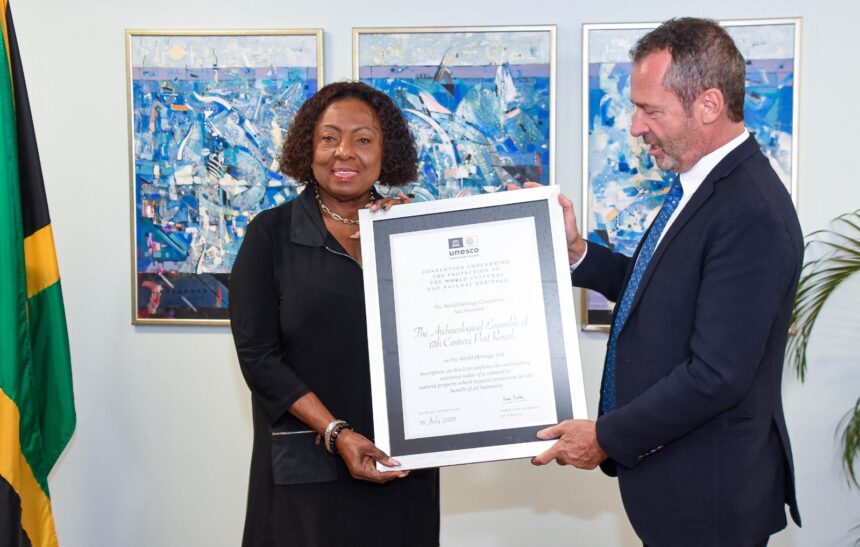
Three centuries and thirty-three years later, that catastrophe has become archaeology’s greatest gift to the Caribbean. On July 12, 2025, UNESCO’s World Heritage Committee formally inscribed The Archaeological Landscape of 17th Century Port Royal on its coveted World Heritage List—recognition that this sunken city represents not just Jamaica’s heritage, but humanity’s.
“This is a big deal,” declared Culture Minister Olivia Grange as she received the Certificate of Inscription from UNESCO’s Caribbean representative Eric Falt. “We have delivered on almost 40 years of our country’s dream to have Port Royal inscribed.”
But the dream she speaks of required first confronting a nightmare that began nearly four centuries ago.
When the Sea Claimed the Wicked
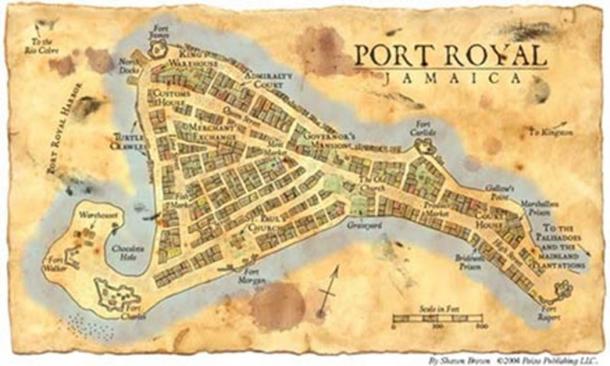
Port Royal’s rise had been meteoric. In just four decades after English forces captured Jamaica from Spain in 1655, this strategic outcropping at Kingston Harbor’s mouth became the most important English settlement in the Western Hemisphere. Ships laden with sugar, silver, and human cargo made Port Royal the beating heart of Britain’s Caribbean empire.
The city’s wealth was built on trade—legitimate and otherwise. Pirates found safe harbor here, their Spanish gold welcomed by merchants who asked few questions.
The slave trade turned the port into a human marketplace where Africans were bought, sold, and shipped across the colonial world. By 1692, Port Royal housed nearly 7,000 souls packed into taverns, brothels, and counting houses that lined streets barely wide enough for a cart.
Then the earth moved.
The earthquake that struck that June morning did more than destroy buildings—it liquefied the sandy foundation upon which Port Royal stood. Entire city blocks tilted and slid into the harbor as if the sea had decided to reclaim what rightfully belonged to it.
The HMS Swan, anchored in the harbor, found itself riding a tidal wave that swept it over the town’s rooftops.
Within minutes, 2,000 people lay dead. Two-thirds of the city had vanished beneath 40 feet of water, creating an archaeological time capsule unmatched anywhere in the Americas.
Arch
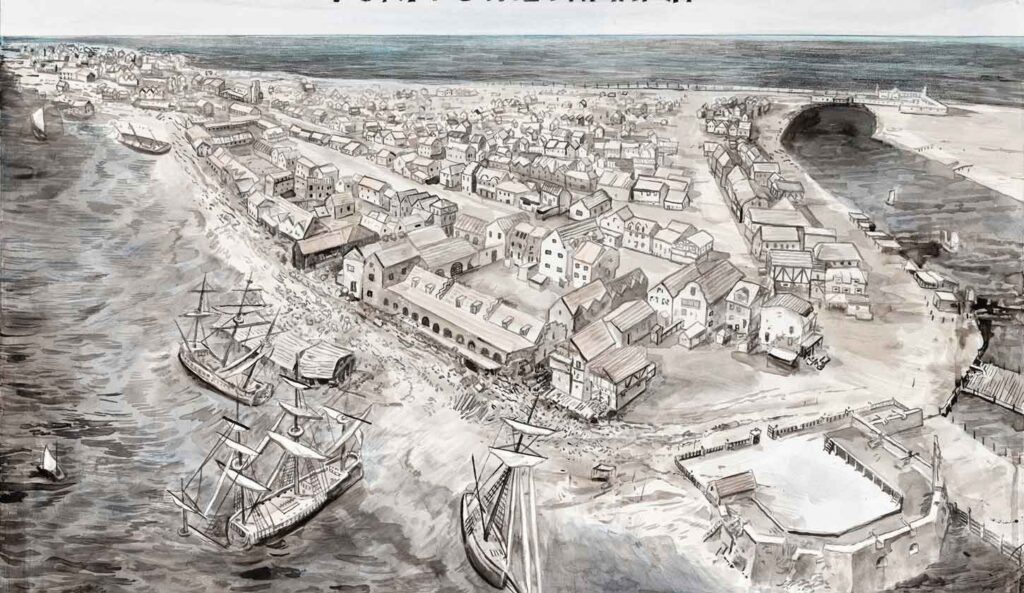
What makes Port Royal extraordinary is not just that it sank, but how it sank. The rapid submersion and immediate sealing under marine sediments created preservation conditions that terrestrial archaeological sites can never match.
Unlike Pompeii, which was destroyed by volcanic ash, or other historical sites degraded by centuries of weather, Port Royal’s submerged sections remain virtually intact.
Marine archaeologists working the site have recovered everything from pewter plates still set for meals never finished to clay pipes dropped by smokers who ran for their lives.
Wooden buildings that should have rotted away centuries ago stand beneath the harbor’s surface, their timber preserved by the same waters that claimed them.
The significance extends beyond mere preservation. As UNESCO Regional Director Eric Falt noted, “The Port Royal story is one of wealth and disaster, mirroring the weight of the human experience.”
This is the only place in the Western Hemisphere where researchers can study a complete 17th-century English colonial city—not through foundations and fragments, but through entire neighborhoods suspended in time.
More Than Tourism Gold
UNESCO recognition brings more than prestige to a country where tourism accounts for nearly a quarter of GDP. It validates what archaeologists have long argued: that Port Royal represents an irreplaceable window into Caribbean colonial life, trade networks, and the brutal realities of slavery and exploitation that shaped the region.
“The successful inscription brings significant attention to the rich history and heritage of this remarkable part of Jamaica,” said Yuri Peshkov, Head of UNESCO’s Caribbean Culture Program. “We anticipate this global recognition will serve as a catalyst for sustainable development, education, and economic opportunities that directly benefit the local community.”
For Jamaica, the designation caps a remarkable journey from colonial outpost to independent nation that now stands as guardian of one of humanity’s most significant underwater archaeological sites. The city that once symbolized colonial exploitation now represents something far more valuable: a commitment to preserving difficult histories for future generations to study, understand, and learn from.
The sea that swallowed Port Royal in 1692 has, in the end, given the Caribbean something priceless—a perfectly preserved piece of its own complex past, now protected for the world to discover. WiredJA