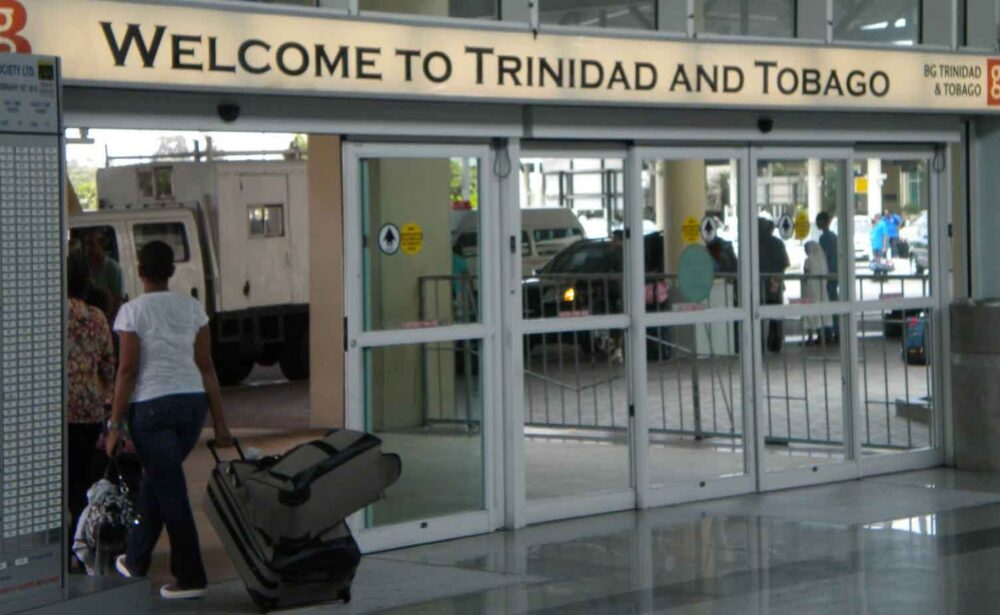
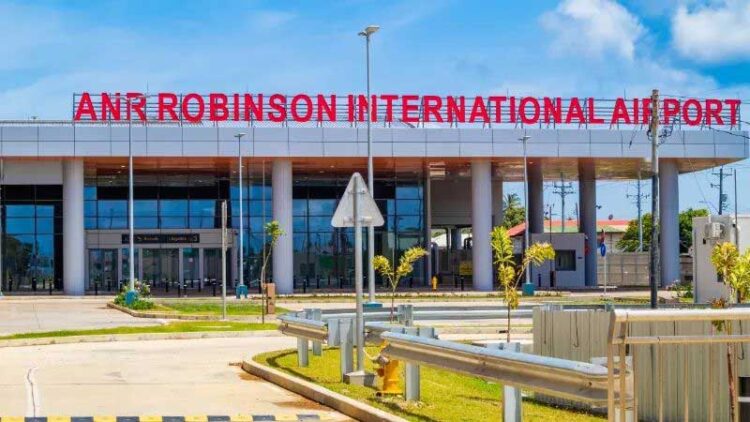
PORT-OF-SPAIN, Trinidad (WiredJA)- They arrived quietly, clipboards in hand and security badges gleaming—Transportation Security Administration officials conducting their periodic inspection of ANR Robinson International Airport. To casual observers, it might have seemed routine.
But the August 17 revelation of these TSA audits sparked an uncomfortable question that cuts to the heart of Caribbean sovereignty: exactly when did Trinidad and Tobago agree to let American security officials walk through its airports as if they owned the place?
The answer lies buried in the fine print of international agreements that most citizens never see, yet which govern their daily lives in ways they rarely understand.
Welcome to the post-9/11 world, where the price of keeping your planes in American airspace isn’t just compliance—it’s submission to a system where Washington’s security paranoia becomes your regulatory reality.
The Paper Trail of Surrender
The legal authority for these inspections didn’t materialize out of thin air. It stems from the 1944 Chicago Convention on International Civil Aviation—a document signed when most Caribbean nations were still colonies, yet which continues to bind them today.
More crucially, it flows from the bilateral air services agreement (BASA) that T&T signed with the United States on May 22, 2010.
That “open skies” agreement, trumpeted as opening lucrative American routes to Caribbean Airlines, came with strings attached—strings that are now visible as TSA agents scrutinize T&T’s security protocols.
The deal wasn’t just about letting Caribbean Airlines fly to New York; it was about accepting that American officials would have the right to determine whether T&T’s airports meet their standards.
Think about that for a moment: a sovereign nation, 174 years after the abolition of slavery and 63 years after independence, still needs Uncle Sam’s permission slip to operate its own airports for international flights.
The Rating Game That Rules the Caribbean
The mechanics of American aviation control operate through a seemingly bureaucratic process that carries devastating real-world consequences.
The Federal Aviation Administration’s International Aviation Safety Assessment (IASA) audits don’t just measure compliance with eight “critical oversight elements”—they determine which Caribbean nations get to play in the lucrative American aviation market and which get locked out.
Fail an IASA audit, and you’re relegated to FAA Category Two status—aviation purgatory. Your national airline can’t expand service to the United States. New carriers can’t enter American markets. Your airports become economic dead zones for international expansion.
Ask the Organization of Eastern Caribbean States how that feels. They’ve been trapped in Category Two since 2020, watching helplessly as LIAT 2020 remains blocked from operating flights to Puerto Rico and the U.S. Virgin Islands—routes that could be economic lifelines for struggling island economies.
Trinidad and Tobago, by contrast, has played the game successfully, passing IASA audits in 2005 and 2012. But success in this system isn’t about meeting international standards—it’s about meeting American interpretations of those standards, enforced by American officials who can ground your aviation sector with the stroke of a pen.
The TSA’s security audits add another layer to this regulatory stranglehold. Operating under Department of Homeland Security protocols, TSA officials don’t just review T&T’s security measures—they evaluate whether those measures meet American paranoia levels about who might board a plane bound for Miami or New York.
The Caribbean’s Gilded Cage
This isn’t just about Trinidad and Tobago—it’s about how small island states navigate great power influence in an era where economic survival depends on connectivity.
Every Caribbean nation with direct flights to the United States faces the same Faustian bargain: submit to American oversight or watch your tourism industry and diaspora connections wither.
The irony is stark. These are the same Caribbean territories that fought for political independence in the 20th century, only to discover that economic independence is far more elusive.
When American aviation officials walk through Piarco Airport, they’re not just checking security protocols—they’re demonstrating who really controls access to the hemisphere’s largest economy.
Regional governments rarely discuss this reality publicly. Why would they? Admitting that your airport security is subject to foreign approval doesn’t exactly project sovereignty. But the August 17 revelation forces an uncomfortable reckoning with the hidden architecture of Caribbean dependence.
The Price of Connection
What emerges is a picture of sovereignty that exists only at Washington’s pleasure. Trinidad and Tobago can elect its own government, write its own laws, and fly its own flag—but it cannot decide for itself whether its airports are secure enough for international travel.
The TSA audits at ANR Robinson International Airport represent more than bureaucratic procedure. They’re a reminder that in the post-9/11 world, the price of staying connected to global commerce isn’t just compliance with international standards—it’s acceptance that someone else will always hold the keys to your economic future.
The question isn’t whether these audits are legal—they clearly are, buried in agreements signed by previous governments. The question is whether Caribbean nations will continue accepting that their sovereignty stops where America’s security concerns begin, or whether they’ll find ways to build regional aviation networks that don’t require bowing to foreign inspectors.
Until then, those TSA clipboards and security badges will keep appearing at Caribbean airports, quiet symbols of who really controls the skies above these proudly independent nations.