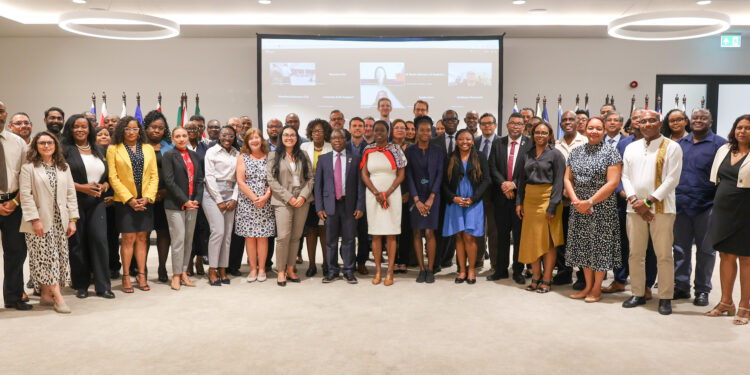
WiredJA – When nursing leaders from across the Caribbean gathered in Barbados this August for the 52nd Annual General Meeting of the Regional Nursing Body, they weren’t just addressing a crisis—they were architecting the future of Caribbean healthcare.
Against the backdrop of Bridgetown’s azure waters, this historic assembly marked a pivotal moment where challenge met opportunity, transforming what could have been a story of shortage into a narrative of strategic renewal and regional solidarity.
The meeting represented more than a routine professional gathering; it embodied CARICOM’s commitment to turning adversity into advantage, leveraging the region’s legendary resilience to build a healthcare workforce worthy of the Caribbean’s proud medical traditions.
Building on Five Decades of Excellence
Dr. Jerome Walcott, Barbados’ Minister of Health and Wellness, opened the proceedings with a powerful reminder of what the region has already accomplished. For fifty years, the Regional Nursing Body has demonstrated “unwavering commitment to nursing excellence,” establishing Caribbean nurses as globally recognized professionals whose expertise is sought from Toronto to London, from New York to Dubai.
This golden anniversary moment arrives not as an ending, but as a launching pad. “The RNB now stands at a critical crossroad,” Minister Walcott declared, positioning the organization not merely to “sustain the gains of the past, but to lead the transformation of the profession.” This isn’t about managing decline—it’s about evolutionary leadership in an era where healthcare faces unprecedented challenges, from digital health literacy to climate change impacts.
The Caribbean nursing tradition has always been one of innovation born from necessity. Small island developing states have consistently punched above their weight in healthcare delivery, producing nurses whose adaptability and excellence have made them coveted professionals worldwide. This very success, while creating current retention challenges, also demonstrates the caliber of talent the region continues to produce and the strong foundation upon which future growth can be built.
Innovative Solutions on the Horizon
What emerged from the Barbados gathering wasn’t despair, but a sophisticated strategy rooted in Caribbean ingenuity. Regional Nursing Body Chair Nester Edwards outlined a comprehensive approach that turns the region’s challenges into competitive advantages through smart innovation and strategic thinking.
The diaspora connection represents perhaps the most promising avenue. Rather than lamenting the nurses who have migrated abroad, Caribbean leaders are pioneering new models to maintain professional ties and create pathways for knowledge exchange and eventual return. This isn’t about guilt-tripping professionals who sought better opportunities—it’s about building bridges that benefit both home countries and overseas communities.
Technology integration offers another leap forward. Edwards emphasized utilizing technological advancements not as cold substitutes for human care, but as tools to enhance working conditions and create more efficient, satisfying practice environments. From telemedicine capabilities that extend specialist expertise across island chains to digital systems that reduce administrative burden, technology becomes an ally in nurse retention.
Flexible working arrangements represent a paradigm shift toward work-life balance that acknowledges nursing as both a calling and a career requiring sustainability. These aren’t just policy adjustments—they’re cultural transformations that signal the region’s evolution toward modern, attractive healthcare employment.
Investing in Tomorrow’s Leaders
The most visionary aspect of the CARICOM nursing strategy lies in its commitment to developing the next generation of healthcare leaders. Edwards’ call for capacity-building in “leadership, policy development, strategic planning and research” signals an ambitious transformation of nursing from a primarily clinical role to a comprehensive professional force capable of shaping health policy and driving innovation.
This leadership development initiative recognizes that Caribbean nurses possess not just clinical excellence, but the intellectual capacity and cultural understanding to become architects of regional health systems. By investing in policy development skills, the region is ensuring that future healthcare decisions will be informed by professionals who understand both the clinical realities and the unique socio-economic context of Caribbean communities.
The research component particularly promises to position Caribbean nursing as a knowledge-generating force rather than merely a knowledge-consuming one. This shift toward indigenous research capacity means that solutions to Caribbean health challenges will increasingly come from Caribbean minds, creating a virtuous cycle of expertise development and retention.
These investments directly support the region’s ambitious goal of achieving universal health coverage—a target that becomes attainable when nursing leadership possesses both the clinical skills and strategic vision to navigate complex healthcare delivery challenges.
A Regional Community United
The Barbados gathering exemplified CARICOM’s greatest strength: the power of collective action. When Assistant Secretary-General Alison Drayton emphasized the imperative to “substantially increase investments in the education, recruitment, and retention of nurses and midwives,” she spoke not for individual nations but for a unified Caribbean vision of healthcare excellence.
This collaborative approach transforms what could be competitive disadvantage into shared opportunity. The three-day meeting’s agenda—developing action plans for health worker mobility, reviewing global nursing reports, and examining regional examination results—demonstrates a region that thinks strategically and acts collectively.
As the nursing profession stands poised for transformation, the Caribbean isn’t merely adapting to global trends but positioning itself to lead innovation in small-state healthcare delivery. The investment in nursing excellence today becomes tomorrow’s foundation for a healthier, more resilient Caribbean community—one where quality healthcare is not just an aspiration but an achievable reality for all sixteen million CARICOM citizens.