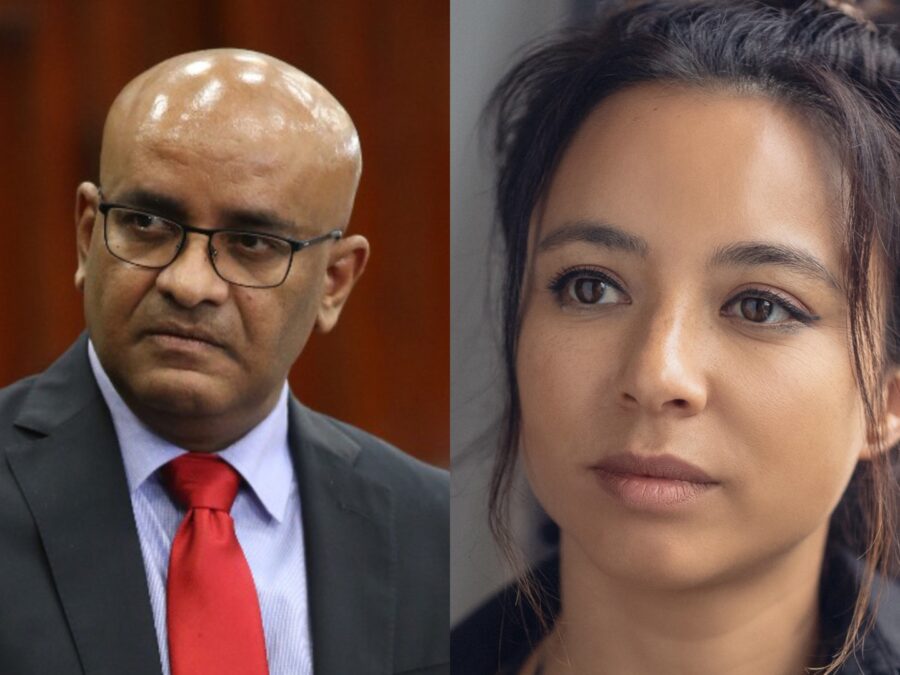
Nearly three years after investigative journalist Isobel Yeung was named Journalist of the Year at the Foreign Press Association (FPA) Media Awards, the Government of Guyana has yet to initiate a local investigation into her groundbreaking undercover report, “Undercover in Guyana”. The 2022 VICE News feature, which also won Financial/Economic Story of the Year, exposed systemic exploitation and alleged corruption reaching the highest levels of government, including confrontations with Vice President Bharrat Jagdeo.
At the FPA awards, judges praised Yeung’s courage and ingenuity. One noted that she had gone “undercover in this fresh and extraordinary piece of journalism to expose how corruption in Guyana goes to the very top of government” and that she “fearlessly confronted the Guyanese Vice President Bharrat Jagdeo on camera about his own apparent corrupt dealings on huge multinational projects.” Another judge described it as “one of the best TV investigative reports I’ve ever seen,” calling some moments “scary to watch,” but added that “the payoff at the end was astonishing.”

In her acceptance speech, Yeung recounted the painstaking effort behind the story. Alongside colleague Belle Cushing, she presented themselves as prospective investors interested in mining, logging, and construction. Weeks of careful immersion into elite business circles allowed them to capture conversations that would normally be inaccessible.
Eventually, they were invited to a private country retreat where they met influential business figures, including a timber exporter who candidly advised them on “how to best work the system.”
Yeung also acknowledged the personal risks involved. “The VICE News team is very grateful to our Chinese colleagues, who put their lives at risk in helping us tell this story,” she said. “We cannot disclose their names, but without their help, the story could not have been told. So thank you to the anonymous people who made this possible.”
At his residence in Goedverwagting, East Coast Demerara, Jagdeo explained to the undercover reporter and her colleague—posing as Chinese investors—that he provides his Chinese “friend” with full support to handle investment deals, while himself staying out of financial matters due to his government role. “No, no, no, I’m not getting involved in business. Su is my friend. He gets all the support. Su handles all the agreements. I don’t. My role is in government, so I assist from the government side,” he said.
The VICE reporter was informed that Su was the key contact who could arrange a meeting with the Vice President—and indeed, he facilitated it, demonstrating his connection with the government official. The team was also told that any bribe payments purportedly intended for the VP would be passed on to him.
When Vice News first met Su, he openly bragged about his relationship with Jagdeo, asserting that his close ties made the meeting possible. “If you want anything done in Guyana, you have to have some connections,” he told the team. The documentary subtitles translated his Mandarin words into English: “You tell me, it should be no problem. I am very close with the Vice President and the other officials.”
Despite the international acclaim and the explosive revelations — including Su Zhirong’s role as Jagdeo’s close associate, tenant, and alleged “go-to” intermediary in foreign investment deals — the Irfaan Ali administration has not conducted a formal inquiry. Jagdeo stated he filed a $50 Million defamation suit against Zhirong and got a default judgement last year, raising suspicious the filing was intended to remove national attention away from the allegation.
Critics argue that the government’s refusal to investigate undermines accountability and transparency, leaving serious allegations about corruption in the extractive and investment sectors untested. For now, the exposé remains a landmark in investigative journalism, celebrated internationally, even as local scrutiny remains absent