(Newsweek)- Lithium deficiency in the brain could be a cause of Alzheimer’s disease—and a new potential target for treatment.
Ten years in the making, this is the finding of researchers at Harvard Medical School who have revealed how lithium plays an essential role in brain function and may provide resistance against brain aging and Alzheimer’s.
Lithium is a chemical element, currently used as medicine to treat mood disorders like mania and bipolar disorder.
“Most people associate lithium with psychiatric treatment. Our study shows, for the first time, that naturally occurring lithium plays a crucial role in maintaining brain health during aging—even at concentrations far below those used in clinical psychiatry,” study authors Bruce Yankner and Liviu Aron told Newsweek.
The findings are based on a series of experiments in mice and on analyses of human brain tissue and blood samples from individuals in various stages of cognitive health.
“We found that lithium is uniquely depleted in the brains of people with mild cognitive impairment—a precursor to Alzheimer’s. This makes lithium deficiency one of the earliest biochemical signs of the disease, possibly years before clinical symptoms appear,” the duo explained.
“We also saw that higher endogenous lithium levels were associated with preserved cognitive function even in individuals without Alzheimer’s. So, this isn’t just about preventing disease—it’s about supporting healthy brain aging in general.
The new revelation helps to explain why some people with Alzheimer’s-like abnormalities in the brain don’t go on to develop the disease. While genetic and environmental factors play a role, scientists also haven’t been able to suggest why some people with the same risk factors might develop it and others don’t—until now.
The scientists unearthed that lithium loss in the human brain is one of the earliest changes leading to Alzheimer’s. In mice, meanwhile, similar lithium depletion accelerated brain pathology (disease or abnormality) and memory decline.
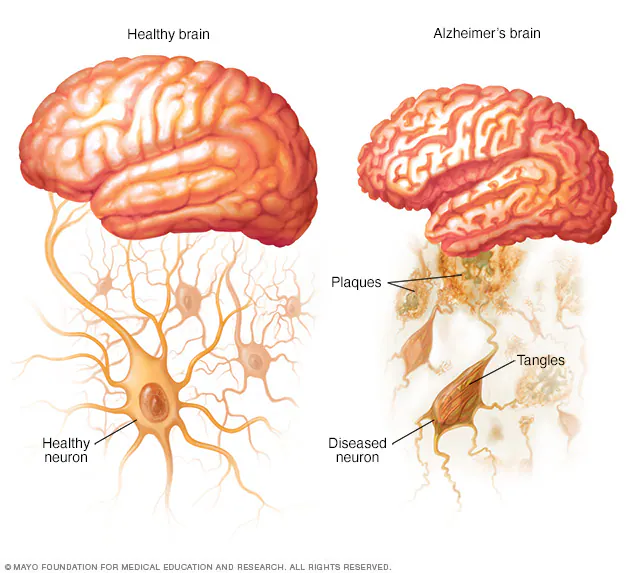
They also found reduced lithium levels stemmed from binding to amyloid plaques (misfolded proteins found between nerve cells found in the brains of people with Alzheimer’s) and impaired uptake in the brain.
In their final set of experiments, they found a new lithium compound that avoids “capture” by amyloid plaques restored memory in mice.
“In people that start experiencing memory loss, the so-called mild cognitive impairment, lithium gets trapped by amyloid plaques—reducing its availability just when it’s most needed to protect against inflammation and neurodegeneration,” Yankner and Aron explained.
“This creates a self-perpetuating feedback loop of worsening pathology and accelerating disease progression and memory loss.”
This all ties together decades-long observations in patients and provides a new theory of the disease and strategy for early diagnosis, prevention and treatment, according to the researchers.
Recently developed treatments that target amyloid beta (a key component of the amyloid plaques) typically don’t reverse memory loss and only modestly reduce the rate of decline.
“The idea that lithium deficiency could be a cause of Alzheimer’s disease is new and suggests a different therapeutic approach,” said Yankner in a statement.
Researchers had previously found lithium to be the only metal that had markedly different levels across people with and without Alzheimer’s at different stages. But Yankner added in a statement, “Lithium turns out to be like other nutrients we get from the environment, such as iron and vitamin C.
“It’s the first time anyone’s shown that lithium exists at a natural level that’s biologically meaningful without giving it as a drug.”