With less than two months to the September 1 General and Regional Elections, the Guyana Elections Commission (GECOM) is failing in its most basic duty, i,.e. to safeguard the integrity of the electoral process and ensure a level playing field for all contesting parties. What we are witnessing is not mere incompetence. It is a dangerous pattern of exclusion, opacity, and apparent collusion, one that threatens to strip this election of credibility long before a single vote is cast.
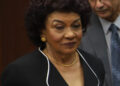
From all indications, GECOM, under the leadership of Chairperson Ret’d Justice Claudette Singh, appears uninterested in creating the conditions necessary for free, fair, and transparent elections. Instead, the Commission seems content to operate under the shadow of the governing People’s Progressive Party/Civic (PPP/C), enabled by its nominated commissioners and presided over by a Chair whose compliance borders on complicity.
Nowhere is this more apparent than in the Commission’s refusal to provide small contesting parties with copies of the Preliminary List of Electors (PLE), a basic electoral tool critical for validation and campaigning. The list would reportedly be shared only with the PPP/C and the People’s National Congress Reform/A Partnership for National Unity (PNCR/APNU), leaving other parties at a severe disadvantage. That GECOM would engage in such blatant discrimination and offer no satisfactory explanation is both disgraceful and unacceptable.
Even more troubling were the events surrounding Nomination Day, when GECOM inexplicably directed the submission of Lists of Candidates in a manner that allowed the PPP/C to jump the queue, despite other parties, including the AFC, having been present at the location since Monday. Such eleventh-hour decisions, made without consultation or justification, only fuel the perception of a process being stage-managed for political benefit.
These developments demand a unified response. The time for polite protest has passed. All non-governmental contesting parties must now stand together and demand accountability. Fragmented outrage is no match for institutional bias. Unity, coordination, and sustained public pressure are the only effective response to the creeping erosion of electoral legitimacy.
The moment also demands leadership. The Leader of the Opposition, Aubrey Norton,cannot remain silent. He must either lead the fight for electoral fairness or throw his full support behind those already doing so. His voice is essential, particularly in condemning the Nomination Day irregularities and the systemic disenfranchisement of smaller parties. The society is watching, and it expects him to rise to the occasion.
It bears repeating: an election is not only rigged at the count or declaration. It can be rigged at every stage— through the manipulation of lists, the suppression of oversight, the abuse of process, and the denial of access. That is why safeguards such as a clean voters’ list and the use of biometric verification were never cosmetic demands. They were essential bulwarks against fraud—ignored and dismissed by both GECOM and the Government.
Meanwhile, the outstanding concerns raised by the Opposition-nominated commissioners remain unresolved:
-
The deletion of deceased persons from the voters’ list;
-
The clarification of voting rights for incarcerated citizens;
-
The status of non-resident electors;
-
And the suspicious sole-sourcing of election materials, in apparent breach of procurement laws.
Each unresolved issue compounds an already fragile electoral environment.
Guyanese voters deserve better. The legitimacy of these elections cannot rest on trust alone—it must rest on process, law, and equal access. If GECOM cannot, or will not, provide that, then it is the duty of the political parties—and the broader civil society—to demand it.
Democracy does not defend itself; it must be protected—boldly, visibly, and collectively. Nothing less than united opposition action will suffice.