
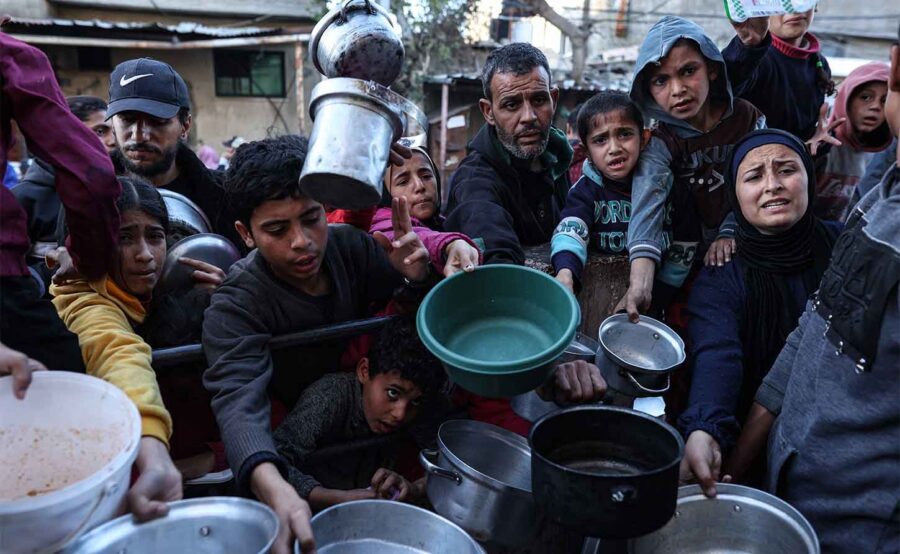
(WiredJA)-The Caribbean Community has shattered its diplomatic restraint, unleashing an extraordinary condemnation of what it calls Gaza’s “unprecedented humanitarian catastrophe”—a crisis so appalling that even distant island nations can no longer stomach international inaction.
In a blistering statement released July 11, CARICOM Heads of Government deployed language that would make seasoned diplomats wince, declaring themselves “profoundly distressed” and “appalled” by the “immense, unabated suffering and tragic loss of civilian lives.” This isn’t the Caribbean’s usual measured prose—this is a moral reckoning.
The timing carries brutal precision. As CARICOM issued its statement, 640 people were killed and at least 4,488 injured trying to access food supplies since 27 May 2025, while 57 children have reportedly died from the effects of malnutrition since the aid blockade began on 2 March 2025. These aren’t statistics—they’re an indictment of a world that has normalized starvation as statecraft.
The Caribbean leaders didn’t mince words about the mechanics of suffering. They condemned what they termed the “weaponization of essential resources,” calling it “morally repugnant, intolerable and unconscionable.” This goes beyond humanitarian hand-wringing to name a deliberate strategy: the systematic conversion of food, water, and medicine into instruments of collective punishment. Since March 2025, Israel has made the blockade publicly official, with Defense Minister declaring that “No humanitarian aid will enter Gaza”.
CARICOM’s fury extends to the perversion of humanitarian mechanisms themselves. The organization condemned the “unacceptable dismantling of humanitarian mechanisms, replacing UN-led coordination with military control” that “demonstrably leads to further civilian casualties.” The numbers bear this out: the 400 aid distribution points operating during the temporary ceasefire across Gaza have now been replaced by just four military-controlled distribution sites, forcing two million people into what aid groups describe as militarized killing fields.
The result is a grotesque theater where hunger meets gunfire. At least 613 Palestinian aid seekers had been killed, including 509 near the GHF’s distribution sites as of late June, while IDF troops had received orders to fire on the unarmed crowds to “keep them away from food distribution centers”. CARICOM’s statement anticipated this horror, warning that military control of aid would lead to “further civilian casualties”—a prediction that has become grim reality.
The Caribbean Community refused to accept Israel’s narrative of proportional response. While acknowledging the “abhorrent 7 October 2023 attacks and hostage-taking,” CARICOM equally condemned what it called the “disproportionate military response” and “systematic undermining of peace by illegal settlement expansion.” This represents sophisticated moral reasoning: condemning terrorism while rejecting collective punishment as a response.
Perhaps most damning, CARICOM called out the international community’s complicity through inaction. The organization noted that their previous “calls for an immediate, unconditional, and sustained ceasefire” had “largely gone unheeded,” transforming preventable suffering into what they now characterize as deliberate destruction. Only 40 per cent of drinking water facilities functional and fuel shortages pushing water systems to near collapse, while 93 per cent of households faced water insecurity by mid-June.
The statement’s most pointed critique targeted the breakdown of international law itself. CARICOM lamented the “belligerent and continued disregard” for UN Security Council resolutions, essentially accusing the international community of enabling lawlessness through selective enforcement. When small island states start lecturing the world about legal accountability, something fundamental has broken down.
The Caribbean leaders demanded immediate action with the urgency of people who understand vulnerability. They called for “full, safe, and unimpeded humanitarian access throughout Gaza,” the “immediate and unconditional release of all hostages and detainees,” and an “end to forced displacement of Palestinians.” These aren’t diplomatic niceties—they’re emergency measures for a population facing extinction.
CARICOM’s commitment to a two-state solution rings with particular authority coming from nations that achieved independence through struggle against colonial powers. Their insistence on “comprehensive, just, and lasting peace” between Israelis and Palestinians reflects hard-won understanding that sustainable security requires justice for all parties.
The statement concluded with words that carry implicit warning: “The international community cannot stand idly by while this catastrophe deepens.” For an organisation known for diplomatic caution, this represents not just criticism but a fundamental challenge to global conscience. When the Caribbean—3,000 miles from Gaza—can no longer maintain silence, it suggests the crisis has transcended geography to become a test of humanity’s basic moral framework.
CARICOM’s intervention signals something profound: that Gaza’s suffering has become so extreme it compels moral clarity even from the most diplomatically cautious corners of the world. The Caribbean Community hasn’t just issued a statement—they’ve drawn a line in the sand of international conscience.