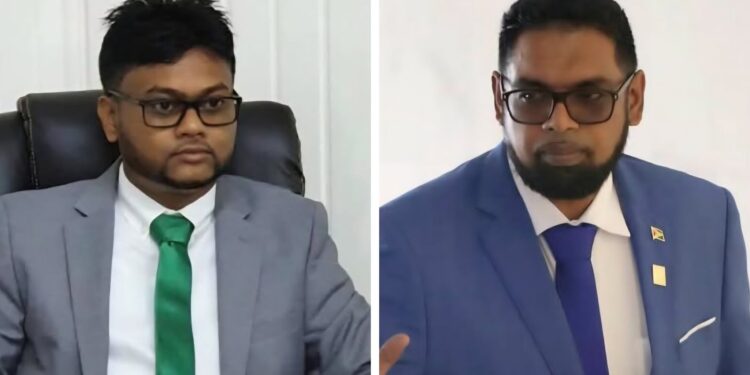
In a recent article published by the Guyana Chronicle on July 8, 2025, Attorney General Anil Nandlall asserted that the People’s Progressive Party/Civic (PPP/C) has always ensured the equitable distribution of Guyana’s national resources. While the government’s public relations machinery might find comfort in such sweeping claims, the lived realities of countless Guyanese citizens across regions tell a very different story—one marked not by equity, but by entrenched disparities, political favouritism, and regional neglect.
Let us be clear: the concept of equitable distribution implies fairness, inclusion, and balance across geographic, ethnic, and economic lines. What has unfolded under the PPP/C’s stewardship, particularly in its recent years bolstered by oil revenues, is a pattern of investment disproportionately favouring strongholds of political loyalty—while communities perceived as opposition-aligned, particularly in Regions 4, 7, 8 and 10, continue to be underserved and deliberately marginalised.
The Evidence of Unequal Allocation.
Take for instance the much-publicised hospital in Lima. While we welcome modern healthcare infrastructure anywhere in Guyana, this does not excuse the fact that large swaths of the hinterland and interior communities still lack even basic health posts. Citizens in Region 10 are forced to travel long hours or days to Georgetown for routine care or emergency services. Where is the equitable health investment for these areas?
Mr. Nandlall’s reference to education success stories such as Anna Regina Secondary School is another convenient half-truth. While pockets of progress exist, schools in Indigenous villages and poor rural communities remain severely under-resourced, overcrowded, and short of qualified teachers. Children are still learning under dilapidated roofs. That is not equity—that is neglect masked by isolated success stories used for political optics.
The “Because We Care” Illusion
The AG also referenced programmes such as “Because We Care” cash grants and part-time jobs as proof of equitable resource sharing. But these initiatives, while helpful in the short-term, are fundamentally flawed in both design and delivery. Reports from across the country indicate that job distributions and grant access are often filtered through PPP party groups, with partisan gatekeeping playing a decisive role in who benefits. True equity would mean transparent, needs-based policies—not political reward systems masquerading as social upliftment.
Oil Wealth, Same Old Story
Guyana is now flush with billions in oil revenue, and yet basic infrastructure in Linden, Bartica, Mahdia, and Lethem remains outdated, broken, or non-existent. Paved roads, modern housing, clean water supply, and broadband connectivity remain luxuries rather than guarantees. It is baffling to hear declarations of “inclusive national development” when the government has failed to even produce a transparent, regionally accountable breakdown of how oil revenue is being spent.
If the government is so confident in its equitable distribution, where is the independent audit of regional investments over the last five years? Where is the public data showing proportional per capita investment across all ten regions? Without this, claims of equity are hollow.
Conclusion: Words vs. Reality
The PPP/C government, and particularly its senior officials like Mr. Nandlall, have become masters at rhetorical gymnastics—parading selective accomplishments as symbols of universal progress. But no amount of well-staged court openings, ribbon cuttings, or cash handouts can hide the deeper, systemic inequalities that continue to define our national landscape.
Guyanese deserve more than politically expedient development. We deserve genuine equity—measured not by what a few regions receive, but by how the nation is uplifted as a whole. Until then, declarations like the one made by the AG in the Guyana Chronicle remain nothing more than comforting myths crafted for headlines, not realities grounded in truth.