Friday, April 17, 2026
Village Voice News
ADVERTISEMENT
  • Home
  • News
  • Sports
  • Editorial
  • Letters
  • Global
  • Columns
    • Eye On Guyana
    • Hindsight
    • Lincoln Lewis Speaks
    • Future Notes
    • Blackout
    • From The Desk of Roysdale Forde SC
    • Diplomatic Speak
    • Mark’s Take
    • In the village
    • Mind Your Business
    • Bad & Bold
    • The Voice of Labour
    • The Herbal Section
    • Politics 101 with Dr. David Hinds
    • Talking Dollars & Making Sense
    • Book Review 
  • Education & Technology
  • E-Paper
  • Contact Us
No Result
View All Result
  • Home
  • News
  • Sports
  • Editorial
  • Letters
  • Global
  • Columns
    • Eye On Guyana
    • Hindsight
    • Lincoln Lewis Speaks
    • Future Notes
    • Blackout
    • From The Desk of Roysdale Forde SC
    • Diplomatic Speak
    • Mark’s Take
    • In the village
    • Mind Your Business
    • Bad & Bold
    • The Voice of Labour
    • The Herbal Section
    • Politics 101 with Dr. David Hinds
    • Talking Dollars & Making Sense
    • Book Review 
  • Education & Technology
  • E-Paper
  • Contact Us
No Result
View All Result
Village Voice News
No Result
View All Result
Home Global

China completes barrier belt to contain its fourth-largest desert

Admin by Admin
July 1, 2025
in Global
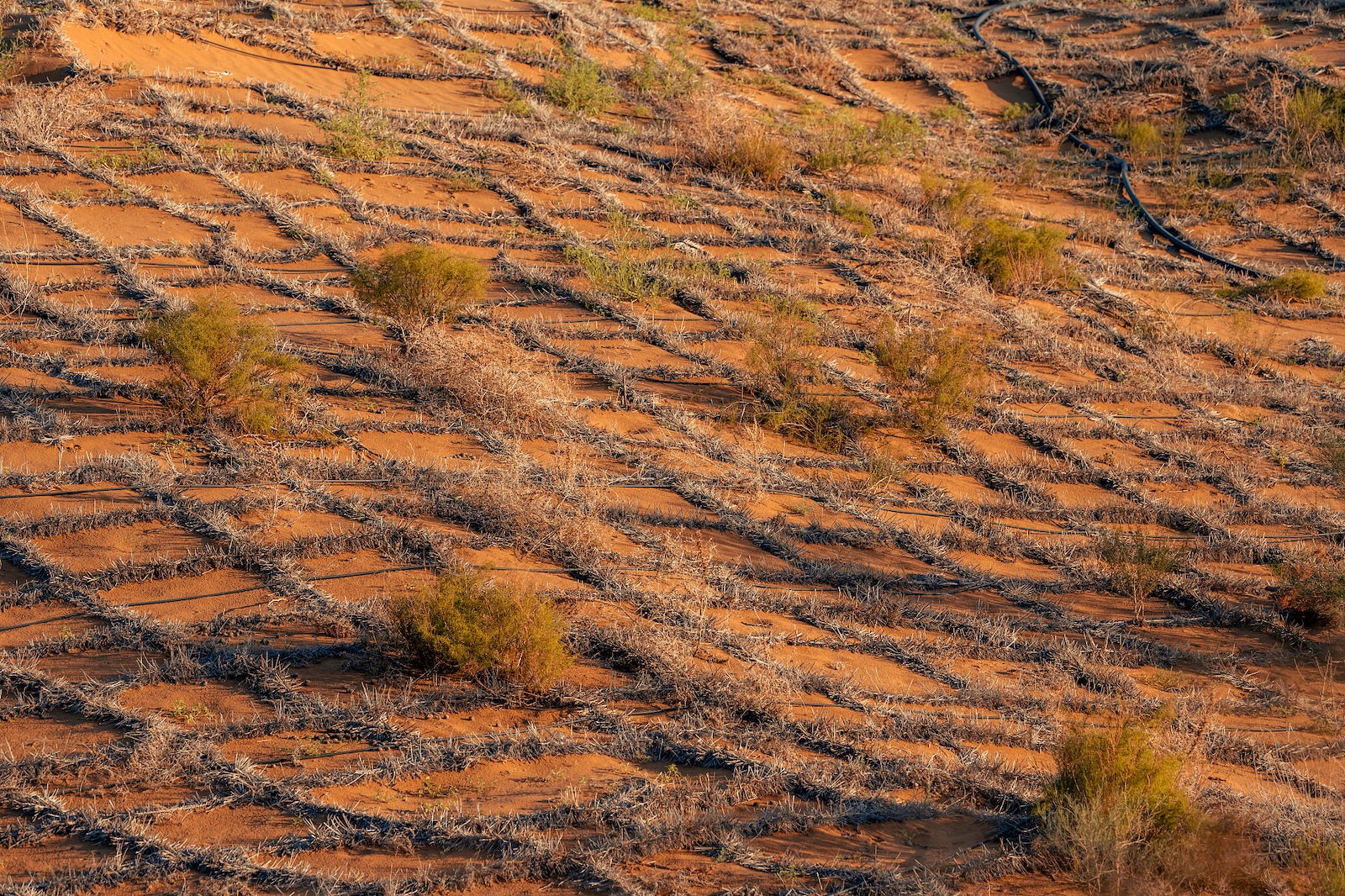
Straw checkerboards in the Tengger Desert in Zhongwei City, Ningxia Hui Autonomous Region, northwest China. /VCG

Straw checkerboards in the Tengger Desert in Zhongwei City, Ningxia Hui Autonomous Region, northwest China. /VCG

0
SHARES
0
VIEWS
Share on FacebookShare on Twitter

China on Monday reached a major milestone in desertification control by completing a barrier belt along the southeastern edge of the Tengger Desert in its northwestern Ningxia Hui Autonomous Region.

In Changliushui village, located in the city of Zhongwei, workers installed the final row of straw checkerboards, a traditional sand-fixing method, that locks the final stretch of shifting dunes in the Ningxia part of the Tengger Desert, following a sand control project spanning more than six decades.

READ ALSO

France, UK to cohost talks on Hormuz

Hopes for deal to end Iran war grow, but nuclear issues unresolved

This traditional sand-stabilization method involves planting straw in a checkerboard pattern on the desert surface to secure the sand and prevent wind erosion. This new development marks the completion of a 153-kilometer-long green barrier belt in Ningxia, which ranges from 10 to 38 kilometers in width.

Known as the desert edge-locking project, this method was created to stabilize shifting dunes by planting vegetation belts around the desert’s boundary, stopping further expansion. Sand control often faces setbacks as fixed dunes can start to move again. To address this, workers plan to plant grass and desert-adapted shrubs within the checkerboard grid once the rainy season begins. When established, the vegetation is expected to secure the sand long-term.

The belt serves as a natural defense line against the eastward spread of the Tengger Desert, which stretches approximately 43,000 square kilometers.
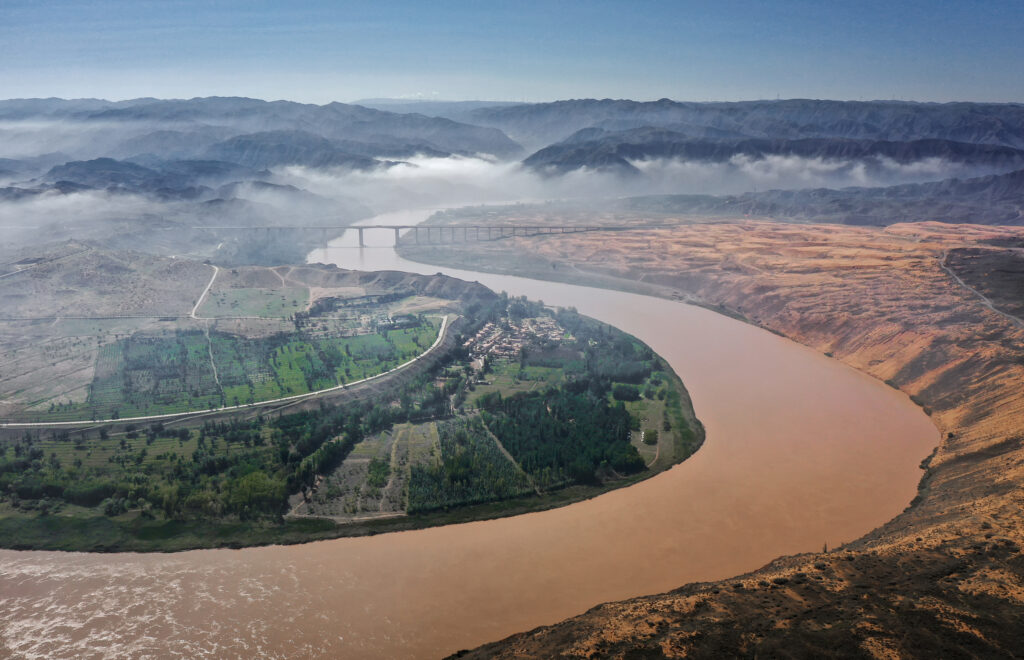
The Yellow River and the Tengger Desert, Zhongwei City, Ningxia. /VCG

Zhongwei, located between the Qilian and Helan mountains, is the only gateway for the Tengger Desert’s eastward expansion. Experts say the barrier will become a critical ecological buffer that stops further sand encroachment and protects the Yellow River.

Lu Qi, chief scientist of the Chinese Academy of Forestry, said the barrier belt can help prevent the desert from further encroaching on farmland, towns, oases and roads, and also significantly reduce the source of sandstorms.

The construction of the green barrier belt in Ningxia dates back to the 1950s when the straw checkerboard approach was invented to protect the Baotou-Lanzhou Railway, China’s first desert railway.

Local authorities have worked with research institutions to apply new technologies in sand control, such as artificial cyanobacteria sand crusts and improved straw checkerboards.
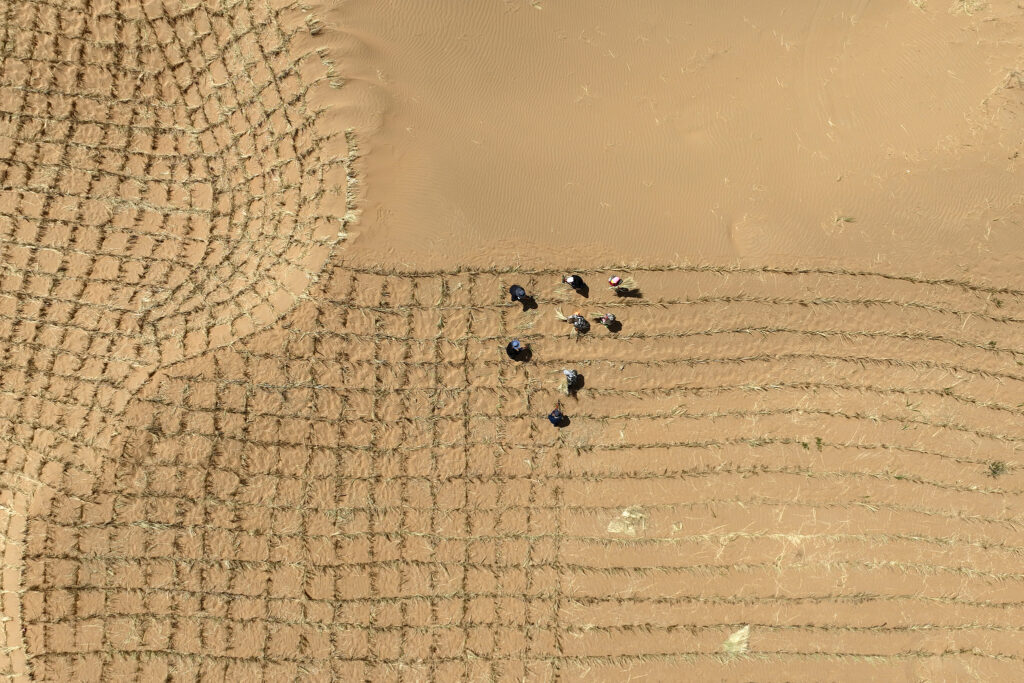
Workers install straw checkerboards in the Tengger Desert in Zhongwei City, May 9, 2024. /VCG

Over the past two years, 2.6 billion yuan (about $363 million) has been invested in the construction of the belt, part of China’s Three-North Shelterbelt Forest Program, the world’s largest afforestation program to tackle desertification.

After generations’ sand control efforts over the past decades, the city has finished desertification control on about 370,000 hectares of land, pushing the desert back by about 25 kilometers.

“The green barrier belt is not only a means of ecological restoration, but also a key practice of harmonious coexistence between humankind and nature,” said Lu. “It also offers an important reference for the sustainable development of arid areas worldwide.”

China has taken an active role in global desertification control. Since signing the United Nations Convention to Combat Desertification in 1994, the country has been a leader in halting land degradation and reversing desertification, and has continuously shared sand control experience, technologies and talent abroad.

In its latest effort, the China-Central Asia desertification control cooperation center, based in Ningxia, was inaugurated in June to boost international collaboration.

“Our goal is to inject more Chinese momentum into global ecological governance and sustainable development,” said Dong Yanbiao, deputy director of the center. He added that the center plans to leverage technology advantages, integrate domestic research and build cooperation networks.

(Cover: The Yellow River and the Tengger Desert, Zhongwei City, Ningxia Hui Autonomous Region, northwest China. /VCG)


Source(s): Xinhua News Agency
ShareTweetSendShareSend

Related Posts

Global

France, UK to cohost talks on Hormuz

by Admin
April 16, 2026

French President Emmanuel Macron and the United Kingdom's Prime Minister Keir Starmer will cohost a video-conference with international leaders on...

Read moreDetails
People take part in an anti-U.S. and anti-Israel rally at Enghelab Square amid a ceasefire between U.S. and Iran, in Tehran, Iran, April 15, 2026. REUTERS/Thaier Al-Sudani Foreign media in Iran operate under guidelines set by the Ministry of Culture and Islamic Guidance, which regulates press activity and permissions Purchase Licensing Rights
Global

Hopes for deal to end Iran war grow, but nuclear issues unresolved

by Admin
April 16, 2026

JERUSALEM/ISLAMABAD, April 16 (Reuters) - Optimism grew on Thursday that the Iran war may be near an end, with a key Pakistani...

Read moreDetails
Global

Florida nursing assistant sentenced to 9 years in $11.4M Medicare fraud scheme

by Admin
April 15, 2026

A Florida nursing assistant has been sentenced to nine years in federal prison for his role in a multimillion-dollar health...

Read moreDetails
Next Post
A view of the site of the First National Congress of the Communist Party of China in east China's Shanghai, February 13, 2024. /VCG

CPC turns 104, advancing Chinese modernization and global development goals


EDITOR'S PICK

Pensioner robbed of $187,000 at Leonora

August 24, 2021

WORD OF THE DAY: PENULTIMATE

October 13, 2025
China Flag

China issues guidelines for prevention, treatment of diabetes, chronic respiratory diseases

July 29, 2024
An interior Road (Team Mohamed's photo)

$209B Interior Roads a “National Shame,” Says Mohamed

December 14, 2025

© 2024 Village Voice

No Result
View All Result
  • Home
  • News
  • Sports
  • Editorial
  • Letters
  • Global
  • Columns
    • Eye On Guyana
    • Hindsight
    • Lincoln Lewis Speaks
    • Future Notes
    • Blackout
    • From The Desk of Roysdale Forde SC
    • Diplomatic Speak
    • Mark’s Take
    • In the village
    • Mind Your Business
    • Bad & Bold
    • The Voice of Labour
    • The Herbal Section
    • Politics 101 with Dr. David Hinds
    • Talking Dollars & Making Sense
    • Book Review 
  • Education & Technology
  • E-Paper
  • Contact Us

© 2024 Village Voice