By Mark DaCosta-The ongoing dispute over the political symbol of the We Invest in Nationhood (WIN) party illustrates the troubling intersection of politics and national identity in our homeland, raising pressing questions about the impartiality of the Guyana Elections Commission (GECOM).
Azruddin Mohamed, the well-known businessman leading WIN, finds himself embroiled in a contentious decision by GECOM that has barred his party from using the jaguar symbol in the upcoming elections. The ruling occurred shortly after GECOM alleged that the image submitted by the party violated national protocols by featuring an element of our Coat of Arms—specifically, the jaguar, a creature emblematic of our cultural heritage.
Mohamed asserts, however, that the symbol in question is misidentified; he insists that it depicts a leopard rather than a jaguar, a claim he stands ready to support with documentation, including image verification.
Jaguar vs. leopard — two majestic, spotted big cats so alike in appearance that many people struggle to tell them apart. Although the coats of leopards and jaguars may look nearly identical at first glance, there are distinct differences in their rosette patterns. Jaguars have larger rosettes with spots inside them, while leopards have smaller, solid rosettes that are more tightly spaced.
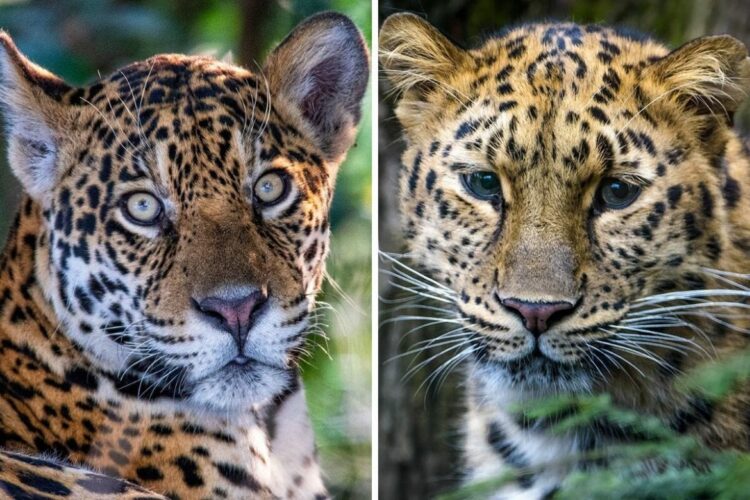
The situation escalated quickly following GECOM’s rejection. The party is now poised to take legal action if GECOM remains steadfast in its decision. “Once refused, ‘yes’, I will move to the High Court. For sure, the face that we submitted is a different species,” Mohamed stated, illustrating his commitment to contest the ruling.
Mohamed has also voiced concerns regarding the fairness of the upcoming elections, hinting that the treatment of his party is indicative of underlying biases within the electoral body.

Confusion regarding the requirement for political parties to declare their symbols was highlighted by GECOM’s Commissioners. Vincent Alexander, one of the opposition-nominated commissioners, noted the inconsistency in GECOM’s procedures, questioning whether such a declaration was necessary during submissions.
In fact, other officials, including WIN affiliates, have remarked that naming a symbol was not mandated, thereby raising further doubts about GECOM’s rationale.
What exacerbates the situation is the conflicting precedent regarding political symbols in our homeland. The Rise Organise and Rebuild (ROAR) party previously employed a jaguar as its symbol without meeting any opposition from GECOM, underscoring the selective nature of this recent ruling. Concerns about fairness were echoed by PPPC-affiliated Election Commissioner Sase Gunraj, who acknowledged that this marked a departure from prior policies and practices regarding political symbols.
Moreover, there is an apparent dissonance within the commission regarding the principles underpinning national symbols. Article 7 of the Guyanese Constitution emphasises the duty of citizens to respect national emblems, but the interpretation varies widely among GECOM officials.
Gunraj pointed out that discussions around the use of Indigenous symbols have led to the current impasse, asserting that a jaguar symbol cannot be accepted due to its status within the Coat of Arms. Contrarily, Alexander argues that if we are to be consistent in respecting our national symbols, then other elements of the Coat of Arms, such as the pick-axe and Canje Pheasant, should also be afforded the same scrutiny currently focused solely on the jaguar.
The inconsistency points to a possible bias in the decision-making processes at GECOM, raising questions about external influences, particularly from the ruling People’s Progressive Party Civic (PPPC).
In the wake of this controversy, calls for a fair and transparent electoral process have become even more urgent. Earlier dissent expressed by leaders within various Indigenous organisations against the use of the jaguar as a political symbol adds another layer to an already complex situation. Claims have been made that such symbols are sacred and should not be politicised, further complicating the environment surrounding the elections.
As it stands, the precedent set by GECOM’s ruling presents a red flag for the electoral integrity of Guyana. The local political landscape is marred by accusations of manipulation and bias, leading many to question whether the upcoming elections can truly be deemed free and fair.
The controversy over the leopard/jaguar symbol and the WIN party presents a critical view of the current electoral environment, suggesting that GECOM may be acting under undue influence from the ruling People’s Progressive Party, potentially jeopardising the electoral process.
The jaguar symbol saga raises alarm for our elections.