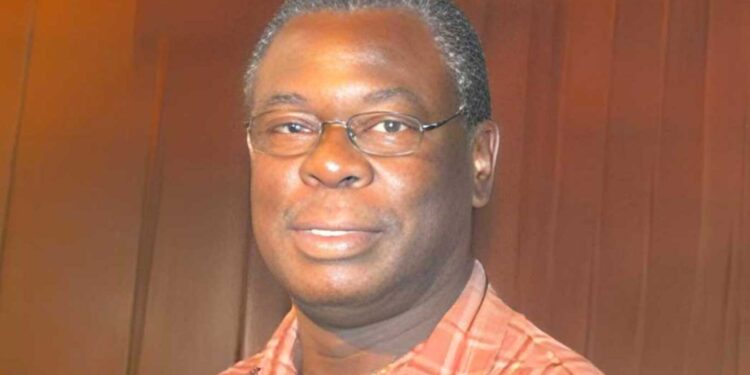
A few weeks ago I heard or read that Charles Ramson, Junior, boasted that development in Guyana can be measured by the number of cars that appeared on the roads within the last three or four months. He contended that an entire series of 10,000 cars were sold within three months. A casual observer will react to this information that Guyanese were swimming in money; that most of them can buy cars.
For starters, these are used cars as opposed to reconditioned cars. Some have ended up in the workshop within a few months at a cost to the buyer who most likely bought these cars on terms. There is also no idea how many have been repossessed within a few months of purchase. There was a time when there was a limit to the age of the car being imported. The contention was that the older cars placed a strain on the foreign currency because of the volume of spare parts that had to be bought.
So there are all these cars. One problem is that there are not enough roads to accommodate them. Drivers are complaining about the length of time it often takes them to complete a short distance because of the bumper to bumper traffic. Another is the ability of the new drivers to exercise caution on the roads.
In recent times the nation has been regaled with the number of car crashes and road accidents. Images of cars in canals along roadways, reports of vehicles crashing into other vehicles and into utility poles are all too common. There continues to be questions about the licensing practices.
Experienced drivers have some horror stories to tell. They speak of the new drivers changing lanes without exercising due care, overtaking in the height of traffic, and ignoring traffic signals. There is no need to talk about the excessive speeds. One worrying fact is that when they are involved in accidents they make haste to settle in the absence of the police. Many make promises that they cannot keep because they lack the financial wherewithal. But according to Ramson, this is progress and development.
That apart, there are the motorcycles that pose an even greater threat. Every motorcyclist is a road racer. He flies down roads regardless of how busy they are. He has a knack for weaving in and out of traffic regardless of the pace at which the cars are moving. Some kill themselves.
It is as if the police no longer pay attention to the road users. A helmet was compulsory for motorcyclists at on time. This is observed more in the breach and in the presence of the policemen who seek to control traffic. Be that as it may, the nation must continue to live with the madness on the roads and at the various places where there is a buildup of traffic at certain times of the day.
The situation is not helped when people on business need parking. There was an attempt to have parking meters installed in Guyana. For some, this was a great idea but the problem was that people wanted to enjoy the freeness and refused any measure to control the situation.
If the traffic is one disaster, the others involve light and water. For more than five years this country has been receiving more money than it ever did in its history. This money is coming from oil. People on the outside now say that Guyana is a rich country, which it is.
It is also one of the countries with the highest poverty rates and growing illiteracy. Many people are still hungry and many of them are not skilled to qualify for high paying jobs. I see them clearing drains and shoveling sand at the sides of the roadways. Despite being poor, they must also suffer the indignity of a life of constant blackouts. The government has been spending money on infrastructure. What a pity that money is not being spent on developing the electricity sector.
One hears talk about the gas to shore project that should have been completed more than a year ago. That was supposed to be the cure for all the electricity woes. Not only was electricity promised to be so much cheaper; it was also expected to be reliable. Sadly, no one knows the state of this project. Vice President Bharrat Jagdeo is not saying.
Prime Minister Mark Phillips who has responsibility for the electricity sector keeps referring queries about this project to the other Vice President. A lot of money has been spent on power barges and on standby generators. These have marginally improved the situation but blackout remains.
Water distribution is another issue. The discoloured water is persistent and as if that is not enough there is now a drastic decline in water pressure. For years people have been resorting to secondary water sources like the black tanks. The rains have helped tremendously for those who have overhead tanks.
For the records, overhead tanks are nothing new. They have been a part of the landscape for decades. The issue now is to get enough pressure in the pipes to fill these tanks. And for many, this water is not for drinking but for the other household chores. Still fresh in the memory is the advice from a Health Minister for people to put bleach in their drinking water. It now seems as if the more money there is, the worse the social services become.