

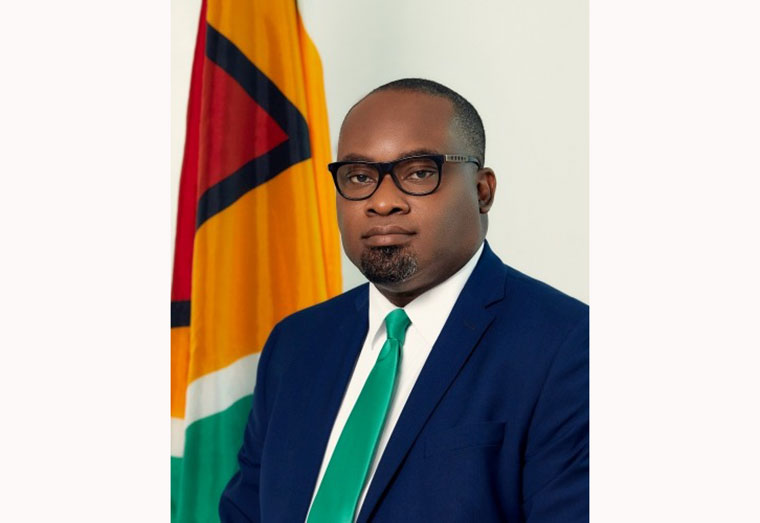
By Roysdale Forde S.C, M.P- Guyana stands at a pivotal moment in its development, following the 2015 discovery of commercially viable offshore oil reserves within its Exclusive Economic Zone. Since then, investment in the emerging oil sector has increased rapidly, and the country has begun to reap substantial returns as production scales up year by year.
Oil wealth presents a powerful opportunity to transform Guyana for the better, offering the means to significantly improve infrastructure, expand access to services, and uplift the most vulnerable members of society. However, as global experience has shown, natural resource wealth can also present significant governance challenges. If not managed transparently and equitably, such wealth risks enriching a select few at the expense of national development.
Concerns persist regarding the stewardship of Guyana’s oil revenues. Many observers have raised questions about whether the current administration—the PPP/C government—is effectively translating resource wealth into broad-based improvements in the lives of all citizens. As the country moves forward, sound governance, robust institutions, and vigilant oversight will be essential to ensure that the oil windfall benefits all Guyanese, now and for generations to come.
I have decided to document just three of the negative consequences of the bad governance practiced by the incumbent regime for our citizens as they contemplate their choices. As we head toward decisive national elections, the anger of a nation fed-up with neglect and despair must be supported by the facts. It must form the background to the unquenchable thirst for change and the rejection of the government which has been allowed to take over Guyana’s political landscape for the past 3 decades.
First, on the question of economic and social performance. In its 23rd Report on Economic and Social Developments in the Caribbean, the Caribbean Development Bank stressed the importance of macroeconomic stability for growth. The Bank argued that growing economies that do not maintain a stable macroeconomic environment run the risk of suffering recurrent economic turmoil, with resultant damage to growth, export capacity and social welfare.
Consequently, maintaining a healthy macroeconomic environment is a central responsibility of any government and particularly in a country like Guyana where extreme vulnerability to exogenous shocks and failure to grow and diversify in a sustainable manner with broad benefits to various sectors of society has been the recurring experience over decades.
There is no doubt that the global economy has changed significantly since 2015 and the risks have increased for all countries. Guyana, however, is especially vulnerable to shocks from multiple volatile sources. Freedom from man-made shocks like poor macro-economic policies is the responsibility of the government of the day at any time if it is to fulfil the central goal of economic development.
When the government entered office in 2020, it expressed confidence that it could produce some of the highest rates of growth in the world and briefly bandied about exciting promises and bold words like “transformational”. Against its poor historical achievements, it expressed its own aspirations that the Guyana economy could reach diamond status.
Over the past few years, however, the forecast numbers have worsened and uncertainty has increased. The only sign that Guyana is about to reach the level of performance imagined has been a record increase in the size of the national budget.
The numbers portray Guyana heading in the opposite direction from: a real national and per capita GDP that is at the mercy of rising world prices and domestic inflation; a currency under constant threat of collapse; little contribution to GDP from any manufacturing or service activity, the banking system unable to create the wealth-creating factor of credit; a single sector – oil – narrowing the range of contribution; and continually threatening energy crises as has been the recent experience.
Of primary concern to the citizenry of Guyana is not so much what the GDP output is, at any given point; rather it is the standard of living, determined by how much money each person (and family) has to spend on particular goods and services, which determines their actual quality of life. Aside from the inherent ability of peoples’ incomes to increase their spending power, another determinant of the quality of life is the price of goods and services, since inflation eases income limitations, while possibly attaching a burden to the price of basic necessities.
An inflation rate of 5% may be acceptable under certain circumstances, while an inflation rate of 1.6% may be shocking under other scenarios. Since the nominal GDP of the Guyanese economy is predominantly composed of depreciation-augmented contributions from the various sectors of the economy, the annual growth decrement of inflation from GDP, should provide a fair estimate of the given country’s real GDP growth. In Guyana, the impact of the contraction of the economy in 2020 due to the pandemic, persisted for some time.
The economy rebounded in 2021 by a whopping 19.9%, before reverting back to more normalised growth figures of 57.4% in 2022. Thereafter, the real GDP growth estimates have been projected at an annual rate of approximately 25.0% for the years 2023 to 2025. Despite that, however, headline inflation has persisted at unacceptably high levels. The exaggerated fiscal response to the pandemic-related contraction in 2020, the external factors of the volatility of fuel prices in the wake of the war, together with inflation and the resumption of trade activities, have contributed to those high inflation rates.
Second, Corruption. Since the PPP/C Government took office in August 2020, there has been a plethora of allegations made against them. These allegations mostly center around the nepotism and corruption that have been commonplace in Guyana throughout the majority of this party’s rule to date. Instead of clamping down on this inequality and corruption, the Government have been actively participating in it. There have also been accusations of many bordering on human rights abuses and no ban on unqualified people and companies with no experience in the oil and gas sector coming to Guyana and offering inflated price and services for contracts linked to Guyana’s deepwater oil and gas.
Guyana needed an Environmental and Social Governance report before it could engage in operating its Oil and Gas sector. Such reports are supposed to establish minimum standards for human behaviour, human rights and environmental protections relative to companies participating in the country’s oil and gas sector. Nothing.
The PPP/C Government has also opted to delay the establishment of an Economic Diversification Committee. It has taken almost two years since the PPP/C took office in August of 2020 for Guyana to update the contents of its report. This report was commissioned to determine the extent of changes which need to take place in Guyana’s economy to make it capable of attracting investment from other sectors besides Oil and Gas, and Tourism and to make Guyana’s economy once more sustainable.
Finally, in 2022, the American State Department accused Guyana’s incumbent government of pervasive government corruption. This was hardly surprising, as there have been accusations of rampant executive corruption against the government for decades, extending back into the pre-independence days when the party was headed by Cheddi Jagan. The most spectacular scandal in this regard was the infamous offering $300,000 per work to install gates on the homes of wealthy overseas-based donors of the party and friends.
The gates had a production cost of less than $10,000. Another was the scandal in which a group of cabinet ministers parceled out large contracts for construction of promenades to be installed along the seawall. These, along with the allegations of bribery surrounding the sale of the mine as well as the shady dealings of a backed attorney and dredge owner in the dredges for gold contracts, only scratched the surface of the regime’s corruption.
What lends particular weight to current allegations of corruption—both those raised by the opposition and counterclaims from the government—is the context in which they now arise: Guyana’s emergence as an oil-rich nation. With billions in projected revenue and vast new spending, the opportunities for misuse of public funds have multiplied exponentially. Allegations of large-scale misappropriation can no longer be dismissed as political noise—they demand rigorous, transparent investigation and public accountability.
A government that fails to implement a coherent and inclusive anti-corruption strategy—one that invites scrutiny, fosters civic engagement, and prioritizes institutional reform—cannot credibly claim to uphold the rule of law, deliver security, or ensure stability. Repeated denials, deflection, and partisan rhetoric are no substitutes for good governance.
Despite the promise of prosperity, the lived reality for many Guyanese remains troubling: rising cost of living, widening inequality, weakened local governance, and persistently poor quality of life indicators. The government’s focus on rapid economic growth must not come at the expense of equity, accountability, or democratic inclusion.
The stakes for this year’s elections could not be higher. Voters must ask: What vision has this government truly delivered? And is it one that serves all Guyanese—or only a privileged few? If the answers fall short, then the democratic path forward is clear. In the spirit of renewal and responsibility, it is time to chart a new course.




![China's Foreign Ministry spokeswoman Mao Ning. [Photo/fmprc.gov.cn]](https://villagevoicenews.com/wp-content/uploads/2023/01/spokewoman-350x250.jpeg)


