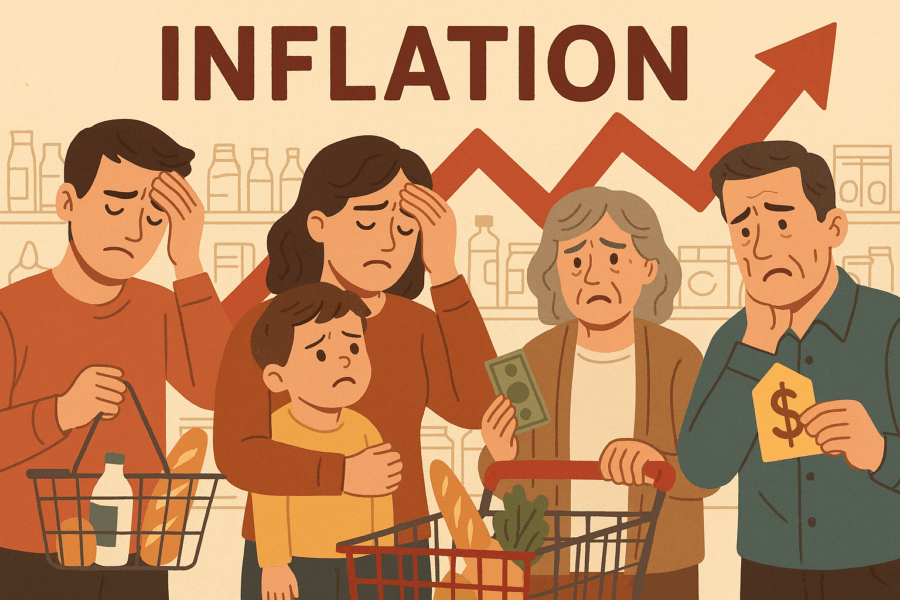
By Mark DaCosta- As Guyana’s economy accelerates on the back of oil wealth, a quieter crisis is tightening its grip on the nation’s entrepreneurial core. Small businesses — long the heartbeat of our communities — are being battered by rising costs and stagnant incomes. This article explores how inflation is undermining these enterprises and what must be done to preserve their role in our homeland’s economic and cultural identity.
From the bustling stalls of Bourda Market to the modest shops in hinterland villages, small business owners are facing a mounting struggle. The cost of doing business has surged, while the spending power of their customers has barely budged. This imbalance is placing immense pressure on micro and small enterprises, many of which are now operating on the brink.
In Guyana, a small business is typically defined as one with fewer than 50 employees and a modest annual turnover. These enterprises are deeply rooted in local communities — ranging from roadside vendors and family-run shops to tailors, mechanics, and small-scale farmers. They are not only economic engines but also social anchors, providing employment, preserving cultural traditions, and ensuring that essential goods and services reach even the most remote corners of our country.
Their contribution to national development is profound. In regions where large corporations rarely venture, small businesses offer livelihoods and foster self-reliance. They keep money circulating within local economies and often serve as the first rung on the ladder of economic mobility. Yet, despite their importance, these enterprises are now facing a perfect storm of economic pressures.
The cost of living in Guyana has risen sharply over the past year. From groceries and fuel to construction materials and imported goods, prices have climbed across the board. According to the International Monetary Fund (IMF), inflation is expected to reach around 4 percent in 2025, up from 3 percent in 2024. While this may appear modest on paper, it belies the lived experiences of consumers who report significant increases in everyday expenses.
“Even as growth surges and revenues climb, careful fiscal management and vigilance against inflation are needed to ensure this prosperity is sustainable,” the IMF warned in its 2025 Article IV mission statement.
Crucially, wages have not kept pace with these rising costs. For the average household, this means less disposable income and a growing reluctance or inability to spend on anything beyond the essentials. For small businesses, it means fewer customers, lower sales, and tighter margins. A vendor selling cooked meals must now pay more for ingredients and cooking gas, while a shopkeeper sees the wholesale price of goods climb steadily. Yet raising prices risks driving away already cash-strapped customers.
“Inflation is a silent tax on the poor,” noted Dr. Tarron Khemraj, economist and professor at New College of Florida. “It erodes purchasing power and disproportionately affects those with fixed or low incomes.”
Caught between escalating overheads and dwindling demand, many small business owners are being forced to make painful choices. Some are cutting back on staff or deferring investments. Others are dipping into savings or taking on debt just to stay afloat. The result is a slow erosion of the entrepreneurial ecosystem that has long sustained our nation’s resilience and ingenuity.
The Inter-American Development Bank (IDB) has acknowledged the strain on small businesses, noting that “a confluence of external shocks now complicates the recovery” for Caribbean economies, including Guyana. These include the lingering effects of the COVID-19 pandemic, the war in Ukraine, and global supply chain disruptions.
If left unchecked, this trend could have far-reaching consequences. The collapse of small businesses would not only lead to job losses and increased poverty but also deepen our dependence on large, often foreign-owned, corporations. It would strip communities of their unique character and undermine the inclusive growth that our country so desperately needs.
To avert this outcome, a coordinated response is essential. Government must continue to monitor inflation closely and expand targeted support for small enterprises — through grants, low-interest loans, and training programmes that build resilience. The IDB has praised Guyana’s efforts to contain inflation but more must be done to ensure these measures reach the smallest and most vulnerable businesses.
Policies that encourage local sourcing and reduce import dependency, such as the CARICOM 25 by 2025 initiative, should be accelerated. “Reducing food import dependence by 25 percent by 2025 is not just a goal — it’s a necessity,” said President Irfaan Ali. While those are encouraging words, they must be translated into government actions and policies.
Small business owners, in turn, must explore innovative ways to cut costs, diversify offerings, and embrace digital tools to reach wider markets. Consumers, too, have a role to play by supporting local businesses whenever possible.
Our nation stands at a crossroads. While the promise of oil wealth is real, so too is the risk of leaving behind the very people who have kept our economy alive through leaner times. Protecting small businesses is not just an economic imperative — it is a moral one. Their survival is essential to preserving the spirit, identity, and shared prosperity of Guyana