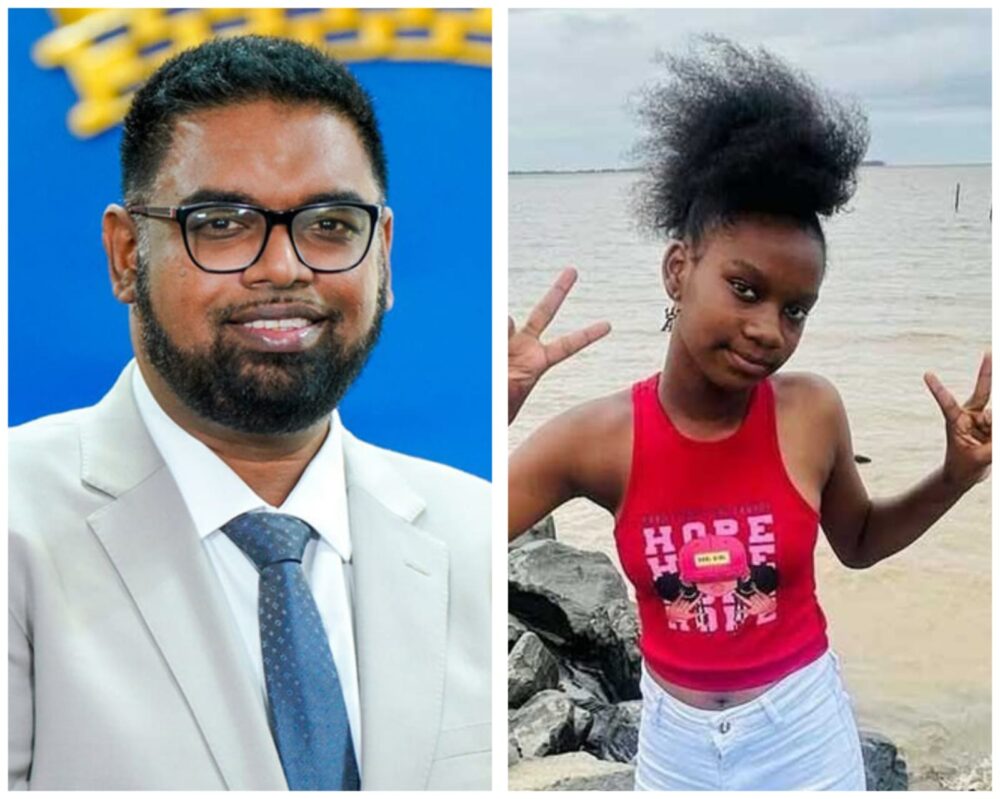
In one of the most unflinching critiques of Guyanese leadership in recent memory, political commentator GHK Lall delivers a scorching rebuke of President Irfaan Ali, holding him personally accountable for the moral and institutional collapse that continues to unravel the country—one tragedy at a time.
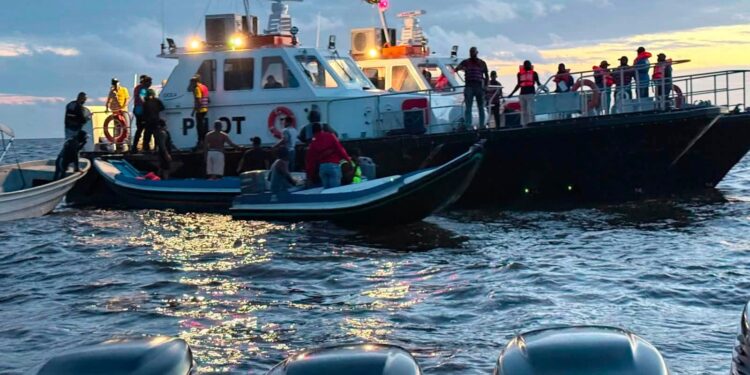
At the centre of Lall’s firestorm is the unresolved, haunting death of Adrianna Younge, a 11-year-old child whose final hours, shrouded in terror and unanswered questions, have become a symbol of Guyana’s deepening rot. Rather than facing the fallout with transparency and resolve, President Ali, Lall argues, has taken the path of evasion—“cry for a day, then hustle away.”
“They tell me that President Ali has a PhD. Then he shouldn’t be so dense, or pretend at being so. I am aware that his shadow can be heavy, but his head shouldn’t be so hard. A child is dead, and it wasn’t from sickness.”
With those lines, Lall zeroes in not just on the president’s failure to lead, but on his failure to feel. Adrianna’s death, Lall insists, is not simply one tragic case. It is the manifestation of a diseased system—a state built on cover-ups, protected by power, and lubricated by dirty money. And in his silence and deflection, Ali has shown the country what kind of leadership truly exists at the helm.
For Lall, the President’s brush-off is more than political tone-deafness—it’s a betrayal. “The paramountcy of the Adrianna Younge case and the integrity that should accompany it, believed to be there, is not there,” he writes. The public display of concern at Tuschen has given way to a deafening quiet, revealing what Lall sees as the president’s deeper instinct: manage the optics, bury the truth, and move on before accountability catches up.
But Lall refuses to let it go. Because Adriana’s story, he argues, is not isolated—it is a window into what Guyana has become. A place where law enforcement is in “shreds,” where justice is transactional, and where access to protection depends on proximity to power. The Guyana Police Force, he says, stands at the forefront of this decay, “a microcosm of the plagues that have devastated this society.”
And standing atop it all is President Ali—who, Lall asserts, owns the wreckage.
“Whether Irfaan Ali wants to or not, he owns the national cesspool of filth, of decay, of all that has gone wrong in this country in the last five years.”
Lall’s prose is sharp, bitter, and unrelenting. He mocks the president’s attempts to “smartly click his heels and dash away” from the political consequences of this death. “He is entitled to think of himself as that slick and that smart. But I have news for Excellency Ali and his Palace Guard: he isn’t.”
The scathing op-ed doesn’t stop at political accountability. It attacks the culture of impunity that allows certain people—connected, well-funded, protected—to escape scrutiny entirely. “This is about dirty money and what it buys,” Lall writes. “Access to power. Access to protection. Access to the national-political-commercial compound that empowers those inside its charmed circle to cheat, to corrupt, and even to kill probably.”
What GHK Lall lays out is more than a critique of a failed presidency. It’s a charge of moral collapse under Ali’s watch—a country rotting from the top down. Accountability, he reminds us, was the centerpiece of President Ali’s inaugural speech five years ago. “There has been none,” Lall says now, flatly. Not for the corrupt. Not for the complicit. And not for the dead.
Adrianna’s fate, then, becomes not just a tragedy, but a verdict. One that exposes the state’s worst tendencies and the president’s weakest instincts.
“This is now larger than the life of Adrianna Younge so slickly stolen from her. This is the tangled web weaved by the People’s Progressive Party (PPP) Government, many of such webs. Now they come back with a vengeance to trap those responsible for their existence.”
There is, Lall warns, no place left to run. Not for the president. Not for his government. And not for a nation sleepwalking through decay.
Because this isn’t just about a child’s death.
It’s about the death of accountability. The death of leadership.
And the death of a republic that no longer remembers how to care.