HAVANA — For six decades, the United States has waged an unyielding economic war against Cuba, a campaign rooted in what many view as little more than a political grudge following the revolutionary overthrow of dictator Fulgencio Batista, once the steadfast defender of U.S. interests on the island.
Like a spurned partner refusing to move on, Washington has maintained one of history’s longest and most punishing economic blockades, choking Cuba’s development and access to essential goods. This economic onslaught, designed to punish the Cuban people for their audacity to claim independence and establish a government under Fidel Castro’s leadership, manifests as a comprehensive blockade that has bled the island nation of more than $130 billion.
The U.S. sanctions, colloquially termed the ‘blockade,’ intricately weave through the fabric of Cuban life, significantly hampering access to essential goods and services, including medicine, food, and materials crucial for vaccine development, notably during the Covid-19 pandemic.
Beyond the direct impacts, the sanctions aim to suffocate Cuba’s economy, restricting travel and barring international businesses from engaging with Cuba if they wish to maintain trade relations with the United States.
The rationale behind such draconian measures traces back to a stark admission by the U.S. State Department in the wake of the Cuban Revolution: to dislodge the widespread support for Castro and his government, the U.S. resolved to incite internal dissent by imposing economic hardships on the Cuban populace.
Against this backdrop of sustained economic hostility, Cuba’s government announced Friday the extension of regulations allowing citizens to import essential goods duty-free until September 2025 — a tacit admission that the state, hamstrung by sanctions that have cost the island hundreds of billions in trade and development opportunities, remains unable to provide even the most basic necessities for its people.
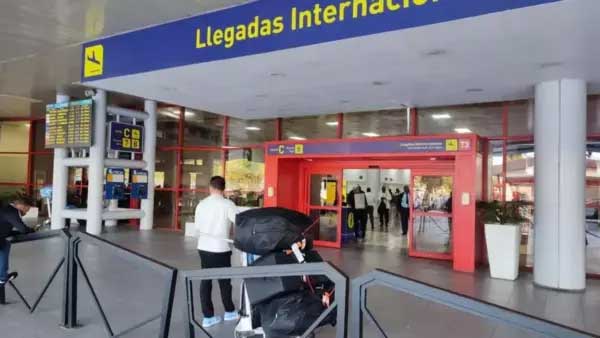
The Ministry of Finance and Prices announced Friday that medicines, hygiene products, food, and electric generators will continue entering the country tax-free, provided they come in as non-commercial imports. The extension marks yet another chapter in the government’s reluctant dependence on its citizens’ foreign connections to patch the gaping holes in its failing supply system.
“The conditions that gave rise to these measures persist,” the government acknowledged, using bureaucratic language to skirt around a devastating reality: hospital shelves remain barren, pharmacies stand empty, and the agricultural sector has collapsed so thoroughly that Cuba now imports virtually all its food.
While officials present the extension as a benefit, it primarily serves those fortunate enough to travel abroad or maintain relationships with overseas relatives who can finance these shipments. Meanwhile, the majority of Cubans — those without foreign contacts or the means to purchase from informal vendors — remain trapped in increasingly desperate circumstances.
Since the regulation’s introduction in 2021, the island’s economic situation has deteriorated dramatically. Between 2015 and 2022, the consumer price index ballooned 24 times while purchasing power plummeted by a staggering 96%. Recent years have only accelerated this freefall, with inflation deepening shortages and driving the Cuban peso to historically low values.
The authorities remind travelers that items must be presented separately from personal luggage to qualify for the duty exemption. International courier shipments also remain eligible, though with stricter limitations — a value cap of $200 and maximum weight of 20 kilograms, compared to the $500 value and 50-kilogram allowance for personal imports.
Despite its reliance on these imports, the government has begun cracking down on those who attempt to resell these goods. According to Cubadebate, officials recorded 118 violations last year involving people using “these benefits for profit and not to meet personal and family consumption needs.” In just the first quarter of 2025, enforcement has already caught 104 cases, resulting in confiscation of medicines, food, and hygiene products.
That these items frequently end up in the informal market is hardly a secret. The government’s warning that “Customs will continue reinforcing control measures” rings hollow in a country where the black market has become an essential survival mechanism for many families.
The inclusion of electric generators among duty-free items underscores another government failure. “Despite the country’s efforts and the energy recovery program, there are still significant energy deficits,” Cubadebate admits. Yet even those fortunate enough to import generators face another hurdle — finding fuel to operate them in a country plagued by chronic shortages.
First extended in January, the regulation represents a stopgap measure for a system in crisis. While it provides temporary relief for some, it offers no solution to the structural problems that have left Cuba’s economy on life support — a reality that no amount of duty-free imports can obscure.
First published in Spanish by 14ymedio and translated and posted in English by Havana Times.