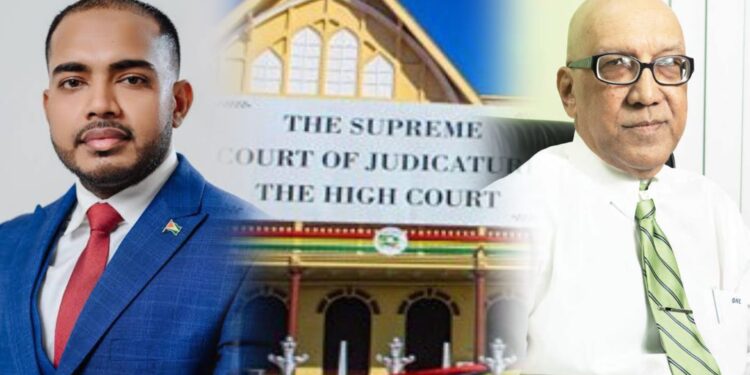
As Guyana marks its 55th year as a Republic, President Irfaan Ali in his speech to the nation paints a rosy picture of a nation “safe and strong,” soaring towards “prosperity” with “robust democracy” and “world-class social services.” But for the thousands of Guyanese who wake up every day to systemic inequality, rampant corruption, and a government more concerned with appearances than accountability, the President’s speech reads less like a celebration and more like a cruel joke.
Guyana, flush with oil revenues, should indeed be on the brink of prosperity. Instead, the wealth has become a poisoned chalice, consolidated in the hands of a political elite and their cronies, while vast segments of the population, particularly African Guyanese, remain sidelined from economic opportunities. President Ali boasts that “life is improving for every citizen,” yet basic services in Afro-Guyanese communities remain underfunded, youth unemployment rates continue to soar, and many citizens are left grappling with rising living costs and stagnant wages.
If this is prosperity, it is prosperity for a select few.
The President heralds Guyana’s democracy as “robust.” But how robust is a democracy when the very essence of democratic engagement—dialogue with the opposition, is treated as an afterthought? The exclusion of the parliamentary opposition from the Republic Day flag-raising ceremony was not merely a bureaucratic “oversight” as the Ministry of Culture conveniently claimed after midnight. It was a glaring symbol of a government that operates in silos, preferring political theater over democratic inclusion.
A robust democracy thrives on transparency, debate, and accountability. In Guyana, what we see instead is a façade, with government policies shaped in backrooms and dissenting voices marginalized. If the President truly valued democratic principles, the Opposition would have been front and center at that ceremony, not as a courtesy, but as a constitutional obligation.
Guyana’s oil boom should have been the great equalizer, an opportunity to lift every Guyanese citizen. Instead, it has fast-tracked the nation into what economists dub the “resource curse.” Multinational oil giants reap billions, local elites grow wealthier, and the vast majority of Guyanese remain spectators in their own economy.
The Ali administration has failed to establish transparent frameworks for oil revenue management, leaving the door wide open for corruption and mismanagement. Where are the comprehensive audits? Where is the public disclosure of how billions in oil revenues are being allocated? Instead of answers, Guyanese get platitudes about a “bright future” while crumbling infrastructure, failing healthcare systems, and under-resourced schools tell a very different story.
But perhaps the most insidious rot in Guyana’s foundation is systemic racism, an issue President Ali conveniently sidesteps. Guyana is not a nation “soaring to prosperity” when entire communities are institutionally disadvantaged based on race. African Guyanese face unequal access to jobs, contracts, and public services, all while their concerns are dismissed as political noise.
It’s a silent apartheid, masked by nationalistic speeches and shallow calls for “togetherness.” The President implores citizens to “transcend divisions” and “work hand in hand,” yet his government’s policies continue to deepen racial and economic chasms.
If the administration truly seeks unity, it must first acknowledge the fractures, then act decisively to heal them. Until then, calls for harmony will remain hollow.
The President was right to commend the bravery of the Guyana Defence Force, particularly in light of recent border skirmishes. But safeguarding territorial sovereignty is meaningless if the government fails to safeguard the nation’s moral and economic integrity. What good is defending every inch of Guyanese land if the wealth beneath it serves only a privileged few?
True sovereignty is not just territorial, it is economic, social, and moral. Guyana’s leaders may boast about protecting borders, but when they turn a blind eye to internal exploitation, they erode the very foundation of the Republic.
Fifty-five years as a Republic should have been a celebration of resilience and unity. Instead, it feels like a cautionary tale, a nation poised for greatness but paralyzed by its own internal contradictions.
President Ali says Guyana’s “greatest achievements are still ahead.” He’s right, but only if the nation is willing to confront its demons: racism, corruption, and mismanagement. Until then, Guyana will remain a Republic in name, but a fractured, weakened nation in reality.
For Guyana to truly soar, it must first come down to earth—face the hard truths, and rebuild not just its economy, but its very soul.