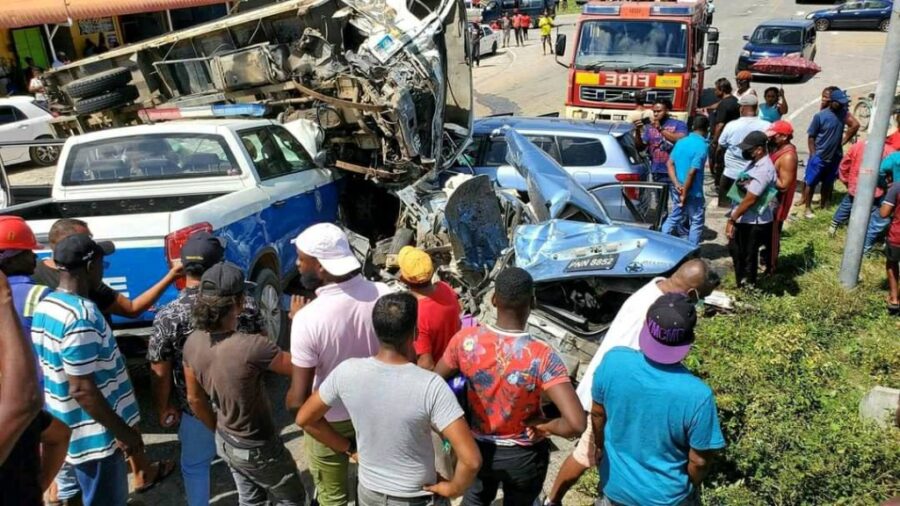
By Mark DaCosta- In response to the alarming increase in road accidents and fatalities, the opposition has reiterated its call for a more data-driven and holistic approach to road safety. This follows recent statements by the People’s National Congress Reform (PNCR), which critiqued the AFC’s proposal to reinstate a 2 a.m curfew as a standalone measure to curb traffic incidents.
At a press conference held on July 19, 2024, the PNCR highlighted the urgent need for comprehensive action to address what they termed a national crisis. “The rise in road accidents, injuries, and deaths has reached an alarming level, impacting all road users from pedestrians to truck drivers,” a PNCR spokesperson stated.
The opposition’s proposed framework for reducing road accidents and fatalities focuses on several key areas:
1. Data-Driven Policy Framework.
The PNCR stressed the importance of basing traffic safety measures on empirical data and rigorous statistical analysis. They called for an immediate review of traffic accident statistics to identify the primary causes of road accidents. Key factors to be examined include speeding, driver inattention, driving under the influence, conflicts between animals and vehicles, pedestrian-vehicle interactions, crashes involving fixed objects, and intersection collisions.
2. Road Safety Audits.
The opposition proposed comprehensive safety audits of major roads such as the Essequibo Coast Road, West Coast and West Bank Demerara Roads, Linden-Soesdyke Highway, East Coast Road, and the Corentyne Highway. These audits would identify substandard design elements contributing to accidents, such as poor road surfaces, the proximity of fixed objects to roadways, inadequate passing sight distances, and dangerous turn designs. The results of these audits would guide targeted funding to improve road safety infrastructure.
3. Education and Enforcement Programmes.
The PNCR called for robust and sustained road safety education and enforcement programmes. They noted that past efforts often faded quickly and lacked effectiveness. The opposition is already preparing a comprehensive road safety and traffic management plan in anticipation of forming the next government.
4. Holistic Measures Beyond Curfews.
While the AFC’s former leader, Khemraj Ramjattan, suggested reinstating the 2 a.m. curfew as a measure to reduce accidents, the PNCR argued that this alone is insufficient. They emphasised the need for a multifaceted approach that includes the measures outlined above.
The government’s response to the rising road accident rates has been criticised for failing to inspire public confidence. The opposition contends that the current measures are inadequate and calls for immediate, robust government interventions.
The public shares the opposition’s concerns. Many Guyanese have expressed frustration with the dangerous conditions on the nation’s roads. “Every time I leave my house, I worry about getting into an accident,” said Shalini Persaud, a resident of Georgetown. “We need real solutions, not just temporary fixes.”
As Guyana grapples with this road safety crisis, the call for a data-driven, holistic approach becomes increasingly urgent. The opposition’s detailed proposals aim to address the root causes of accidents and create a safer environment for all road users. The government is urged to consider these recommendations seriously and act swiftly to implement effective road safety measures.
In the face of mounting fatalities, it is clear that Guyana needs comprehensive and sustained efforts to ensure the safety of its citizens on the roadways. The nation looks to its leaders for decisive action to end the carnage on our roads.