Last Tuesday, on Dr. David Hinds’ Pol 101 programme, he asked for my take on the recent high-profile visits by Bill Clinton, former British prime minister Tony Blair, etc. in the context of the global struggle between autocracy and democracy, and where do I think the People’s National Congress (PNC) stands on the issue. Given the position of this column over the years, the high-profile visits pointed to hope, but the recent pronouncements coming from the PNC leadership are disheartening.
There is little doubt that the autocratic/democratic contestation is heating up. Guyana is at present formally considered nearing an elected autocratic state and only last month a bipartisan bill, the International Freedom Protection Act, was introduced in the US Senate ‘To combat transnational repression abroad, to strengthen tools to combat authoritarianism, corruption, and kleptocracy, to invest in democracy research and development,’ etc.
The Carter Center report on Guyana’s 2020 elections noted: ‘While credible and accurate elections are essential to democratization, it is clear that in Guyana’s winner-take-all political system with its recurring patterns of ethnic voting and political polarization, elections alone will not produce an inclusive system of governance with broad participation by all major groups.’ (https://www.cartercenter. org/documents/1036.pdf).’ To paraphrase Bill Clinton’s remarks in 2018 on the 20th anniversary of the Good Friday Agreement (GFA) that brought peace to Northern Ireland after 30 years of ethnic conflict that cost some 3,500 lives, in our context real democracy requires constitutionalising methods to protect majority, minority and individual rights, uphold the rule of law and facilitate the end of violence, shared political decision-making, shared economic benefits, and – most interestingly – creating space for the identity and the interests and the values of all the people involved.
To better contextualise Guyana, Jason Calder, who is not unfamiliar with Guyana, wrote as follows about the 2020 elections: ‘From 1998 to 2008, episodes of ethnic violence triggered by winner-take-all elections traumatized the nation and dragged a new generation into conflict. This period was marked by human-rights abuses, the emergence of Guyana as a nascent microstate, extrajudicial killings, and economic marginalization that overwhelmingly, though not exclusively, afflicted Afro-Guyanese….. The Carter Center, which helped support Guyana’s democratic transition in the early 1990s and has observed five of the country’s elections, has long staked out the position that the winner-take-all system is not right for Guyana. This is the position of many civil-society groups and, more quietly, politicians within the main parties themselves. However, opposition politicians in Guyana regularly pledge to reform the winner-take all system but seem to lose passion for their principles once they get into government’ (https://foreignpolicy.com).
After nearly three-quarters of a century of ethnic political conflict in Guyana, I cannot find in the recent statements coming from the PNC a vision that comes close to the profundity expressed by Clinton. A few days ago, in HARDtalk – On the Road, Stephen Sackur observed that some 40% of the Guyanese people still live in poverty, neighborhoods such as Sophia in Georgetown, a PNC stronghold, reek of neglect and deprivation in the world’s fastest growing economy and that Guyana continues to be an ethnically divided society in which the politicians persistently blame each other for these and the other defects such as corruption, discrimination, etc. He then enquired of Mr. Aubrey Norton, the leader of the PNCR, if the continuation of such conditions is not likely to lead to social upheaval.
Mr. Norton responded precisely as Sackur surmised: to blame the PPP. According to him, the government has not provided any programmes to deal with poverty and the high cost of living, and although his party did make suggestions, the government has not acted on them. Oil resources are going to ‘family, friends, and favourites’. Poverty is affecting all ethnic groups, but it also has the capacity to unite if dealt with properly. If policies provided the citizenry with the good life the poverty gap can be bridged and destabilisation.
In not a dissimilar, albeit in a somewhat more utopian mode, Norton’s competitor for the leadership of the PNC, Mr. Roysdale Forde, speaking at his leadership declaration, stated that should he win the leadership contest his intention is to form a wider coalition with all the remaining small parties and see the ‘back of the PPP’ by winning the next elections! Guyana has always been well endowed with natural resources and we are now accustomed to hearing these kinds of pronouncements from its politicians. What has been missing is the ability to grasp and the will to implement the relevant political vision.
At the same event at which Bill Clinton made the remarks paraphrased above, above, Tony Blair also spoke declaring that ‘the GFA took real courage and for all its faults, it was worth doing and worth keeping.’ Tony Blair and Bill Clinton were ‘available by phone on demand to keep the talks alive’ in the crucial last 58 hours of the negotiations.
Current US president Joe Biden was the driving force in favour of the GFA in the US Senate. On the 25th anniversary of the GFA last year, he joined Clinton, Blair, and others to remind his audience that ‘All the immense progress we see around us was built through – conversation and compromise, discussion and debate, voting and inclusion. It’s an incredible attestation to the power of democracy to deliver the needs for all the people.’
The GFA is considered by the USA ‘a major diplomatic achievement’ and ‘a model that has yet to be bettered to end conflict between opposing ethnicities or communities’ (https://www.huffingtonpost.co.uk). From my reckoning, in terms of the loss of lives, on a per capita basis the ethnic conflict in Guyana has been more costly than that of Northern Ireland. Not surprising then that in around 2008, the British government finance da trip by senior Guyanese politicians to observe the workings of the GFA. Those then in opposition returned, made manifesto promises to transform and make Guyana more ethnically politically inclusive, but when they came to office reneged on that promise: hence Calder’s observation above.
One must hope that in their tête-à-tête with the powers that be in Guyana, the chief architects of the GFA, which introduced a system that is more appropriate for the ethnic/political conditions in Guyana, would have again made and elaborated upon the decades old point that elections alone will not produce a sufficiently inclusive system of governance.
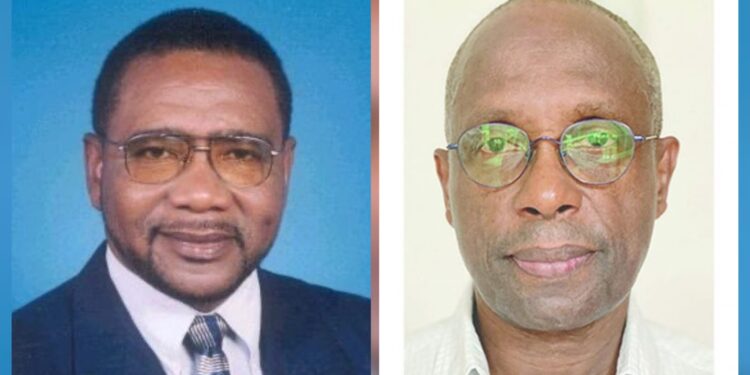
What I have heard from the two individuals now contesting the leadership of the PNC is disappointing. Nowhere have they explained how they intend to deal with the existing structural difficulties that have interminably plagued this country; that have and still largely are preventing the establishment of an effective functioning liberal democracy.