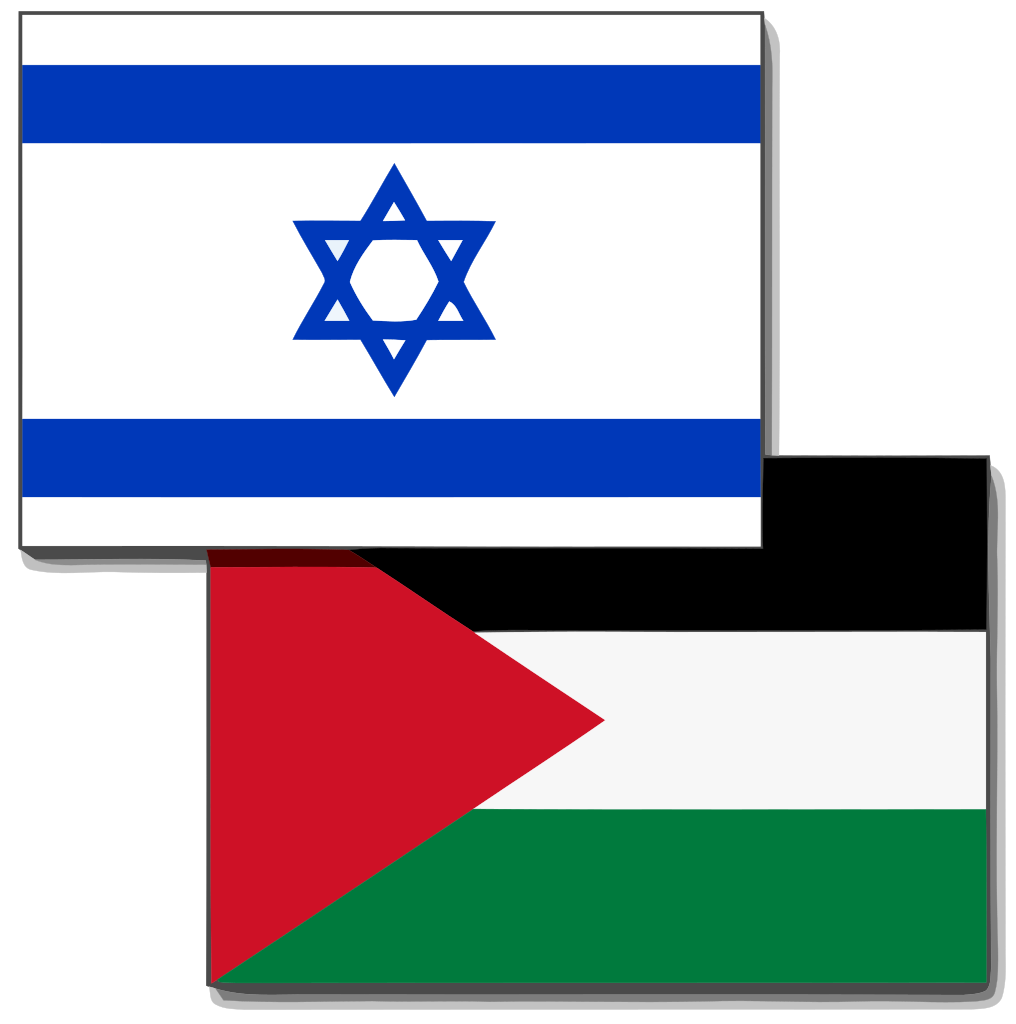
By Mark DaCosta- In recent times, the Middle East conflict has become a focal point of interest for many Guyanese, igniting discussions across social media, mainstream outlets, and letters to the editor. As the people of Guyana express a growing curiosity about the roots of the Israeli-Palestinian conflict, this article seeks to inform Guyanese about the complex historical tapestry that has brought the region to its current state of turmoil.
The origins of the Israeli-Palestinian conflict can be traced back to the late nineteenth century, gaining significant momentum with the adoption of Resolution 181 by the United Nations (UN) in 1947. This pivotal resolution, also known as the Partition Plan, aimed to carve out Arab and Jewish states within the British Mandate of Palestine. However, the establishment of the State of Israel in 1948 marked the beginning of the first Arab-Israeli War, resulting in the displacement of 750,000 Palestinians and the division of the territory into Israel, the West Bank, and the Gaza Strip. These are the two Palestinian enclaves separated by Israel in the middle.
The ensuing years witnessed escalating tensions, leading to conflicts between Israel and neighboring countries, including Egypt, Jordan, and Syria. Key events such as the 1956 Suez Crisis and the Six-Day War in 1967 further reshaped the territorial landscape, with Israel gaining control over the Sinai Peninsula, Gaza Strip, West Bank, East Jerusalem, and the Golan Heights.
Efforts to broker peace materialised in the Camp David Accords of 1979, a landmark treaty between Egypt and Israel. However, the thorny issue of Palestinian self-determination continued to linger. The first intifada – an Arabic word translating to “uprising” or “shaking off – erupted in 1987, with hundreds of thousands of Palestinians in the West Bank and Gaza rising against Israeli governance.
The Oslo Accords of 1993 aimed to mediate the conflict, establishing a framework for Palestinian self-governance in the West Bank and Gaza. In 1995, the Oslo II Accords expanded on the initial agreement, mandating the withdrawal of Israel from several cities and towns in the West Bank.
The year 2000 marked a turning point as the second intifada erupted, fueled by Palestinian grievances over Israel’s control of the West Bank. In response, Israel constructed a barrier wall in 2002, despite opposition from international bodies. Factionalism among Palestinians intensified when Hamas emerged victorious in the 2006 parliamentary elections, leading to violence between Hamas and Fatah – the main political party in Palestine.
In 2014, clashes erupted into a military confrontation between Israel and Hamas, resulting in a ceasefire brokered by Egypt. The Trump administration, breaking with longstanding U.S. policy, canceled funding for the UN Relief and Works Agency and relocated the U.S. embassy to Jerusalem. The Abraham Accords followed, normalising relations between Israel and some Arab nations.
The year 2021 witnessed renewed tensions, triggered by the eviction of Palestinian families in East Jerusalem. Protests escalated into violence, with Hamas launching rockets and Israel responding with airstrikes, culminating in an eleven-day conflict that claimed hundreds of lives.
Fast forward to 2023, and the conflict has reached a critical juncture with renewed hostilities. The current, ongoing war that erupted on October 7, 2023, between Israel and Hamas has garnered significant international attention, including that of many Guyanese. The United States, traditionally supportive of Israel, has declared staunch support and sent arms shipments to Israel.
Concerns are mounting over the escalating loss of life, with approximately 1,300 Israelis and some 25,000 Palestinians killed to date. Regional tensions have heightened, with Iran-backed groups targeting U.S. military positions in Iraq and Syria. Hezbollah — an Arab military group based in Lebanon — engages in daily artillery exchanges with Israel, while Houthi rebels in Yemen launch missiles at Israel, and ships traversing the Red Sea. The U.S. has warned its ships to avoid the area.
The recent outbreak of war has thrown into chaos ongoing diplomatic efforts, such as the 2023 U.S. attempt to broker normalisation between Israel and Saudi Arabia. The displacement of millions of Palestinians poses a refugee dilemma for neighboring countries, including Egypt and Jordan. Meanwhile, those trapped in Gaza face increasingly dire living conditions and security risks.
As Guyanese observers engage in discussions about the Middle East conflict, it is crucial to recognise the multifaceted historical roots that have shaped this ongoing struggle. Understanding the historical context provides a nuanced foundation for informed conversations and fosters empathy for those profoundly affected by the enduring Israeli-Palestinian conflict.