International and Caribbean regional forecasts indicate that Guyana’s oil wealth will significantly enhance its global socioeconomic standing and create opportunities for its traditional sectors, such as agriculture and renewables, to flourish even after the oil exploration phase. This economic diversification can enable Guyana to become a major food supplier to the Caribbean region while exporting goods worldwide, supported by a reliable energy supply. While the state and private sector actively pursue these possibilities, a crucial challenge is meeting the country’s human capital needs to effectively serve existing and emerging industries that contribute to the ongoing national transformation.
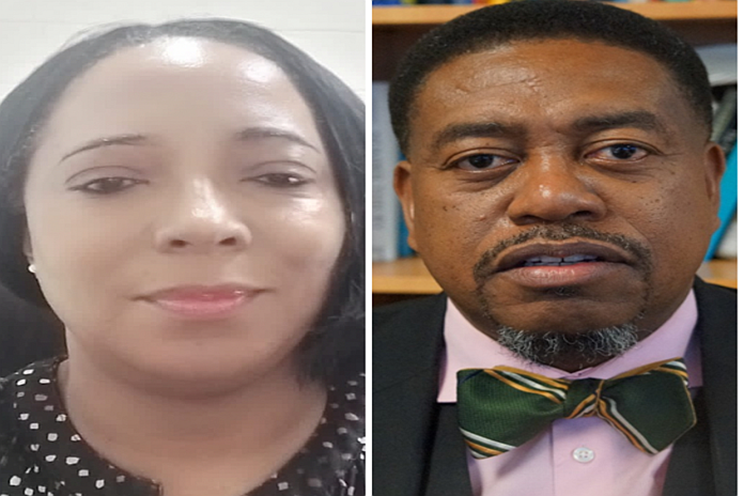
However, there are concerns about how shared resources and the benefits from oil proceeds will reach ordinary Guyanese citizens. Previous promises of a “good life for all Guyanese” and ideas for direct cash grants have generated expectations and caution. While some proponents advocate for monetary payouts, others, like Prof. Roger Hosein of the University of the West Indies, argue that in an ethnically polarized nation like Guyana, cash grants and political promises must be revised. Drawing from experiences in Trinidad and Tobago, where oil and political power have influenced political campaigns and development along polarized ethnic lines, Prof. Hosein and Dr. Remi Piet, appearing on Guyana Business Journal’s and the Caribbean Policy Consortium’s recently premiered Season II, Episode I webinar series, “Transforming Guyana,” emphasized the need for a careful evaluation of the labor, trade, and production sectors in Guyana’s revenue-sharing model. They argue that direct interventions for low-income individuals should be based on empirical data, ensuring a targeted approach that addresses education, job creation, and broader long-term employment and economic objectives.
Guyana faces a significant human resource shortfall, given its population of less than a million people, with less than 60 percent engaged in productive sectors. Efforts through institutions like the University of Guyana and the Guyana Online Academy of Learning are underway to address this shortage through specialized technical and vocational training. However, Hosein and Piet propose, in addition, leveraging the current influx of migrants from Venezuela and Haiti as a strategy to bolster Guyana’s labor pool. They argue that investments in human capacity building should be complemented through contracts that secure skilled individuals for a specified period, guaranteeing retention and sustainability. It is essential to recognize that the strength of Guyana’s economy over the next 15 years, they emphasize, lies not solely in the energy sector but in the effective management of energy resources alongside production, trade, and employment structures that facilitate growth in non-energy sectors.
Governance of resources remains a critical aspect of Guyana’s economic growth. Piet and Hosein note the necessity of a revenue-sharing model developed through collaboration among key stakeholders. This model should prioritize social welfare, foster transparent development, and ensure fair distribution of Guyana’s assets. In conjunction with this, a program of human resource mentorship is essential to drive sustainable development aligned with the needs of local society. Interestingly, Piet and Hosein argue that the mining sector, due to its growth relative to oil and gas, can serve as a model for developing a cohesive revenue-sharing methodology. Institutional mechanisms for targeted incentives and a holistic approach, including periodic assessments of the country’s fiscal terms for new oil agreements, should also be considered.
As Guyana continues to invest in its human capital and physical infrastructure, policy-making on revenue sharing must be prioritized beyond the political realm. A shared national vision, supported by consultation and collaboration among state and non-state actors, including civil society, for revenue sharing, will pave the way for Guyana to thrive beyond the lifespan of its oil reservoirs.
Dr. Carolyn Walcott is a media and communications educator and scholar with a diverse background in journalism education, international communication, and media development. She received her undergraduate degree in Communication and her Graduate Diploma in International Studies at the University of Guyana. She completed her M.A. in Communication and Development at Ohio University and her Ph.D. in Communication at Georgia State University. Her research agenda focuses on media pedagogy and practice, national identity, rhetoric, and political communication.
Dr. Terrence Richard Blackman is a member of the Guyanese diaspora. He is an associate professor of mathematics and a founding member of the Undergraduate Program in Mathematics at Medgar Evers College. In addition, he is a former Dr. Martin Luther King Jr. Visiting Professor at MIT and a member of The School of Mathematics at The Institute for Advanced Study. He previously served as Chair of the Mathematics Department and Dean of the School of Science, Health, and Technology at Medgar Evers College, where he has worked for more than twenty-five years. He graduated from Queen’s College, Guyana, Brooklyn College, CUNY, and the City University of New York Graduate School.