Friday, August 21, 2026
Village Voice News
ADVERTISEMENT
  • Home
  • News
  • Sports
  • Editorial
  • Letters
  • Global
  • Columns
    • Eye On Guyana
    • Hindsight
    • Lincoln Lewis Speaks
    • Future Notes
    • Blackout
    • From The Desk of Roysdale Forde SC
    • Diplomatic Speak
    • Mark’s Take
    • In the village
    • Mind Your Business
    • Bad & Bold
    • The Voice of Labour
    • The Herbal Section
    • Politics 101 with Dr. David Hinds
    • Talking Dollars & Making Sense
    • Book Review 
  • Education & Technology
  • E-Paper
  • Contact Us
No Result
View All Result
  • Home
  • News
  • Sports
  • Editorial
  • Letters
  • Global
  • Columns
    • Eye On Guyana
    • Hindsight
    • Lincoln Lewis Speaks
    • Future Notes
    • Blackout
    • From The Desk of Roysdale Forde SC
    • Diplomatic Speak
    • Mark’s Take
    • In the village
    • Mind Your Business
    • Bad & Bold
    • The Voice of Labour
    • The Herbal Section
    • Politics 101 with Dr. David Hinds
    • Talking Dollars & Making Sense
    • Book Review 
  • Education & Technology
  • E-Paper
  • Contact Us
No Result
View All Result
Village Voice News
No Result
View All Result
Home Feature

The Ancient Origins of Diwali, India’s Biggest Holiday

Admin by Admin
October 24, 2022
in Feature
0
SHARES
0
VIEWS
Share on FacebookShare on Twitter

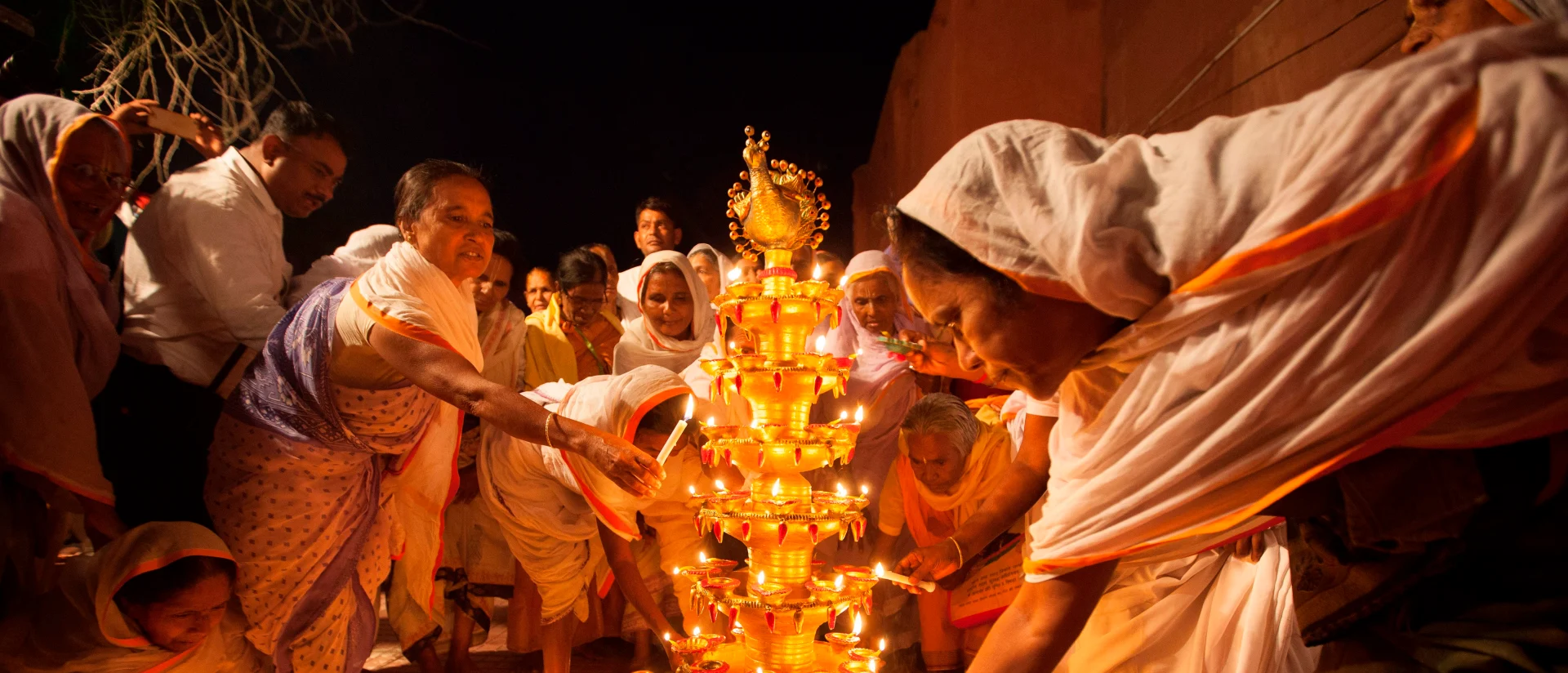
Every year around October and November, Hindus around the world celebrate Diwali, or Deepavali—a festival of lights that stretches back more than 2,500 years. Diwali 2022 occurs on Monday, October 24. In India, the five-day celebration traditionally marks the biggest holiday of the year.

Like many Hindu festivals, there isn’t just one reason to celebrate the five-day holiday. Pankaj Jain, a professor of anthropology, philosophy and religion at the University of North Texas, says that the ancient celebration is linked to multiple stories in religious texts, and it’s impossible to say which came first, or how long-ago Diwali started.

READ ALSO

Chevening Scholar Marissa Foster to Return as Guyana’s First Peace Practitioner

The Village Movement: How Freed Africans Bought Their Freedom Twice

Many of these stories are about the triumph of good over evil. In northern India, a common tale associated with Diwali is about King Rama, one of the incarnations of the god Vishnu. When an evil king in Lanka (which some people associate with Sri Lanka) captures Rama’s wife Sita, he “builds up an army of monkeys” to rescue her, Jain says.

The monkeys “build a bridge over from India to Sri Lanka, and they invade Sri Lanka and free Sita and kill that evil king,” he says. As Rama and Sita return to the north, “millions of lights are spread out across the city Ayodhya just to help them come back home, just to welcome them.” Lighting lamps has long been one of the ways that Hindus celebrate Diwali.

In the south, Diwali is popularly linked to a story about the Hindu god Krishna, a different incarnation of Vishnu, in which he frees some 16,000 women from another evil king. In the western state of Gujarat, the New Year coincides with Diwali (there are multiple New Years throughout India), and Diwali is associated with asking the goddess Lakshmi for prosperity in the coming year. During the festival, many celebrants exchange gifts and coins.

Other religions like Buddhism, Jainism, and Sikhism use Diwali to mark important events in their histories, too. Professor Jain says that while Diwali is a religious holiday, it’s also somewhat of a national holiday in India.

Vasudha Narayanan, a professor of religion at the University of Florida, points out that not everyone in India celebrates Diwali. But because about 80 percent of India is Hindu—with Buddhists, Jains, and Sikhs making up 2 or 3 percent more—it’s celebrated by the majority of the country.

Narayanan says that in the past century or so, fireworks became a major part of the Diwali celebrations.

“On the night before Diwali, you hardly ever slept,” Narayanan says of the fireworks. “I mean, the sound was that loud.”

In 2020, several states in India imposed a ban on firecrackers and its sale ahead of the festivities due to the rising cases of coronavirus COVID-19 and growing air pollution. According to Narayanan, this upset a lot of revelers in India, with many complaining that Diwali without fireworks is like Christmas without a Christmas tree.

While Narayanan understands the desire to keep with tradition, she also gets the government’s concern.

“Hinduism also advocates doing good to others, and nonviolence,” she says. Therefore, she argues that traditions should be rethought if they “cause violence to someone else’s health.” (History Channel).


ShareTweetSendShareSend

Related Posts

Chevening Scholar, Marissa V. Foster
Feature

Chevening Scholar Marissa Foster to Return as Guyana’s First Peace Practitioner

by Admin
August 16, 2026

Driven by a vision to advance social justice and peacebuilding at home, Marissa Foster, a Chevening Scholar, is preparing to...

Read moreDetails
Feature

The Village Movement: How Freed Africans Bought Their Freedom Twice

by Admin
August 6, 2026

They had endured centuries of enslavement, survived the brutality of the plantation system and emerged from emancipation with little more...

Read moreDetails
President Linden Forbes Sampson Burnham, O.E, S.C
Feature

Burnham at 41: The Architect of Modern Guyana Whose Vision Still Challenges a Nation

by Admin
August 6, 2026

"This Government holds that all the people of this country are equally important, whether they belong to a large group...

Read moreDetails
Next Post
Incoming Prime Minister Rishi Sunak

BREAKING: Rishi Sunak to become Britain’s next prime minister


EDITOR'S PICK

Josh Hazlewood of Australia. Photo by Randy Brooks / AFP
Source: AFP

Australia wrest back control against West Indies

July 4, 2025
Tourists take photos of citizens practicing Tai Chi at the Tiantan (Temple of Heaven) Park in Beijing, capital of China, July 2, 2024. (Xinhua/Ju Huanzong)

Beijing enters moderate aging society: official

September 26, 2024
Dr Mellissa Ifill

OP-ED | Freddie Kissoon’s unhealthy obsession with Guyanese of African Descent

December 22, 2020

WORD OF THE DAY: GRATUITOUS

February 5, 2024

© 2024 Village Voice

No Result
View All Result
  • Home
  • News
  • Sports
  • Editorial
  • Letters
  • Global
  • Columns
    • Eye On Guyana
    • Hindsight
    • Lincoln Lewis Speaks
    • Future Notes
    • Blackout
    • From The Desk of Roysdale Forde SC
    • Diplomatic Speak
    • Mark’s Take
    • In the village
    • Mind Your Business
    • Bad & Bold
    • The Voice of Labour
    • The Herbal Section
    • Politics 101 with Dr. David Hinds
    • Talking Dollars & Making Sense
    • Book Review 
  • Education & Technology
  • E-Paper
  • Contact Us

© 2024 Village Voice