By Dinah Voyles Pulver (Yahoo News!)-Frogs, lizards and other amphibians and reptiles living in places they don’t belong cost the world at least $17 billion between 1986 and 2020, a group of international researchers concluded in a new study.
But the true cost of these invasive species is much greater, said authors of the paper published in the journal Scientific Reports.
The first-of-its-kind assessment tallied the economic cost of only 27 species reported in a worldwide database – 10 times that many reptiles and amphibians are classified as invasive, said lead author Ismael Soto, a doctoral student at the University of South Bohemia in the Czech Republic.
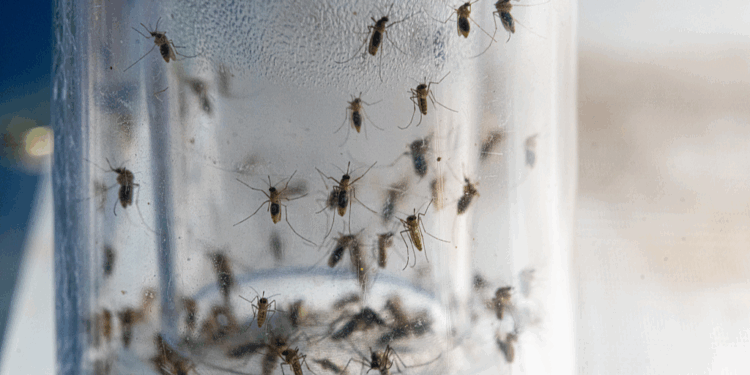
Invasive species, ranging from parasites to pythons, have become a global problem with trade expansion. Some species, such as frogs and iguanas, are shipped away from their native lands as exotic pets. Others, like spiders and beetles, hitch rides in packages and crates carrying products.
Depending on the circumstances, once a nonnative species arrives at its new destination, it can spread rapidly, wipe out native species, carry exotic diseases and cause other troubles.
These invasions are widely expected to grow even worse with climate change as warmer temperatures provide more comfortable homes for species on the move.
It’s “a massive issue,” said Catherine McKenna, former minister of environment and climate change in Canada and chair of a new United Nations task force on the global climate.
In the United States, more than 6,500 nonnative species have been identified, costing an estimated $100 billion in economic damage every year, according to a U.S. Geological Survey study from 2005, the most recent estimate available.
Invasive species can increase the costs of delivering water and power, degrade recreational opportunities and discourage tourism, said Rachel Pawlitz, chief public affairs officer for the Geological Survey.
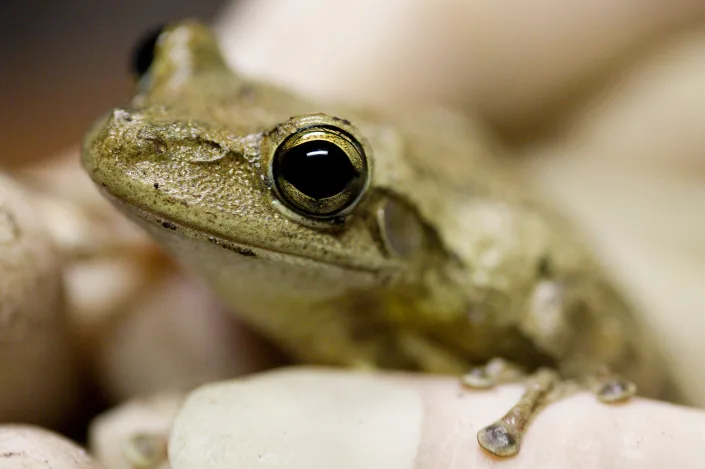
Researchers also found cases of declining property values after coqui frogs, which are native to Puerto Rico, infested areas with their “extremely loud” mating songs.
Field technicians with the Oahu Invasive Species Committee Brian Caleda and Daniel Tsukayama, mix a lethal mix of citric acid and water, before dousing coqui frogs. The loudly shrieking amphibians are menacing Hawaii’s economy.
Field technicians with the Oahu Invasive Species Committee Brian Caleda and Daniel Tsukayama, mix a lethal mix of citric acid and water, before dousing coqui frogs. The loudly shrieking amphibians are menacing Hawaii’s economy.
Working with the worldwide database called InvaCost, a collaboration launched two years ago by a pair of French researchers, Soto and others hope to better understand the economic toll of invasive species around the globe. But as Soto’s group discovered, reporting of economic data is still incomplete, particularly in areas such as Africa and South America.
Total economic costs for all the thousands of invasive species identified around the world would be many, many times higher, said Andrew Kramer, an assistant professor in biology at the University of South Florida.
The new study is at least the third this year to call on authorities worldwide to step up efforts to reduce the risks by more closely monitoring the movement of potentially invasive species.
As the climate warms, species can carry new infectious viruses to other animals and to humans, reported a study in April by Georgetown University researchers Colin Carlson and Gregory Albery.
In Canada, cases of tick-borne Lyme disease have quadrupled, McKenna said. They’ve Scientists also have seen growing damage along the Great Lakes and St. Lawrence River, where nearly n 200 invasive species have been identified.
Of the nearly $17 billion in costs Soto and colleagues counted for the 27 reported species, $10.4 billion was attributed to reptiles and $6.3 billion to amphibians. Costs weren’t available for 94% of the world’s invasive reptiles and amphibians.
The vast majority of the amphibian costs the group studied were spent on efforts to eradicate or manage the American bullfrog in European countries.
More than 99% of the money spent on reptiles was to control damage caused by the brown tree snake in the South Pacific. On Guam this year, the Department of the Interior was set to spend more than $4.1 million on control of the snake, which has caused island-wide power outages and the extinction of 75% of the island’s native bird species.
Florida Fish and Wildlife Conservation Commission Officer Matthew Rubenstein with a breeding female Burmese python and some of the 23 eggs and 18 hatchlings he and South Florida Water Management District python removal contractor Alex McDuffie found July 11, 2022.
Florida is infamous for its exploding population of invasive Burmese pythons that devour mammals in the Everglades.
In June, biologists captured the state’s largest-ever python, a 215-pound behemoth that measured nearly 18 feet long. Inside her abdomen, the Conservancy of Southwest Florida reported, was a record 122 eggs and the remains of an adult white-tailed deer.
The pythons reflect the destruction invasive species can wreak in native ecosystems. Studies have shown pythons wiped out rabbit and fox populations in the southern reaches of Everglades National Park.
The state has removed 16,000 Burmese pythons since 2020. Its annual 10-day python hunt, the Python Challenge, starts Friday.
Soto and his colleagues suggested the world needs greater investment in limiting transport of potentially invasive species and detecting them once they arrive. He acknowledged that would be difficult but said authorities could regularly update a “blacklist” of species that could not be traded.
Because the consequences are unpredictable, Kramer said, not moving species around at all or “doing better at preventing their establishment Is the best way to save money.”
“We need to do better at keeping species where they belong,”