Friday, May 29, 2026
Village Voice News
ADVERTISEMENT
  • Home
  • News
  • Sports
  • Editorial
  • Letters
  • Global
  • Columns
    • Eye On Guyana
    • Hindsight
    • Lincoln Lewis Speaks
    • Future Notes
    • Blackout
    • From The Desk of Roysdale Forde SC
    • Diplomatic Speak
    • Mark’s Take
    • In the village
    • Mind Your Business
    • Bad & Bold
    • The Voice of Labour
    • The Herbal Section
    • Politics 101 with Dr. David Hinds
    • Talking Dollars & Making Sense
    • Book Review 
  • Education & Technology
  • E-Paper
  • Contact Us
No Result
View All Result
  • Home
  • News
  • Sports
  • Editorial
  • Letters
  • Global
  • Columns
    • Eye On Guyana
    • Hindsight
    • Lincoln Lewis Speaks
    • Future Notes
    • Blackout
    • From The Desk of Roysdale Forde SC
    • Diplomatic Speak
    • Mark’s Take
    • In the village
    • Mind Your Business
    • Bad & Bold
    • The Voice of Labour
    • The Herbal Section
    • Politics 101 with Dr. David Hinds
    • Talking Dollars & Making Sense
    • Book Review 
  • Education & Technology
  • E-Paper
  • Contact Us
No Result
View All Result
Village Voice News
No Result
View All Result
Home Global

Prisoners locked up for 23 hours due to Covid rules is ‘dangerous’

Staff Reporter by Staff Reporter
October 20, 2020
in Global
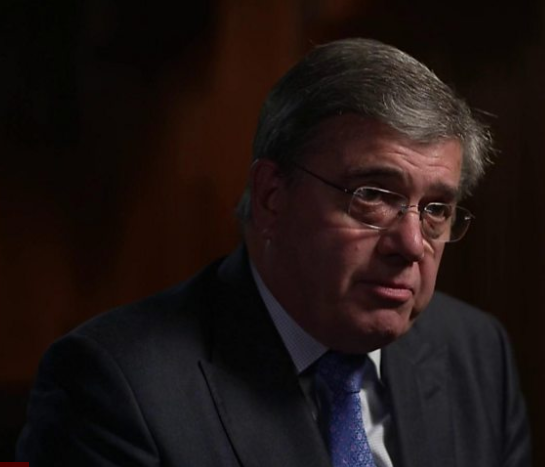
Peter Clarke, Chief Inspector of Prisons (BBC News)

Peter Clarke, Chief Inspector of Prisons (BBC News)

0
SHARES
0
VIEWS
Share on FacebookShare on Twitter
Peter Clarke, Chief Inspector of Prisons (BBC News)

Prisoners being locked in their cells for 23 hours a day under Covid restrictions is dangerous, the chief inspector of prisons has warned.

Peter Clarke told BBC Newsnight that inmates were “losing hope” and warned of the impact on their mental health.

READ ALSO

Chinese FM calls for reforming and improving global governance at UN meeting

China issues ethical guidelines to regulate human genetic data research

The Prison Officers’ Association (POA) has said the practice – which aims to help reduce the spread of the virus – has reduced violence and self-harm.

It has led to a more stable environment, the POA said.

But Mr Clarke, who is due to step down from his position at the end of October, said he found that argument “shallow” and “to an extent self-serving”.

In an in-depth interview with Newsnight, ahead of the publication of a report later on Tuesday, Mr Clarke said he had “good reason to believe” that self-harm was actually rising in women’s prisons.

The inspectorate for England and Wales says it has visited more than 50 prisons since the beginning of the pandemic and found that prisoners spending 23 hours a day in their cells was “normal”.

Sentenced inmates are allowed out of their cells to attend work or education, to exercise and to socialise for short periods. But since lockdown much of this activity has stopped.

“We cannot surely have a position where we say that the only way to run a safe and decent prison is to lock prisoners up in conditions that amount to solitary confinement,” he said.

“That cannot be right. We as a nation surely cannot say that that is acceptable.”

But the national chairman of the POA, Mark Fairhurst, said no-one on the front line “wished to see prisoners locked in cells for 23 hours a day”.

“We must be mindful there are 20 outbreak sites at the moment, so Covid is a real and prevalent threat.

“Our duty of care is to people housed in those prisons, to keep them safe.”

‘So dirty you can’t clean it’

Mr Clarke called on Justice Secretary Robert Buckland to work with the leadership in prisons and come up with a workable solution for however long the pandemic lasts.

In what was his final interview before stepping down, Mr Clarke also criticised prison service managers, saying they were out of touch with how bad conditions behind bars can be.

He says there has been an overall failure to manage the performance of prisons for too many years.

“I ask the question, why so often when the inspectorate has found really very disturbing and appalling conditions does it seem to come as a surprise to so many of the management of the prisons?

“I think the biggest problem is that there’s been an overall failure to manage the performance of prisons for far too many years.

“The Prison Service prides itself on being what they call data driven and evidence based.”

He urged managers to “taste it, to smell it” and to “see what is actually happening” in prisons.

Mr Clarke described some prisons as being allowed to get “so dirty you couldn’t clean it”, citing the example of one prison which had gullies full of rats and rubbish.

A Prison Service spokesperson said: “The measures we put in place limited the spread of the virus and saved lives.

“In line with the latest advice from Public Health England we are gradually easing restrictions, including increasing time out of cells.”

Mr Clarke said he was hopeful for the future of prisons. “I am hopeful because before the pandemic struck, there were some signs that things were getting better.”

He said some of his recommendations were being taken on board.

Mr Clarke’s fifth and final report will be laid before Parliament today.

Charlie Taylor, a former chair of the Youth Justice Board, will succeed Mr Clarke as chief inspector. (BBC News)

ShareTweetSendShareSend

Related Posts

Chinese Foreign Minister Wang Yi attends a meeting of the Group of Friends of Global Governance at United Nations (UN) headquarters in New York, US, May 28, 2026. /Chinese Foreign Ministry
Global

Chinese FM calls for reforming and improving global governance at UN meeting

by Admin
May 29, 2026

CGTN - Chinese Foreign Minister Wang Yi on Thursday called for reforming and improving global governance while attending a meeting...

Read moreDetails
Global

China issues ethical guidelines to regulate human genetic data research

by Admin
May 28, 2026

China's Ministry of Science and Technology issued ethical guidelines for human genetic data research on May 25, aiming to effectively...

Read moreDetails
Experts of the 2026 Meeting of experts on a code of practice on occupational safety and health in aquaculture, together with ILO Secretariat
Global

ILO meeting adopts first-ever code of practice on occupational safety and health in aquaculture

by Admin
May 28, 2026

(ILO News) – Experts from governments and employers' and workers' organizations have adopted the first-ever code of practice on occupational safety...

Read moreDetails
Next Post
Prime Minister Mia Mottley (Caricom)

Govt to pay for CXC reviews


EDITOR'S PICK

GTTA Names Senior Table Tennis Squad for 2025 Internationals

May 18, 2025
Dawn Hastings-Williams, MP

“…I wish to further state that justice was not served and the system failed the victim…” – Hon. MP Dawn Hastings-Williams

July 20, 2023

The stamp of Norton’s campaign all over Forde and Walton-Desir’s flyers

June 17, 2024

Let us now be faithful to the major articles in our Constitution

May 12, 2025

© 2024 Village Voice

No Result
View All Result
  • Home
  • News
  • Sports
  • Editorial
  • Letters
  • Global
  • Columns
    • Eye On Guyana
    • Hindsight
    • Lincoln Lewis Speaks
    • Future Notes
    • Blackout
    • From The Desk of Roysdale Forde SC
    • Diplomatic Speak
    • Mark’s Take
    • In the village
    • Mind Your Business
    • Bad & Bold
    • The Voice of Labour
    • The Herbal Section
    • Politics 101 with Dr. David Hinds
    • Talking Dollars & Making Sense
    • Book Review 
  • Education & Technology
  • E-Paper
  • Contact Us

© 2024 Village Voice